Rack of Lamb

Rack of Lamb

1 Package of Rack of Lamb  (about 6 pieces)
3 Garlic Cloves Minced
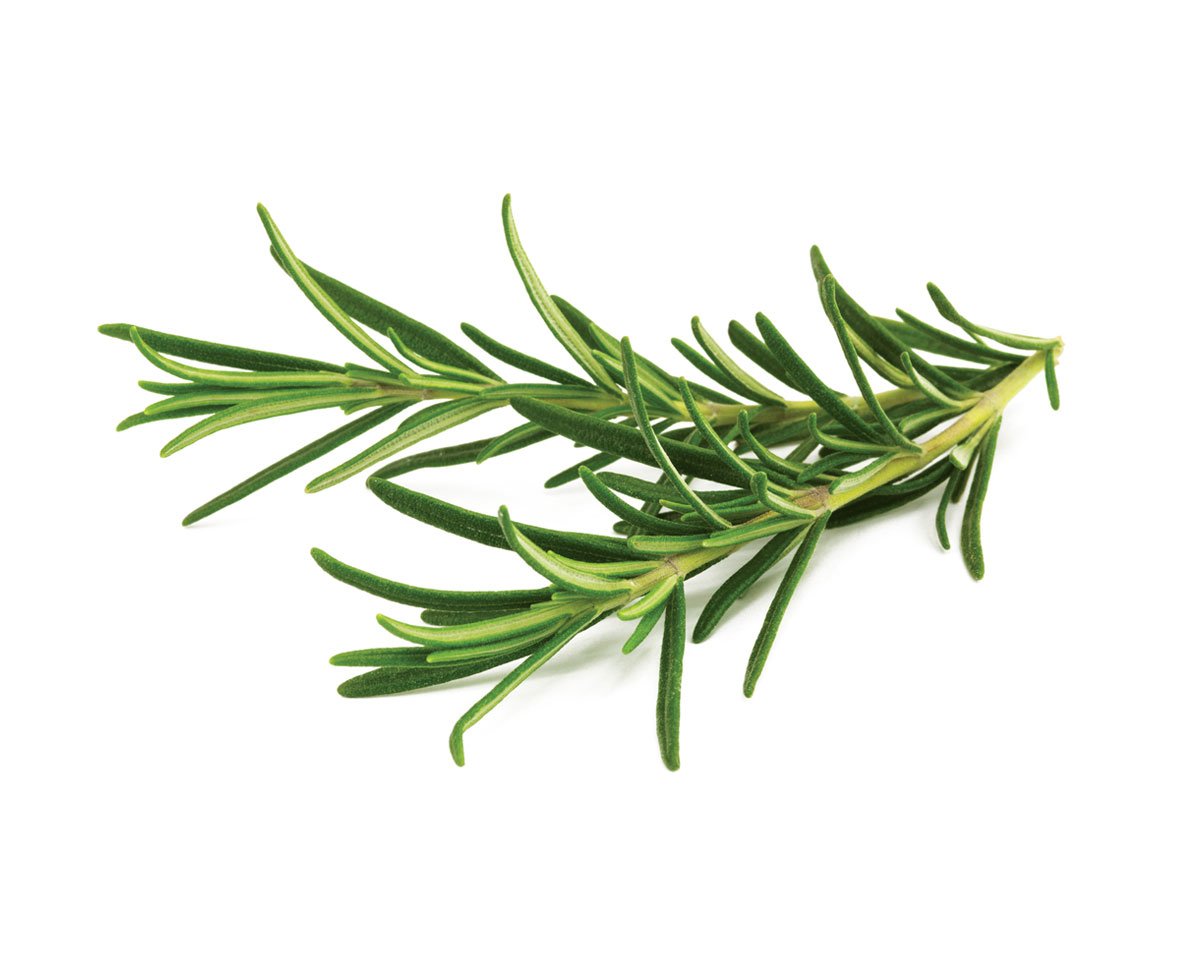
3-4 Large Sprigs of Fresh Rosemary
About 30 blonde pistachio nuts crushed into small pieces
1 tbl Dijon Mustard
15 Whole Peppercorns
1 Bottle low priced Red Zinfandel
1 Can Beef Broth

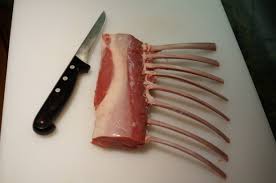
Start to French Cut the rack.  Basically, this is trimming down the bone on each piece to the meaty part.  Continue to scrap all of this part of the bone. Also, remove any fatter pieces, which they should only be one large one.

Save all of these scrapings. In a 2-3 qt stove pot, add the olive oil and lamb scrapings, heat till the scrapings begin to melt. Add the garlic and half of the rosemary. Cook for about 30 minutes without burning. Add one full bottle of red Zinfandel and one can of beef broth. Continue to simmer until the wine/broth reduces to about 1/3.

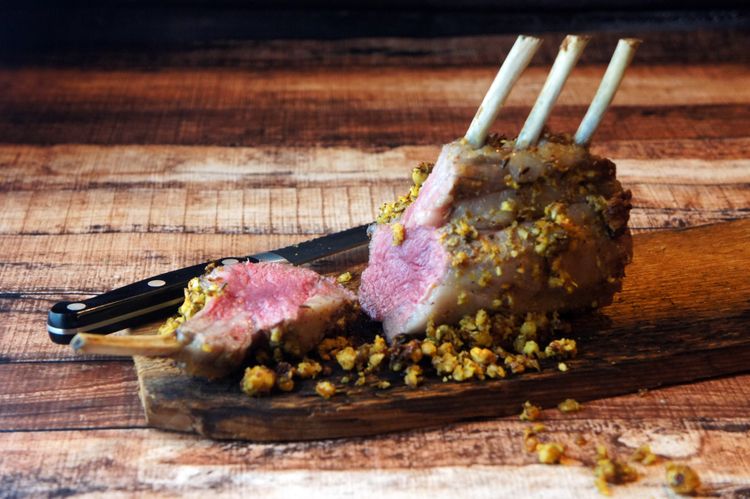
Meanwhile, take your rack out, salt/pepper it and they quickly sear it on a very hot pan for about 2 minutes per side at the most. Remove from heat and put aside. When the lamb is cooled, spread the Dijon mustard on both sides. Press on the crushed pistachio nuts on both sides, with the most on the natural top side of the rack.

Strain the sauce, return to heat, add some more of the fresh rosemary, leaving only enough to garnish. Continue to heat until you have a thick rich sauce.

In a hot oven or broiler, cook the Lamb no longer than 25 minutes. Remove from the heat; let it rest for about 5 minutes. Cut into the rack, so you have 6 individual pieces.

This goes great with Garlic-mashed red potatoes and grilled Asparagus.

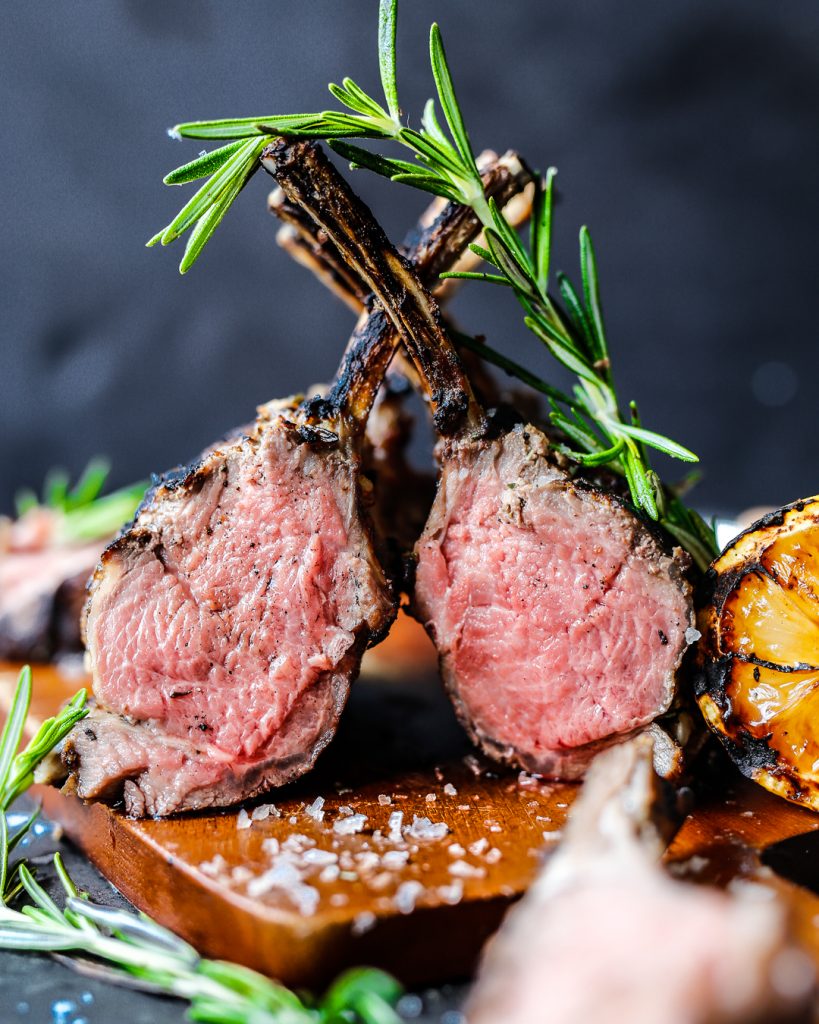
Put a good amount of the potatoes in the middle of the plate. Proceed to place the pieces of lamb so that the bone ends are up in the air and surround the potatoes.

Pour some of the wine sauce around the lamb pieces, snip a few pieces of the remaining rosemary around the plate.

Wine
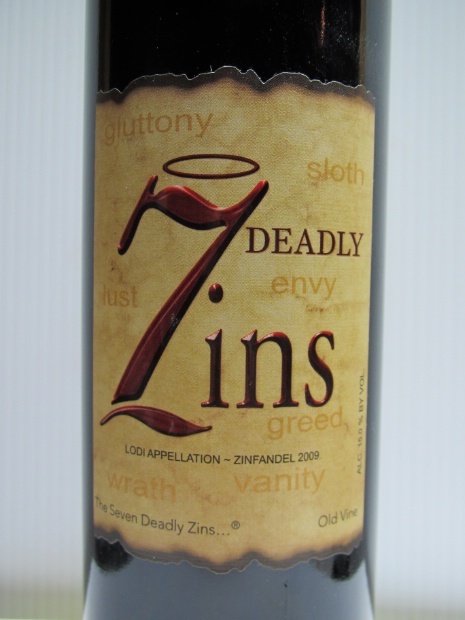
 Big Bold Red Zinfandel from  California,  my favorite, 7 Deadly Sins 


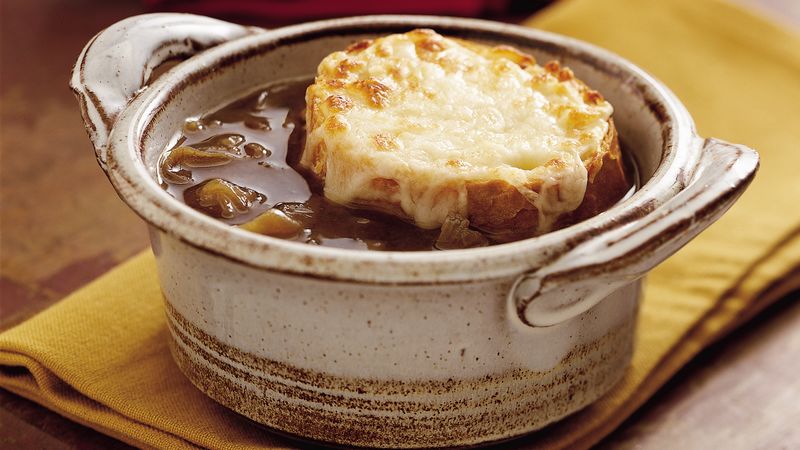
French Onion Soup


Ron’s French Onion Soup Recipe

Total time: 3 hrs 25 minutes, which includes about 45 minutes of standing

Ingredients:

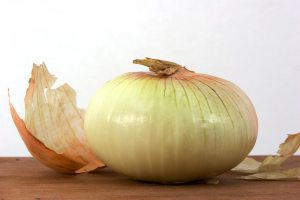
  • 5 lbs onions (a combination of American Yellow and Vidalia)
  • 2 tablespoons butter or oil
  • 1/4 cup sugar
  • 1/8 cup cognac
  • 10 cups beef broth
  • Salt and pepper
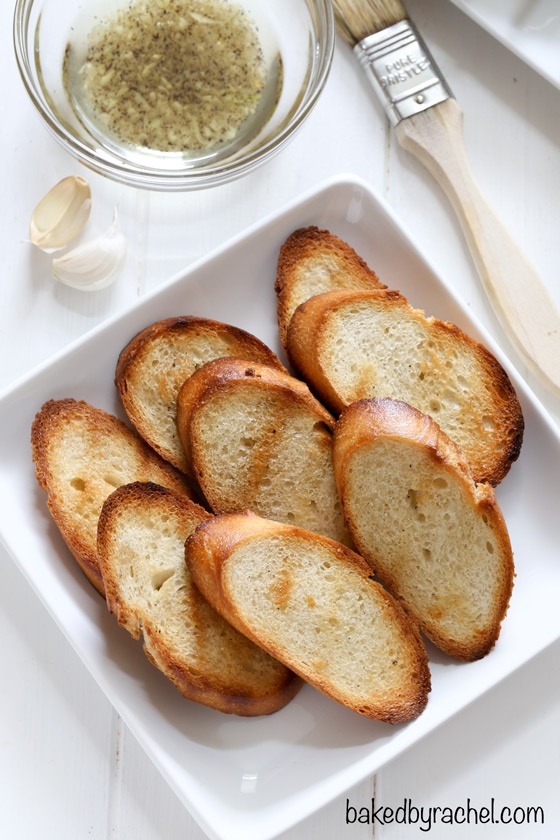
  • French bread, toasted
  • Gruyère cheese
  • Parmesan cheese
  • Cream sherry (optional)


Method:

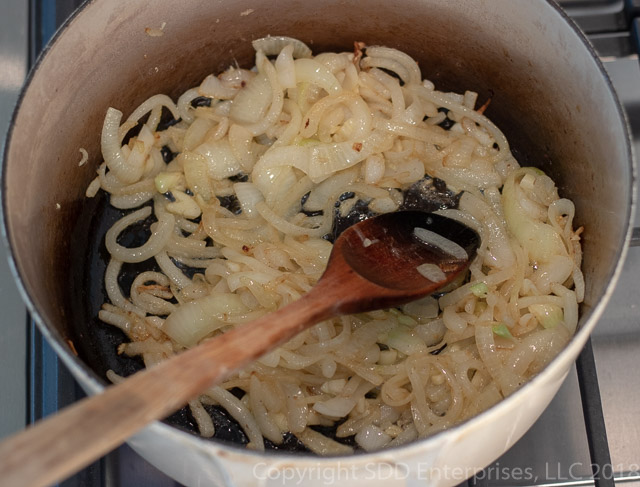
  • Slice the onions while sitting comfortably at a table. Sauté the sliced onions in the butter or oil for 15 minutes. Add sugar, salt, and pepper, and sauté at a higher temperature for about 45 minutes until onions caramelize. (Ron only needs to go to the stove every 8-10 minutes during this time. Otherwise, he takes a seat and enjoys his glass of wine.)
  • After the onions are slightly amber, add flour and turn heat to low, stirring occasionally for 15 minutes. Slowly add the cognac and flambé the mixture.
  • Finally, add the broth, salt and pepper to taste, and cover and simmer for 2 hours. Ron recommends serving the soup the next day, after the onions and broth have had time to soak together.
  • If you are serving the soup immediately, preheat the oven to 375 degrees Fahrenheit about 15 minutes before the soup is done.
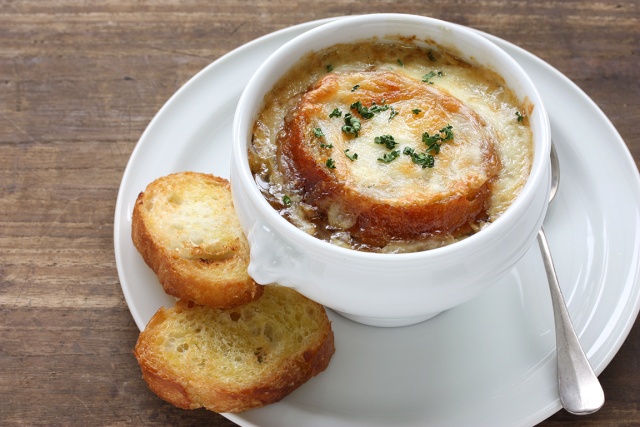
  • Before serving, remove some of the onions from the broth and prepare each individual bowl: fill the bowls with soup, and place toasted bread and generous amounts of Gruyère and Parmesan cheese on top. Bake at 375 for 15 minutes.
  • If you do not have a soup dish that can bake in the oven, Ron recommends using two or three smaller pieces of toast, and microwaving individual bowls until the cheese on top melts.


Note: Depending on the type of onions you use, you may need to add a little Cream Sherry before serving. Ron uses a combination of the standard American Yellow onions along with the sweeter Vidalia onions.

Wine
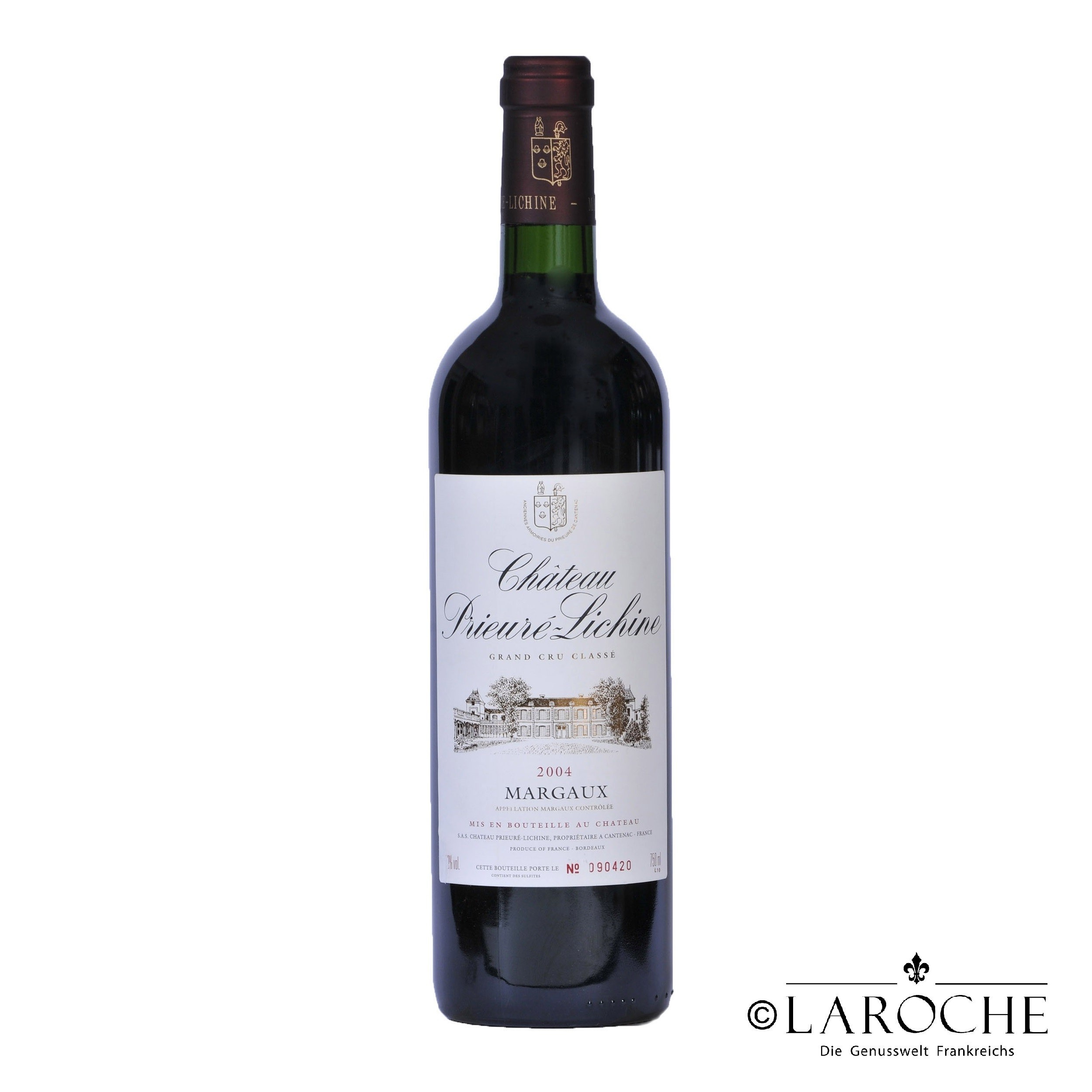
French bordeaux from either the St Julien or Magaux appellations


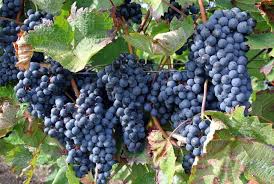
Grapes


I was  fascinated by the history of grapes , when they first were planted and used to make wine.   Then how all the various species of vine types made their way across the world creating specific styles of wine.

It all started over 6,000 to 8,000  years ago in the Near East.

Earliest record of fermented wine is from 8,000 years ago in Georgia. 
Earliest recorded winery is from 4,000 years ago in Amenia
9th century AD in the city of Shiraz created the finest wines in the Middle East
Eventually grape growing made its way to Europe and North America.

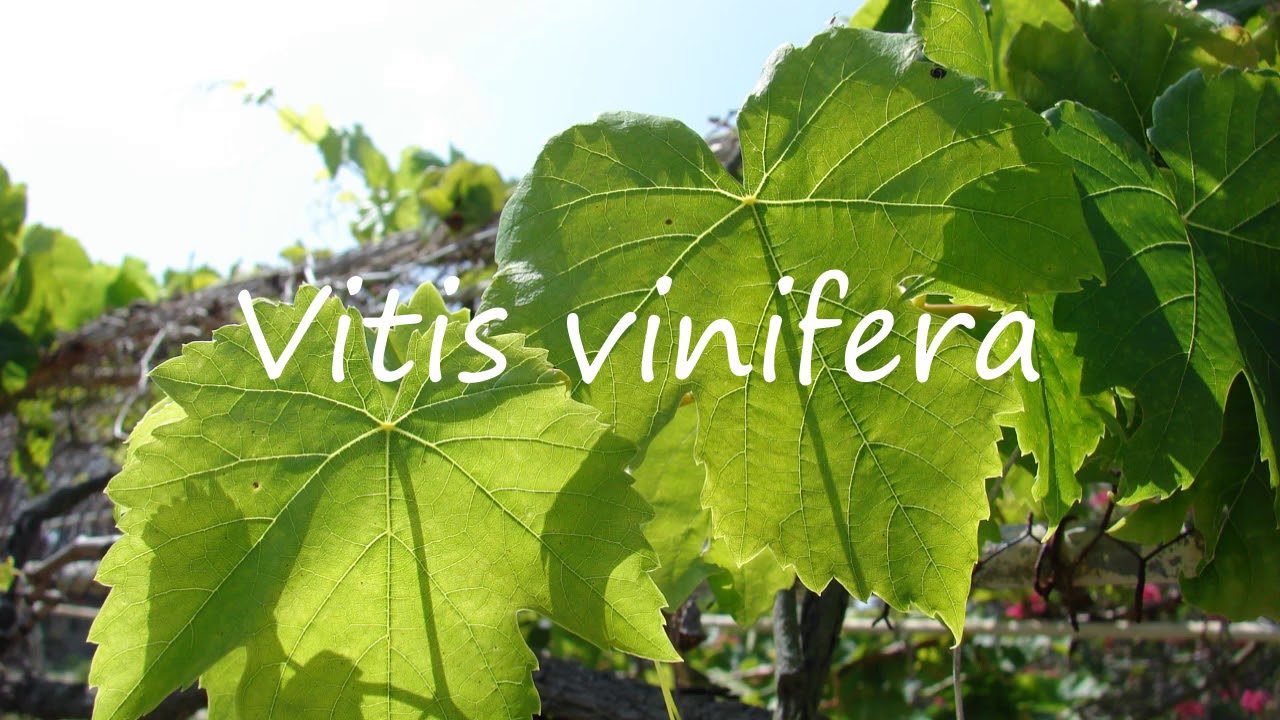
The main grape vine (or father of all vines) is  Vitis Vinifera


This is the main grape type used in making the wine classics from Europe, Australia, Germany, Italy, Spain and the United States.  From this original species came the common grape varieties we know today.  The Cabernet Sauvignon, Merlot, Chardonnay, Pinot Noir and more.

Further break out of the Vitis Vinifera grapes are

Amurenis              Mostly in Asian wines
Labrusca               North America, producing foxy wines, ie Concord
Mustangensis    Mississippi,Alabama,Texas, Oklahoma
Ripara                    Wines and Jams, East Coast USA up to Quebec
Rotundifolia        Wines and Jams, Southern USA Delaware to Mexico

Grapevines and grapes are grown just about in every country throughout the world.  Even in the driest or coldest of climates, there are grapes to be grown.  And where grapes are grown, wine is to be made.

Here are the top areas that plant vines / grapes for wine making purposes

Spain                               11,750  (all in km)
France                              8,640
Italy                                   8,270
Turkey                             8,120
United States              4,150
Argentina                     
2,080
Australia                       
1,642

The partial destruction of Grapes in Europe

Grape phylloxera  (an insect) originated in France.  By the late 19th century, most of Europe vines were destroyed by phylloxera, mostly in France.  Phylloxera insect is native to North America, where for the most part the grapes were resistant to the insect.  Not so with Vitis Vinifera.

To combat this, most European vineyards developed a practice of grafting

their vines onto North American root stocks.   This was not suppose to have any impact on the actual growing or quality of the grape.   But you will hear many stories that say, the French wines prior to phylloxera were superior to any wine grafted onto an American root!  Whatever the case, this practice saved Europe and allowed for the continuing growth and cultivation of grapes.

The Grapes  (Here are just some of the more popular)
I took this list from www.wineturtle.com to include a link to each of the following grapes.

Appellations


Each country has specific rules and regulations that goven many particulars about where the wine is grown, what grapes can be used, etc.


FRANCE  (Highest level to 3rd level)

AOP: Appellation d’Origine Protégée  Began in 1937 starting with the 11 main regions of grape growing.  (Bordeaux, Burgundy, Loire, etc).  The AOP specifies the grape varieties that can be used, the alcoholic content of a wine,  aging requirements and more.  This also further breaks down into

Special Classification    Regional cru or classification
Commune Village           ie:  Saint Julien, Pouilly- Fusse,  Montrachet
Sub Regional                    ie:  Medoc, Macon-Villages
Regional                             ie:   Bordeaux, Burgundy

IGP (Indication Géographique Protégée,)   (Vine de Pays)  Means country wine.  It identifies six regional areas of France.  Wines made from here, have to adhere to specific standards.  They are not as strict as those from AOP, but all the wines still must be submitted for analsis and testing.  Vine de Pays created in 1973 was replaced by IGP in 1979

Vin de France Basically means table wine. These wines are generally labeled by their grape varietal (ie Chardonnay), can not include a Controlle , but they can say  that they are a product of France


ITALY


DOC:    Denominazione di Origine Controllata
DOCG: Denominazione di Origine Controllata Garantita


First established in 1963 for the purpose of identifying and promoting the indigenous grape varietals use in Italian wines.  This classification does not always identify the actual quality of the wine.

These wines are many times broken down further to
ClassicoNarrows down the specific region
Superiore Higher standards in the quality of the grape and minimum aging requirements.
Riserva Mainly refers to the extended aging of the wine and those made from exceptional vintage years

IGT :  Indicazione Geografica Tipica
Created in 1992 to add wines that did not meet the DOC or DOCG standards but still had excellent regional characters.  A perfect example of a IGT wine are the Super Tuscan.   These wines are made from not only native Italian grapes, but from grapes known in other countries.   The Super Tuscan generally are a blend of Sangiovese, Cabernet Sauvignon and Merlot.   The two most famous  Super Tuscan are  Tignanello and Sassicaia which can be pricier than many DOC or DOCG wines.

VDT:  Vino da Tavolo
Basically means table wine.  These are the Italian wines you will see labeld Rosso or Bianco.   There are not many rules or regulations that goven the production or bottling of these wines.


SPAIN

Denominación de Origen (DO)
Denominación de Origen Protegida (DOP)

VINO de Pago                Special vineyard classifications
DOP (DOC&DO)
DOC                                   
Rioja and Priorat
DO                                     
Mentrida, Bierzo
IGT / VDiT                       Castilla, Cordoba

Aging is critical to all Spanish Wines, especially Tempranillo

Tinto/Robo             Little to no oak aging       
Crianza                     
Some Oak and bottle aging, Rioja requires 12 months
Reserva                   
Has both Oak and Bottle aging , 1 year in oak, 2 years in bottle
Gran Reserva       
Extended aging 2 years in Oak 4 or more years in bottle


UNITED STATES

American Viticulture Area (AVA)
Began in 1980 to identify grape-growing area with unique geographic and cultural features that influence a wine’s taste and quality.  AVAs can get confusing because they add Sub-AVAs into the mix, so there are really no geographic boundaries that are firmly established.
For example, Calistoga AVA is a sub AVA of Napa Valley AVA, which is a sub AVA of the North Coast AVA
One main restriction is for a wine to carry a AVA classification, the wine must have 85% of the grapes coming from a single AVA


Wine Dinners


                      WINE DINNERS


Coordinating and executing wine dinners can be a large task, but can also be so much fun.    I live in a private Lake Club Community, Candlewood Lake Club in New MIlford, CT.   Each year, I organize a Wine Dinner.

I always pick a theme of the dinner to make it a bit more interesting.   In the past number of years, some of my themes have been

Champagne Night
Regional Wines (CT and NY)
Around the World in 80 Wines
Dont wine for me Argentina

The easy part is pick out the theme.   Once I have that in place, I start to select a group of wines that I would like to use at the dinner.   All of the dinners are 7 course meals, so, I start with about 30 or more wines that I would like to go with.   I pick out several  “Welcome to the Dinner” wines,  wines to go with the initial course, and step through right up to the desserts.   I spend some time going over these list of wines, until I have the ones that I really want to use.

My next step is to start working with our caterer.  Since the caterer is the one that does all of the club’s social events, I get to know them very well.    I sit down with their head chef and tell them about my theme and then identify the wines I want to use at each course.   From that point on, we work together on coming up with the best pairing dish for that particular course.    This can go on for weeks.  I always give myself about 2 months lead time in preparing for these dinners, because I know there will be a lot of give/take, discussions, tastings about the different food that will be served.   I rely on the chef’s experience about food, and I rely on my experience on wine and food pairing.   Plus I have an additional resource.  My son is a formal chef, so I have always bounced things off of him.   I have had some battles with the caterer ,  mainly because he would want to serve this dish and I didnt think it went well with the wine I selected.  Since it was my dinner, I would continue ‘discussing’ these concerns until we had a joint agreement.

So, now I have the Theme,  I have the Wines and I have all the Courses of Food.

Now I begin on preparing the various materials I provide for each table.
I like to name each table after a specific wine or wine region.   I place a 5×7 laminated card at each place setting identifying each food course, the wine and a brief description of both.   Then at each table ,  I provide some basic information about the Wines being served, How some of the food was prepared, general tasting instructions and whatever I think is appropriate for that given tasting.

I love using props.   For the Sparkling Wine dinner, I gave a simple presentation of sabering (which failed).  I explained how each champagne, sparking wine, or beer caged cork cage will come off in exactly 5 and 1/2 turns.   Told people they could win bets on this, since it is valid for any cage I have seen from any country.    For the Around the World in 80 Wines dinner, I had a large map in front of the room, which large colored pins pointed to the country/region of the wines that we would be tasting.  I would use a marker to draw the paths we took from one place to another.   (ie staring in California, flying to New York, jetsetting over to Europe, , etc)   My most fun was at the Dont Wine for me Argentina.    I dressed up as a Argentina Gaucho.  Black pants, white shirt,  a fake knife (facon) and a cloth belt (Faja).  I put on a gaucho Hat and wore typical gaucho boots.    To me, it was fun doing that, plus it lightens the mood of the audience.

Through out the evening, between courses, I would stand up and talk about various items that pertained to that particular dinner theme.   I talked about how Champagne is made, why Champagne can come only from France and the rest is Sparkling Wine.  That Torrentes is a grape that is unique to Argentina, that Malbec originated in France, and was used more for blending, etc.

My objective was to make the wine dinner a perfect pairing of food and wine.
To demonstrate just how much correct pairing can enhance both the food and wine.   I love to educate anyone on wine, but I also wanted everyone to have fun and enjoy the evening.


Wine Dinner Menus and Wines

———————————————————————————–
 CLC Wine Dinner 2006
Sparkling Wines
————————————————————————————

Introduction                                                                           Spanish Frexinet

Parmesan Reggiano  (Italian)
Camembert   (French)
Spanish Manchego  (Spanish)

First Course                                                                           Blanc de Blanc

Fresh Tuna Trio
  Tuna tartar, tuna roll and tuna tonnato
  garnished with a cucumber amuse

Second Course                                                                  Italian Processco Brut

Goat Cheese and Herb Polenta topped with
grilled portabella mushrooms and a balsamic
buerre blanc

Third Course                                                                         French Rose Champagne

Grilled Pesto Shrimp served over a saffron-tomato
Risotto sauce with kalamata olives and crumbled feta

Fourth Course                                                                       California Brut Vintage

Shitake Crusted Filet Mignon. Sauced with an
Asian demi-glace served over a cold sesame noodle
salad.

Fifth Course                                                                           SEC

Rocky’s Angel Food Cake with two sauces
 lemon and raspberry)

 ———————————-————————-————————-
CLC Wine Dinner Menu 2007
Wine Pairing with Food
————————————————————————————

Welcome                                                         Chardonnay with Cassis (Kir)
Cheese and Crudites Platter

First Course                                                  2006 Villa Rosi Gavi

EGGPLANT and White Bean Tapa
Diced eggplant sautéed with zucchini , white beans, tomatoes, garlic and fresh herbs garnished with pesto

Second Course                                          2006 Saladini Pilastri Rosato

Mini-Potato and Forest Mushroom Lasagna
In a chive béchamel sauce

Third Course                                              2006 Coopers Creek Dry Riesling

Fresh Crab-Crusted Cod
Served over a vegetable risotto with a lobster sherry sauce

Fourth Course                                          2006 Joel Gott Zinfandel

Braised Short Ribs
Done Osso Bucco style with vegetables and herbs served with wilted spinach and mashed potatoes

Fifth Course                                            2005 Hayman Hill Meritage

Assorted Cheeses and Jellies

Sixth Course                                           Taylor Fladgate 10yr

Triple Chocolate Mousse
Three layers of mouse, dark chocolate, milk chocolate and white chocolate on a thin layer of chocolate cake sauced with a raspberry puree


————————————————————————————

 CLC Wine Dinner Menu 2008
Regional Wines (CT and NY)
————————————————————————————


Welcome                                                  Hopkins Dry Cider

Apples/Pears Chutney, Chicken Pate  and Nuts


First Course                                           Stonington Seaport White

New England Clam Chowder
Classic New England fresh clam chowder seasoned with bacon, fresh thyme, carrots, celery and red potatoes.

 Second Course                                  Chamard Chardonnay Reserve

Fresh Corn-Fried Oysters
Served with a horseradish cream, avocado salad and cherry tomato salsa


Third Course                                        Stonington Triad Rose

Layered Vegetable Tower
Portabella mushrooms, wilted spinach, roasted peppers, tomatoes
Zucchini whipped goat cheese served on a bed of mixed greens

Fourth Course                                   DiGrazia Fieldstone Reserve

Pumpkin Ravioli
In a fresh sage butter sauce garnished with pecorino romano fresh sage butter sauce garnished with pecorino romano cheese.

Fifth Course                                   Pellegrini Cabernet Franc

Beef Braciola
Filet mignon pounded thin, rolled and stuffed with pancetta, spinach, mushrooms and ricotta cheese sauced a tomato-demi glace

 Dessert                                           Tomasello Blackberry wine
DiGrazia Blacksmith Port

Flourless Chocolate Cake
Served with a raspberry puree and mocha whipped cream


 ———————————-————————-————————-

 CLC WINE DINNER – 2011
Around the World in 80 Wines
————————————————————————————


Welcome – Selection of Cheeses and Dips      Domain Chandon Brut

First Course                                                                     Oyster Bay Sauvignon Blanc

House Cured Salmon and Salmon Tartare
with grilled flatbread and a noodle salad

Second Course                                                              Dr. Loosen Riesling
Brats and Slaw
bratwurst in a light mustard sauce
served with German potato salad and red cabbage slaw

Third Course                                                                BrainCain Tre Super Tuscan

Fresh Domestic Mozzarella and CT Farm Tomatoes
layered with Parma Proscuitto and drizzled with fresh basil,
garlic, extra virgin olive oil and a balsamic reduction

Fourth Course                                                           Les Lauzeraries Tavel Rose

Wild Mushroom and Goat Cheese Tart
served on a pool of French vichyssoise

Fifth Course                                                               Clos de los Siete

Grilled Sirloin Steak
topped with chimmichurri sauce on a bed of Spanish risotto with chorizo sausage, red bell pepper and corn

Dessert                                                                       Fonseca Bin 27 Port

Chocolate Mousse Torte
served with a raspberry puree
and mocha whipped cream


————————————————————————————

Candlewood Lake Club Wine Dinner  2012
“Don’t wine for me Argentina”
————————————————————————————

Had to dress like a gaucho from Argentina!


Welcome                                                                 Pascual Toso Brut

Selection of Opening Snacks

First Course                                                          Crios Torrontes

 Provaleta
toasted french round topped with provolone cheese
sprinkled with oregano and chili pepper
drizzled with chimmichurri

Second Course                                                 Felino Chardonnay

 Grilled Shrimp
wrapped with bacon served with a cilantro butter

Third Course                                                    Crios – Rose

Grilled Short Rib and Manchego Empanadas
wrapped in pastry with wild mushrooms

Fourth Course                                                La Posta Cocina

Grilled Baby Lamb Chops and Chorizo
served with a tomato sofrito glaze
and a mango-black bean salsa

Fifth Course                                                 Felipe Rutini Malbec

Grilled Filet Mignon
Topped with a Argentinean cabernet-smoky chilpolte reduction
served on a bed of Spanish paprika roasted sliced potatoes

Sixth Course

Flourless Chocolate Cake
served with mocha whipped cream,
grilled pineapple and a mango puree


Wine Tastings


Over the past 40 years, I have run numerous wine tastings.   But I would like to break them down into these categories, because each of them have their own unique situations and demands

Private Home Wine Tastings
In Store Wine Tastings
Large Group Wine Tastings

Private Home Wine Tastings 

This are generally the most fun for me.  So much depends on the people at these tastings and the types of wines that will be tasted.   I’ve run tastings at my own house for friends, I’ve done it at other peoples home with their own set of friends.   And I’ve run a full range of prices from the  moderate priced wines (under $20) to higher priced wines ($25-$75) and then finally to the classics ($200-$500)

The first ting I always do is get to know the people that will be attending the tasting.  What experience level do they have with wine?  Can I find their basic likes and disk likes?   I meet with the host of those parties to better understand what they are looking for and what their overall objective is.   Some do it for just plain fun, some do it for educational purposes.   Once I know the audience, then I go about identifying the number of wines they would like to taste and the types.   Some wine tastings I’ve run we have had a sampling of all different styles of wine.  Others,  where I’ve concentrated on one particular grape.    I find their price range and then go about selecting the wines that I feel would best suit their desires.  Honestly, the most fun I have is when its all one grape style.  Nothing better than to serve 6 different Cabernet Sauvignon from California and and then seeing the differences between them and identifying their various style and attributes.    For many , they have so much fun tasting varied wines,  a Merlot, a Shiraz, a Pinot Noir, etc   This gives the audience a broad sense of what the different wines taste like and what they like or do not like.

I provide some basic instructional cards for everyone.   I dont want to do too much of this, because I have found over the years, people tend not to look at the material and would rather listen and taste!.

As the price point of the wines increase, my approach in handling the tasting also changes.  I will go into more details about the grape, the land,  the winemaker, the fermentation, bottling, etc.   Then discuss how each of these have an impact on the final product.

When it comes to the classics, its much more serious.  I’ve only run 3 of these, at the cost of about $250 per person.  Working through the store and with some wholesalers, I was able to serve some of the French classics including Lafite Rothschild, Latour, Haut Brion and Margaux.   At that type of tasting, I sit with the people at the table and we all discuss the wines.

In Store Wine Tastings

 I think the majority of the wine tastings I have run fall into this area.  Each retail store I have worked at had different ways to do their tastings.   Luckily for me, at the last store, the format of the tastings was left up to me and I was able to select the wines to be tasted.

Some retail stores run their tastings at specific hours (ie 12:00-5:00), while others run them all day long.   My preference is at specific times, because that gives me the opportunity to concentrate more on the tasting then on selling wines on the floor.

At the last retail shop, we had a CO2 dispenser, that kept the wine fresh and controlled the wine pours.  I would have three wines in there and then two wines I would pour the old fashion way. I really believe in using glass for tastings.  Its more work, a bit more expensive, but it adds so much to the actual tasting.

I would talk to the customer about the wine that they are about to taste.  ( the order would depend on the wines that were selected)  I gave them some brief information as to what to expect, what to look for and then allow them to start tasting the wine.   Right afterwards, I would ask each person who was tasting what their impression was.  No right or wrong answers here, whatever they felt after drinking the wine is what counted.

This type of tasting promotes a level of education and enthusiasm  for the customer.   I have had the same customers coming in day after day to see what wine we were tasting and listening to my explanations.

Large Group Wine Tastings 

Here I am talking about wine tastings for groups of 25 to 75 people.  These were generally social events set up by various clubs, churches, organizations, etc.  Most of the wines were limited to lower to medium prices ($7 to $15) and would consist of at least 8 different wine types.   These events were really more social oriented then for wine education.    I always brought material, left it at the main table, but only a hand full of people would bother to pick them up.    Overall, these were always more less favorite type of wine tastings.

When it was possible, I would want some type of cracker available for these tastings.  It is very important between wines to take a cracker before you go onto to the next wine.  Without doing this, wines can seem to run into each other and its hard to tell anything apart.   In CT, we were throttled by the State Liquor Authority.   No crackers, no cheese, nothing at wine tastings unless you wanted to add a food license to your existing beverage license.

Home tastings was always different.  We had the luxury in serving cheeses, grapes, honey, fruit and various meats that would compliment the wines.

I still enjoy and look forward to running wine tastings.  Its a part of me that gets excited when I see people enjoy different wines and learn about them.

Sauternes

Wine’s  Liquid Gold!

Sauternes has got to be one of my favorite dessert wines.   I remember having my first domestic Sauterne (Gallo) in the early 1970’s.   Just a sweet white wine with not a lot of flavor.  Not again.    Then on a trip to France in 1974, I had a taste of a real French Sauterne.   Now that was more that I ever hoped for.   It was full, rich with amazing aromas and flavors.  The nose was as if I just started to smell the autumn air full of pleasant aromas, spices and much more.   Then the taste, filled my mouth with this golden like honey liquid that hit every inch of my tongue and its senses.   There was apricot, honey, pear, apple and so many beautiful flavors, all mixing together to create a wonderful taste.   The finish was about as amazing as the taste.   It lingered and lasted it seemed for minutes.  I could almost feel, the wine gliding down my throat.  I would have to say in all of my wine experiences, no other wine has had that long lasting finish as a good Sauterne.

Now, a good French Sauterne is not inexpensive.    It comes from the village of Sauterne  ( Sauternais district )in the Graves region of Bordeaux.   The grapes used are Semillon, Sauvignon Blanc and Muscadelle.   But what really makes this wine special, is the over ripening of the grapes.

The French term is Botrytis Cinerea or Noble Rot 

This Noble Rot is also used in making the famous German Trockenbeerenauslese and the Hungarian Tokaji Aszú (many variations with the numbers 3,4 or 5)

Probably the most famous of all French Sauternes is Château d’Yquem.  It was rated as a Superior First Growth, the only Sauterne given this rating.   I was fortunate enough to taste a 1959 Château d’Yquem.  It was a wine that I will never forget.   These wines when properly stored can last a century!

The development of Botrytis cinerea is the key to a syrupy wine. In favorable conditions, with a combination of alternating rain and sun and a beautiful autumn season, grapes experience degradation through the development of this exceptional noble rot. This famous fungus roasts grapes by drying them out, which concentrates the sugar.  Harvest takes place exclusively by successive sorting (between three to five passages). Only grapes that have reached the ripening status are harvested, so the harvest must be hand-operated. That’s why yields are low (25 hl/ha maximum and even 8 hl/ha for some producers) and prices are high.

Once harvested, grapes are pressed, which ensures the delicate and progressive extraction of juice. After a slight settling, the must ferments in barrels (20% of barrels are renewed each year). The slow fermentation lasts from three to four weeks. Breeding is done in barrels for 12 to 18 months, depending on the vintage. Wines are bottled after a single  filtration.   Sauternes wines must have a minimum of 13% alcohol content and pass a tasting exam. There is no regulation about the exact amount of residual sugar that the wine needs to have.

Sauternes has been granted Protected designation of origin (PDO), and comes from the communes of Sauternes, Fargues, Bommes, Preignac, and Barsac, all of which are situated in the Graves region.

I am most familiar with wines from Barsac.  It is made the same way as a Sauterne, but generally is a bit lighter in body and less expensive.  I have never had any of the wines from those other communes.

A little story:   in 1837,  Marquis de Lur-Saluces  went to hunt wolves in Russia and gave the order to wait for his return before beginning the harvest. His journey home was delayed, and the noble rot had turned the grapes into prestigious wine nectar by the time he returned.  https://frenchfoodintheus.org/849

Do yourself a big favor, when  you have a little extra cash, splurge and buy a bottle of a French Sauterne.   You dont need to buy the Yquems,  since there are many other excellent Sauternes.

Chateau Giraud
Chateau Lafaurie-Peyraguey
Chateau Raymond-Lafon
Chateau Guiraud (Barsac)

Just like the classification of Red Bordeaux, there is a 1855 Classification of Sauternes and Barsac.   You will notice that Château d’Yquem. is not on this list, that is because it has its own special ranking –  Premier Cru Supérieur

First Growth Premiers Crus
La Tour Blanche
Lafaurie-Peyraguey
Clos Haut Peyraguey
Rayne Vigneau
Suduiraut
Coutet
Climens
Guiraud
Rieussec
Raubaud Promis
Sigalas Rabaud

Second Growths (Deuxièmes Crus)

de Myrat
Doisy Daene
Doisy Dubroca
Doisy Vedrines
d’Arche
Filhot
Broustet
Nairac
Caillou
Suau
de Malle
Romer
Lamothe Despujols
Lamothe Guignard


Ports

VINTAGE PORTS Warre 1985 , Pocas 2011 , Pintas 2011 , Corte 1997

Ports.     My first introduction to port wine was back in 1972 when customers were buying gallons of Gallo Port.  All I remember about that was it was a sickening sweet wine.


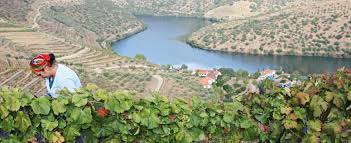
Today,  Ports have become one of my favorite after dinner wines.    But what is a Port?    The original  true ports come from Portugal and are called
vinho do Porto from the Duro valley

in northern Portugal.   Ports are classified as a fortified wine, which means that some form of distilled spirit, mostly brandy is added.   When this is added before the fermentation process,  the alcohol kills the yeast and leaves the residual sugar, which results in a sweet wine.   When it is added during the fermentation process, this will result in a dryer style of wine.

Port wine is made from 5 different grapes … (Tinta BarrocaTinto Cão, Tinta Roriz (Tempranillo), Touriga Francesa, and Touriga Nacional.   These grapes are very small and have dense fruit with produces concentrated and long lasting flavors.   Although they may be planted separately, the varieties are normally harvested and fermented together.   Each grape variety contributes its own particular character – such as the intense flavours of woodland fruit, delicate floral scents, exotic spicy notes or the wild resiny aromas of gumcistus – to the nose of the wine. The grape varieties work together like instruments in an orchestra to create a subtle, complex and multi-dimensional harmony.

Once they are picked, the grapes are taken to the winery. On the Taylor Fladgate estates they are carried in small trays to ensure that they are kept in perfect condition. On arrival in the winery they are evaluated by the wine maker and inspected on a sorting table before being de-stemmed. In the traditional process, still used to make the wines from Taylor Fladgate’s own estates, the grapes are then placed in wide, thigh-deep granite treading tanks known as lagares. Here they are trodden by foot.

The first stage of treading is called the corte, or ‘cut’, and involves crushing the grapes, which at this stage are still relatively solid, to release the juice and pulp from their skins. During this initial stage the treaders link up in a tight line and advance very slowly shoulder to shoulder across the lagar treading methodically and in unison to ensure that the grapes are thoroughly crushed. When the corte has been completed, the second stage begins. This is called the liberdade or ‘liberty’. The treaders now work individually, moving freely around the lagar ensuring that the grape skins are kept submerged under the surface of the wine. After a few hours the fermentation begins and the heat and alcohol it produces begins to release the colour, tannins and aromas from the skins allowing them to be diluted in the fermenting wine. The treading is sometimes supplemented by the use of long wooden plungers called macacos used to punch the skins down under the surface of the wine.

This phase of the process is vital to the making of quality Port. Research by Taylor Fladgate’s wine making team shows that, although expensive and laborious, treading is still the best way of achieving gentle but complete extraction, producing wines with structure, depth of flavour and balance. Similar results have, however, been achieved by mechanical extraction systems, particularly by the innovative fermentation tanks developed by Taylor Fladgate and installed at the company’s winery at Quinta da Nogueira.

When about half of the natural sugar of the grape juice has been turned into alcohol by the fermentation, the wine maker gives the signal for the fortification process to start. The treading stops and the skins are allowed to rise to the surface of the lagar where they form a solid layer. The wine fermenting under this cap of skins is then run out of the lagar into a vat. As the fermenting wine pours into the vat, a very clean young wine brandy is added to it. This colourless neutral spirit, at strength of 77% alcohol, is usually added in a ratio of about 115 litres of brandy to 435 litres of fermenting wine although this proportion can vary.

The addition of the spirit raises the strength of the wine to a level where the yeasts responsible for fermentation can no longer survive. The fermentation stops before all the sugar in the juice has been turned into alcohol and some of the natural sweetness of the grape is thus preserved in the finished wine.

Credit to: https://www.taylor.pt/us/what-is-port-wine/how-is-port-made

Port wine generally ranges from 16% to 18% alcohol.

Types of Ports 

Ruby  Bright ruby red color, generally the sweetest of all ports.   Does not  improve with age.  Normally aged from four to six years.


Tawny  Made like the Ruby, but is aged in wooden barrels that allow for oxidation and evaporation.  These ports pick up a golden brown color and are not as sweet as the Ruby port.  Most Tawny ports are store in wood with several different vintage years.   Thus when you buy a Tawny Port you will find the age as 10, 20, 30, or 40 year old.


Late Bottle Vintage  These ports were originally destined to become vintage ports, but for whatever reason are left in the barrel  longer than expected.  Most LBV are aged  4 to 6 years in the bottle  This produces a Vintage like Port but without the need for bottle aging.


Vintage  Vintage ports  are from one year’s harvest.   They  are aged in stainless steel or wood for a maximum of two and a half years before being bottled.  Then they start to age in the bottle from ten to forty or more years.  Unlike Tawny Ports, the Vintage Ports maintain the ruby color and sweetness but with so much elegance and smoothness.  Vintage ports  can last almost forever.   I have had a Vintage Port from 1915 which was rich and full.  The store in Long Island I worked for had


The IVDP (Instituto do Vinho do Douro e Porto) is situated in an old and unassuming bank building in Oporto. In a governmental decree issued on the tenth of April in 1933, the Port Wine Institute was established. Its main mission is to administer quality and guarantee the origin of Port. The IVDP also has the authority to perform sensorial tests on Port wine and accept or reject the samples prior to their being bottled.IDVP’s Seal of Gurantee.

The requirement for Ports exported with this seal has changed greatly over the years.  For many years it was mandatory,  after 1997, Port wines should always have these seal.


Another fact that always amazed me was the white ‘chalk’ mark on the bottles of Port.  The chalk mark, sometimes known as the splash mark

,     is a dash of white chalk or paint placed on the side of a bottle of Vintage Port to show in which position it was stored in the Port house’s cellar.


One of my favorite ways to enjoy Port is with Nuts and a cigar.   But since I had quadruple bypass heart surgery in 2018, I have to forgo the cigar!

Ports are a treat, you really should try one