


Ports. My first introduction to port wine was back in 1972 when customers were buying gallons of Gallo Port. All I remember about that was it was a sickening sweet wine.
Today, Ports have become one of my favorite after dinner wines. But what is a Port? The original true ports come from Portugal and are called
vinho do Porto from the Duro valley
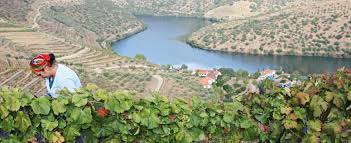
in northern Portugal. Ports are classified as a fortified wine, which means that some form of distilled spirit, mostly brandy is added. When this is added before the fermentation process, the alcohol kills the yeast and leaves the residual sugar, which results in a sweet wine. When it is added during the fermentation process, this will result in a dryer style of wine.
Port wine is made from 5 different grapes … (Tinta Barroca, Tinto Cão, Tinta Roriz (Tempranillo), Touriga Francesa, and Touriga Nacional. These grapes are very small and have dense fruit with produces concentrated and long lasting flavors. Although they may be planted separately, the varieties are normally harvested and fermented together. Each grape variety contributes its own particular character – such as the intense flavours of woodland fruit, delicate floral scents, exotic spicy notes or the wild resiny aromas of gumcistus – to the nose of the wine. The grape varieties work together like instruments in an orchestra to create a subtle, complex and multi-dimensional harmony.
Once they are picked, the grapes are taken to the winery. On the Taylor Fladgate estates they are carried in small trays to ensure that they are kept in perfect condition. On arrival in the winery they are evaluated by the wine maker and inspected on a sorting table before being de-stemmed. In the traditional process, still used to make the wines from Taylor Fladgate’s own estates, the grapes are then placed in wide, thigh-deep granite treading tanks known as lagares. Here they are trodden by foot.
The first stage of treading is called the corte, or ‘cut’, and involves crushing the grapes, which at this stage are still relatively solid, to release the juice and pulp from their skins. During this initial stage the treaders link up in a tight line and advance very slowly shoulder to shoulder across the lagar treading methodically and in unison to ensure that the grapes are thoroughly crushed. When the corte has been completed, the second stage begins. This is called the liberdade or ‘liberty’. The treaders now work individually, moving freely around the lagar ensuring that the grape skins are kept submerged under the surface of the wine. After a few hours the fermentation begins and the heat and alcohol it produces begins to release the colour, tannins and aromas from the skins allowing them to be diluted in the fermenting wine. The treading is sometimes supplemented by the use of long wooden plungers called macacos used to punch the skins down under the surface of the wine.
This phase of the process is vital to the making of quality Port. Research by Taylor Fladgate’s wine making team shows that, although expensive and laborious, treading is still the best way of achieving gentle but complete extraction, producing wines with structure, depth of flavour and balance. Similar results have, however, been achieved by mechanical extraction systems, particularly by the innovative fermentation tanks developed by Taylor Fladgate and installed at the company’s winery at Quinta da Nogueira.
When about half of the natural sugar of the grape juice has been turned into alcohol by the fermentation, the wine maker gives the signal for the fortification process to start. The treading stops and the skins are allowed to rise to the surface of the lagar where they form a solid layer. The wine fermenting under this cap of skins is then run out of the lagar into a vat. As the fermenting wine pours into the vat, a very clean young wine brandy is added to it. This colourless neutral spirit, at strength of 77% alcohol, is usually added in a ratio of about 115 litres of brandy to 435 litres of fermenting wine although this proportion can vary.
The addition of the spirit raises the strength of the wine to a level where the yeasts responsible for fermentation can no longer survive. The fermentation stops before all the sugar in the juice has been turned into alcohol and some of the natural sweetness of the grape is thus preserved in the finished wine.
Credit to: https://www.taylor.pt/us/what-is-port-wine/how-is-port-made
Port wine generally ranges from 16% to 18% alcohol.
Types of Ports
Ruby Bright ruby red color, generally the sweetest of all ports. Does not improve with age. Normally aged from four to six years.
Tawny Made like the Ruby, but is aged in wooden barrels that allow for oxidation and evaporation. These ports pick up a golden brown color and are not as sweet as the Ruby port. Most Tawny ports are store in wood with several different vintage years. Thus when you buy a Tawny Port you will find the age as 10, 20, 30, or 40 year old.
Late Bottle Vintage These ports were originally destined to become vintage ports, but for whatever reason are left in the barrel longer than expected. Most LBV are aged 4 to 6 years in the bottle  This produces a Vintage like Port but without the need for bottle aging.
Vintage Vintage ports are from one year’s harvest. They are aged in stainless steel or wood for a maximum of two and a half years before being bottled. Then they start to age in the bottle from ten to forty or more years. Unlike Tawny Ports, the Vintage Ports maintain the ruby color and sweetness but with so much elegance and smoothness. Vintage ports  can last almost forever. I have had a Vintage Port from 1915 which was rich and full. The store in Long Island I worked for had
The IVDP (Instituto do Vinho do Douro e Porto) is situated in an old and unassuming bank building in Oporto. In a governmental decree issued on the tenth of April in 1933, the Port Wine Institute was established. Its main mission is to administer quality and guarantee the origin of Port. The IVDP also has the authority to perform sensorial tests on Port wine and accept or reject the samples prior to their being bottled.IDVP’s Seal of Gurantee.
The requirement for Ports exported with this seal has changed greatly over the years. For many years it was mandatory, after 1997, Port wines should always have these seal.
Another fact that always amazed me was the white ‘chalk’ mark on the bottles of Port. The chalk mark, sometimes known as the splash mark
 , is a dash of white chalk or paint placed on the side of a bottle of Vintage Port to show in which position it was stored in the Port house’s cellar.
One of my favorite ways to enjoy Port is with Nuts and a cigar. But since I had quadruple bypass heart surgery in 2018, I have to forgo the cigar!
Ports are a treat, you really should try one