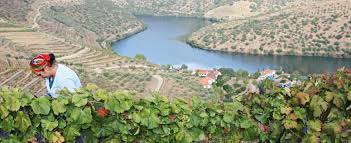
Rose and Spring

Spring is around the corner and the one wine really that speaks Spring is ROSE
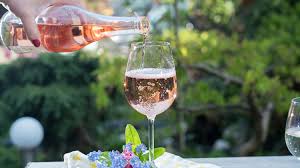
How does this wine get the pink color?  Are there pink grapes?

Wikipedia Answer:  Rosé wines are made from a wide variety of grapes and can be found all around the globe. When rosé wine is the primary product, it is produced with the skin contact method. Black-skinned grapes are crushed and the skins are allowed to remain in contact with the juice for a short period, typically two to twenty hours.

When any grape is first crushed (white or red) the fruit juice is always clear. The color is determined by how long this clear juice is left in contact with the grape skins.  So basically, white wines do not stay in contact with the white grape skins very long, where red wines stay in contact with the red grape skins longer.   As Wikipedia’s definition (above)  Rose wines are made from red grapes, but the resulting juice does not stay in contact with the red grapes for extended periods of time.  The less time the juice is in contact, the lighter color rose will result, where the longer the contact, the darker the color.

Some misconceptions about Rose wine

“Rose wines are made by mixing White and Red Wine”   This is NOT true.
“White Zinfandel is not a Rose”  But it is, its just a very sweet rose.
“The darker the color of the Rose wine, the sweeter it will be”  NOT true             

The early days of Rose wine

While I do not have any accurate dates when Rose wines started to blossom in the wine world, but the early Rose wines came from:

France: 
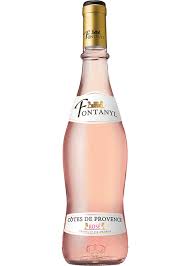
Cote d Provence (light and refreshing)
Tavel ( more body and color and not as dry


Portugal:
Mateus,  Lancers were the big name brands and they tend to be on the sweet side


United States:
All the blush wines, the sweeter ones from the Finger Lakes in New York and the White Zinfandel from California


Where Rose is being made today

Just about every wine producing country/region is now producing Rose wines.  Each is somewhat unique, made from different grapes or a blend of grapes.

Some of the more interesting of these Roses are:

Italy:
Made from the Sangiovese grape resulting in a fuller body wine
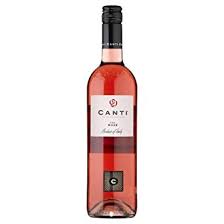


Portugal: 
Now making Rose from many of the grapes from the Douro valley plus many other grapes

New Zealand:
Many made from the Pinot Noir grape resulting in a bigger and not a completely dry wine

Austria: 
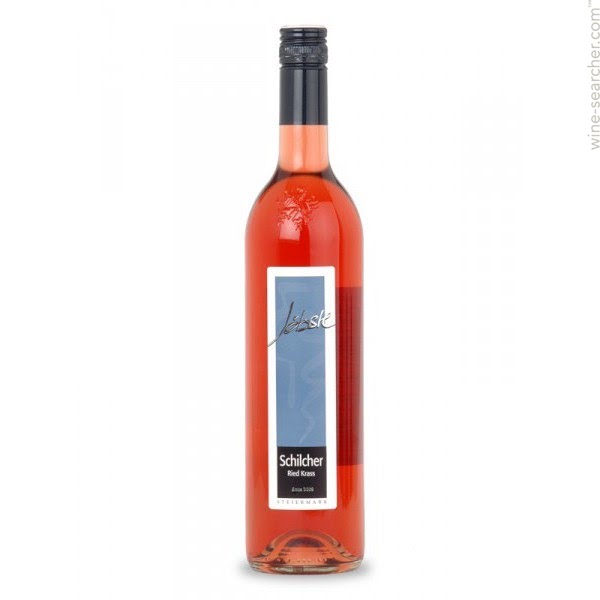
Made from the blaufränkisch grape creating a light and lively wine.


Israel:
Made from the Made from cinsault and mourvèdre  grapes. Much richer
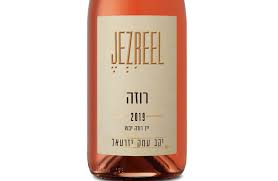
than the everyday rose.  Full bodied.


And there are many other countries making Rose’s today.  This includes Greece,  England, Georgia, South Africa.


Rose Profiles

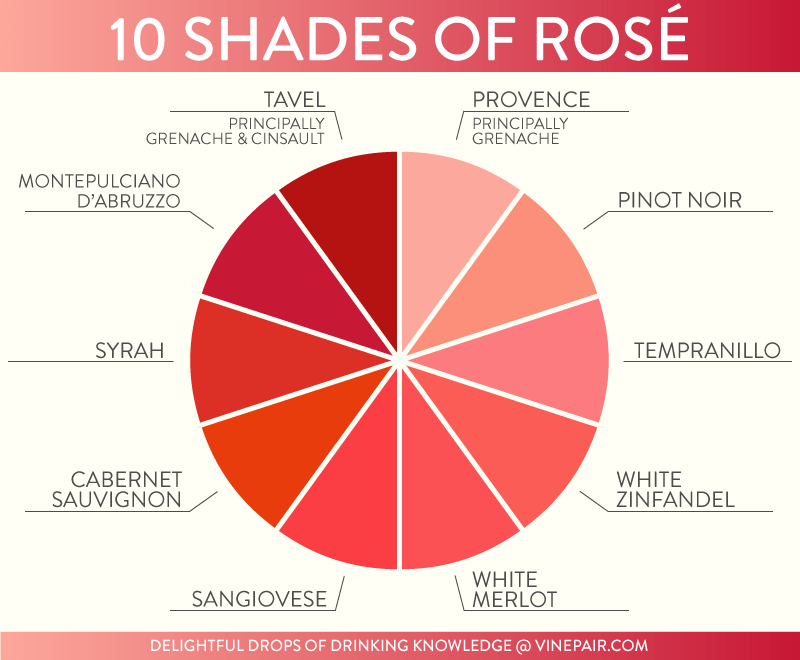
Color

There are so many different color shades of Rose wines.   Much depends on the grape being used and how long the winemaker keeps the grape skins intact with the juice.


Flavor

The flavors of  rose wines tend to be more subtle versions of their red wine varietal counterparts. The fruit expectations lean towards strawberry, cherry, and raspberry with some citrus and watermelon presenting on a regular basis. Rose wines can run from the extra dry and light to a full bodied semi-sweet wine.

Old world (Europe) roses tend to be drier in style, while New world (anywhere else) tend to be not as dry.  Most rose wine will be around 12% abv (alcohol content).  You will find some that are lower than 12% and they tend to be more on the sweeter side.

When can you drink Rose wine? 

ANYTIME.   For years, people always associate rose with Spring and Summer time.  There really isn’t anything more inviting than to have a bottle of Cote d Provence, sitting on the banks of the River Seine in Paris laying down with a picnic lunch of fine cheeses and breads.

Today, rose wines have become so food friendly that the can go with almost any meal and can be served year round.   This wine can handle Surf and Turf,  Outdoor BBQs, Italian, Chinese or even Mexican cuisine.

Most rose wine should be slightly chilled, some varietals can taste great at room temperature and some extremely chilled.   You need to experiment a bit here.  But there are no formal guidelines, your taste and preference is what really counts

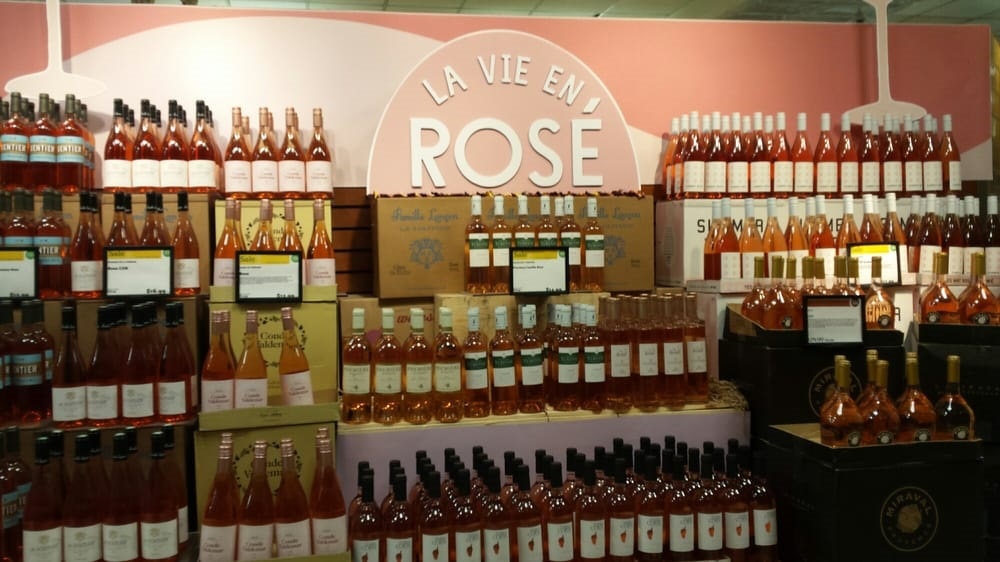
So next time you are in a wine shop, browse the Rose section.  Its growing and growing.  And with Spring around the corner, most wine retail shops will have display after display of Rose wine.


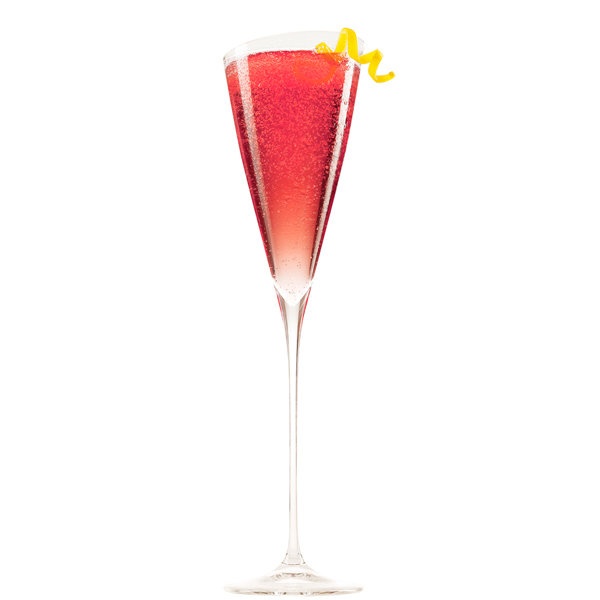
Oh and another treat.  Many winemakers make sparkling Rose.   Thats an extra treat.


ENJOY
Organic vs Natural Wine

Organic vs Natural Wines

Basic Definition and Terms

Organic wine” is made with grapes grown on an organic farm—the same way an apple orchard could be organic. … “Natural wine” is a loose term that describes wines made with minimal intervention in the vineyards and in the cellar, but it can be a bit of a misnomer.

Natural wine is more of a concept than a well-defined category with agreed-upon characteristics. In its purest form, it is wine made from unadulterated fermented grape juice and nothing else. “People think that natural wine is a fad or a new thing, but it’s the traditional way to make wine

Organic” is a system of farming and food processing, as well as a label. … Sulfites are allowed in small amounts (less than 100 mg/L (ppm)); this wine cannot be labeled as “organic” but can mention the use of organic grapes. 2 – wine made from organic grapes with no added sulfites
Simply stated, organic produce and other ingredients are grown without the use of pesticides, synthetic fertilizers, sewage sludge, genetically modified organisms, or ionizing radiation. … Organic meat, poultry, eggs, and dairy products come from animals that are given no antibiotics or growth hormones.

I’ve read so many articles regarding Organic and Natural wines.   I’ve tasted many of them.  My overall opinion so far is that, these wines are not very expensive ($10-$20 range) and the taste is nothing to get excited about (so far)  This does not take away from the quality of the wine or the people that make it.

When I tried explaining this to many customers in the retail wine shop, I tried to keep it as simple as possible, without getting into the details and chemistry behind it.

Natural Wine  The main ingredient (Grape, Fruit, Plant, etc) is allowed to turn to wine naturally without the addition of any yeasts.   This was the method used in ancient Greek and Roman times.   Some natural winemakers will add a minimal amount of sulfites.  This is required to ensure that the wine stays the same from when it was first bottled until a consumer drinks it
What it isn’t

Organic Wine.   Many times, I use the phrase Green control.  This is very similar to Green Farming.   This means there there is  NO  non-artificial, chemical ingredients added.  No artificial fertilizers or insect control can be used. Only natural soil (compost) and minerals can be used and pest control is maintained using other living organisms (such as bees).   As with natural wines, there always is the addition of minimal amounts of sulfites.    

Different countries have different regulations and controls on what can be called organic wines.  In the United States the premium control given is Certified wine.  There is an intensive certification process that a wine maker must go through to obtain that level.   Chile, handles this differently.  They utilize  IMO Control (Institute for Market Ecology).

Now about the standard normal process of winemaking

“Conventional” winemaking — shorthand for non-natural wine — is defined by technical intervention. In the vineyard, that intervention comes in the form of pesticides and herbicides. In the cellar, intervention generally comes in the form of lab-grown yeast (to control the fermentation process and regulate flavor), acid (to increase the wine’s acidity, which in turn can help the wine age better), and sulfites added at the time of bottling (to preserve flavor). Many winemakers also add sugar, which doesn’t make the wine sweet but instead, through turning into alcohol, creates the perception of “body.” (It’s common practice in Burgundy.

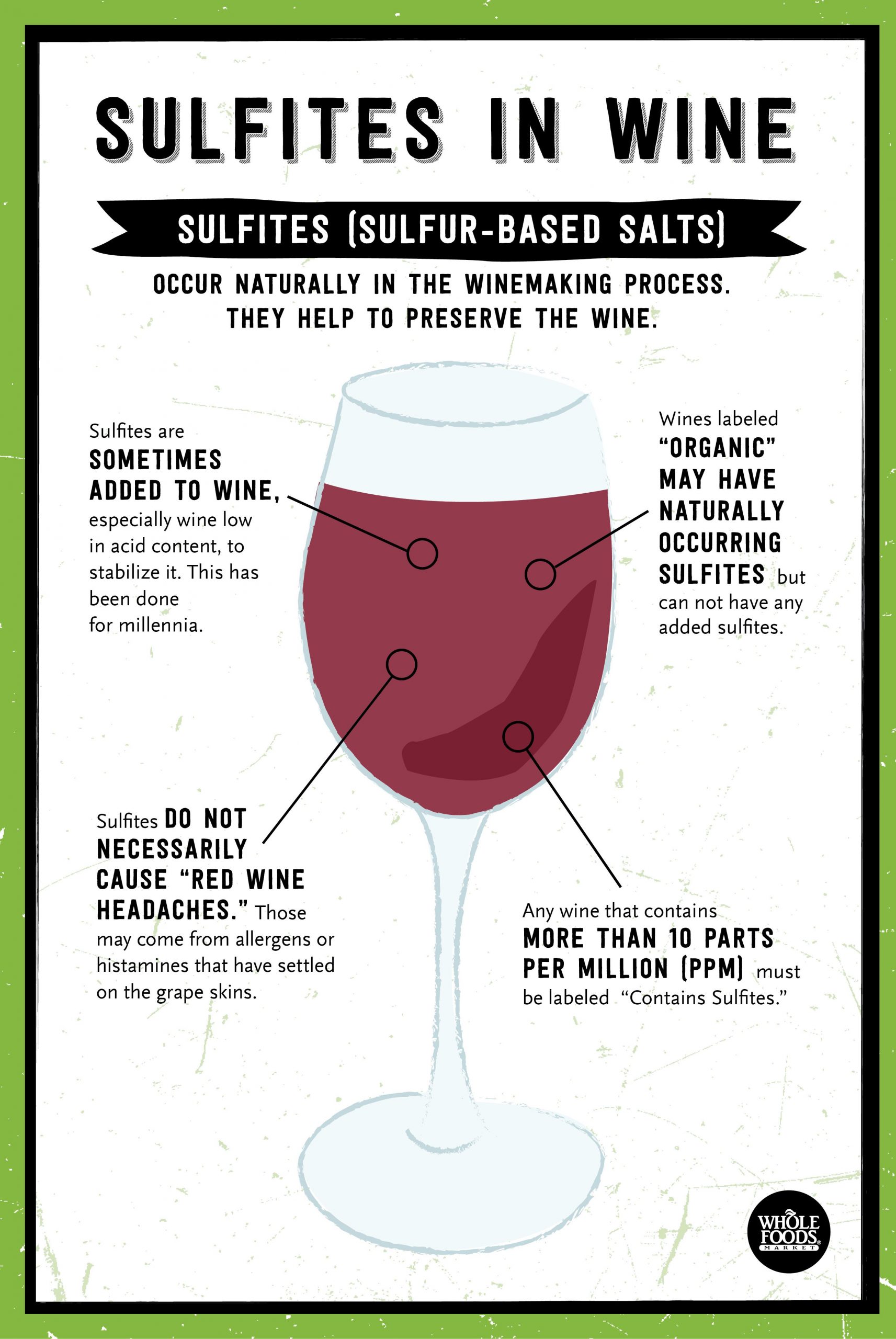
Going off topic now!    Just the word sulfite brings up so many different discussions.  People blame the headaches that get after drinking red wine on sulfites.  In reality, white wine has more sulfites than red wine does.   Also, if you look at sulfite charts on different foods and beverages you will see that wine is always at the very bottom in the amount of sulfites they contain.
There is NO such thing as a wine without sulfites.   What you will look for are wines that do not contain any ADDITIONAL sulfites.   But always keep in mind that sulfites are a natural by product of grape fermentation.
So, the next logical question asked “Then why do I get headaches after drinking red wine?”


There are two answers:

–   Antihistamines.  Red wine can contain more histamines than white wine.
People with allergies therefor can get headaches after drinking red wine.
–   Consuming too much wine!

There is another method called Biodynamic   But for the purposes of this discussion,  I am not going to get into those differences or examples.  Thats another topic. 

Today there is a strong movement  to organic and natural products.   Most people are trying to move to products that overall are better for a person’s health.   This is very good movement.   My son, who besides being a professional chef, has a degree in Nutrition.   One thing he always told me when it comes to products….  “If the ingredients label contain more than a handful of items or items that you are hard pressed to identify, then GET RID OF IT”

Besides going to my natural and organic foods/beverages/etc, there is also a big concern regarding Vegetarians and Vegans.   But most wines are NOT!

WHY?

The reason that all wines are not vegan or even vegetarian-friendly has to do with how the wine is clarified and a process called ‘fining’. … Traditionally the most commonly used fining agents were casein (a milk protein), albumin (egg whites), gelatin (animal protein) and isinglass (fish bladder protein).

Adding to that, many of the oak barrels use in aging wines are held together by horse glue.  So, you have the animal influence right there.   There are some wines that are aged in OAK that the barrels are not held together by animal glue.  One method, is the stainless steel process.

Here are some wines that can be called 100% vegan

  • Bellissima Prosecco. …
  • Blossom Hill. …
  • Charles Shaw Red Wine Varieties. …
  • Cooper’s Hawk Vineyards. …
  • Cycles Gladiator. …
  • DAOU Vineyards. …
  • Frey Vineyards. …
  • JUSTIN Wines.

SO, what are the good Organic or Natural wine?

(I am taking this directly from the internet, these are not my personal choices, but instead an general. consensus)

Top 10 organic wines
  • Domaine Carneros 2009 Brut Vintage Cuvée. (Gayot.com) …
  • Madroña 2011 Signature Collection Dry Riesling. (Gayot.com) …
  • Santa Julia 2012 Chardonnay Orgánica. (Gayot.com) …
  • Sokol Blosser 2012 Pinot Gris. …
  • BioKult 2010 Rosé …
  • Famille Perrin 2011 Nature Côtes du Rhône. …
  • Gérard Bertrand 2010 Cigalus. …
  • Benziger 2011 Joaquin’s Inferno.
  • 11 New Natural Wines to Buy Right Now
    • 2018 Sans Wine Co Sauvignon Blanc. …
    • 2018 Los Chuchaquis ‘Methode Ancestrale’ Albariño, Stirm Wine Company. …
    • 2017 Barrow Vineyard Reserve Dry Riesling, Bloomer Creek Vineyard. …
    • 2018 Kalkundkiesel Blanc, Weingut Claus Preisinger. …
    • 2018 Tsolikouri, Baia’s Wine. …
    • 2018 The Prince in His Caves, The Scholium Project.

    Bottom line, it is always your choice.  What ever life style you are living, you eating or drinking habits   Its always your choice.   Knowing the details behind your decisions is always beneficial   I hope in some way I have shed the light on the topic about Organic vs Natural wines!

Champagne

Its here!  2020   What better post then to talk about Champagne

Any article that talks about Champagne, has to start out with the origin of Champagne and how it was made.

The history of Champagne has seen the wine evolve from being a pale, pinkish still wine to the sparkling wine now associated with the region.
The Romans were the first to plant vineyards in this area of northeast France, with the region being cultivated by at least the 5th century, possibly earlier. When Hugh Capet was crowned King of France in 987 at the cathedral of Reims, located in the heart of the region.

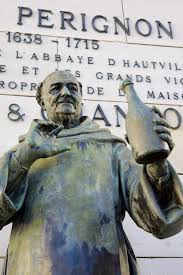
The cold winter temperatures prematurely halted fermentation in the cellars, leaving dormant yeast cells that would awaken in the warmth of spring and start fermenting again. One of the byproducts of fermentation is the release of carbon dioxide gas, which, if the wine is bottled, is trapped inside the wine, causing intense pressure. The pressure inside the weak, early French wine bottles often caused the bottles to explode, creating havoc in the cellars. If the bottle survived, the wine was found to contain bubbles, something that the early Champenois were horrified to see, considering it a fault. As late as the 17th century, Champenois wine makers, most notably the Benedictine monk Dom Pérignon (1638–1715), were still trying to rid their wines of the bubbles.  Many people believed that Dom Perignon was the founder of Champagne, he was not..  Instead he developed the first bottle that would contain the pressure without bursting the bottle.

The person really responsible for the birth of champagne, was Madam Clicquot.    Advances by the house of Veuve Clicquot in the development of the méthode champenoise made production of sparkling wine on a large scale profitable, and this period saw the founding of many of today’s famous Champagne houses,

This describes the  méthode champenoise used in making Champagne

Step 1: Selecting the Cuvée: The cuvée is the base wine selected to make the Champagne. The most expensive Champagnes are made from cuvées from Grand Cru vineyards in the Champagne region. Cuvées can be from a pure grape variety, such as Chardonnay or Pinot Noir, or can be a mixture of several grape varieties. Chardonnay is a white grape variety with white juice, Pinot Noir a red grape variety with WHITE juice. Pinot Meunier, a red grape, is a relative of Pinot Noir, also used extensively.

  • Blanc de noirs means “white of blacks”. It is a white wine produced entirely from black grapes (another name for red grapes). Pinot Noir, Pinot Meunier  are the only two black grapes permitted within the Champagne AOC.
  • Blanc de blancs means “white of whites”, and is used to designate Champagnes made exclusively from Chardonnay grapes.
  • Rosé wines (also known as Pink Champagne) are produced either by leaving the clear juice of black grapes to macerate on its skins for a brief time or, more commonly, by adding a small amount of still Pinot noir red wine to the sparkling wine cuvée.

Step 2: Assemblage is the French art of blending still white wines to create the base wine for Champagne. Assemblage is at the core of all fine Champagne.

Step 3:  Tirage (the second fermentation): Next sugar, yeast and yeast nutrients are added, and the entire concoction, called the “tirage”, is put in a thick walled glass bottle and sealed with a bottle cap. The tirage is placed in a cool cellar (55-60 F) and allowed to slowly ferment, producing alcohol and carbon dioxide.

Step 4 Aging: As the fermentation proceeds, yeast cells die and after several months, the fermentation is complete. However, the Champagne continues to age in the cool cellar for several more years resulting in a toasty, yeasty characteristic. During this aging period, the yeast cells split open and spill into the solution imparting complex, yeasty flavors to the Champagne. The best and most expensive Champagne is aged for five or more years. This completes the second fermentation.

Step 5: Riddling: After the aging process is complete the dead yeast cells are removed through a process known as riddling (Le Remuage). The Champagne bottle is placed upside down in a holder at a 75 degree angle. Each day the riddler comes through the cellar and turns the bottle 1/8th of a turn while keeping it upside down. This procedure forces the dead yeast cells into the neck of the bottle where they are subsequently removed. A riddler typically handles 20,000 to 30,000 bottles per day.

Step 6: Disgorging: The Champagne bottle is kept upside down while the neck is frozen in an ice-salt bath. This procedure results in the formation of a plug of frozen wine containing the dead yeast cells. Finally, the bottle cap is removed and the pressure of the carbon dioxide gas in the bottle forces the plug of frozen wine out (“disgorging”) leaving behind clear Champagne.

Step 7:  Adding the Dosage: At this point the “Dosage”, a mixture of white wine, brandy and sugar is added to adjust the sweetness level of the wine and to top up the bottle.

Step 8: Corking: The bottle is then corked and the cork wired down to secure the high internal pressure of the carbon dioxide. The sweetness levels of Champagne range from very dry (ultra brut) to very sweet (doux), with brut being the most common.

Reference: https://mobile.henrisreserve.com/

Why Champagne?  Why Sparkling wine?

Champagne can only be called Champagne if it comes from the Champagne region in northern France. A typical Champagne or U.S. sparkling wine is made from a blend of three grapes: chardonnay, pinot noir, and pinot meunier. …   Basically, that translate into no other wine producers of sparkling wines can call their product Champagne.  Even though the process is identical, there is a lot of respect given to the origins of Champagne.

How to open a bottle of Champagne 

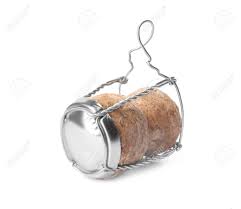
All champagne bottles from any country, always have
a wire cage that surrounds the expanded cork.    To remove
this cork, you need to turn the cage exactly 5 and 1/2 turns.
That will completely open up the cage, so you can remove
the cork.

Sabering

This is another method, mostly for show to open a bottle of champagne.  Its
called sabering and you can use almost any device from a true saber to a simple kitchen knife.  Word to the wise, this is not always the easiest way to open champagne and many times it results in a lot of champagne being wasted


Types of Sparkling Wines

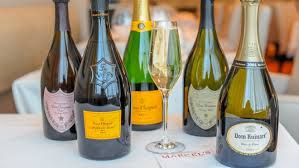
Champagne    – Only for the Champagne Region of France
Cremant           – Directly outside the region of France
Cava                   – Spain
Prosecco         – Italy
Sekt                   – Germany
Sparkling        – USA

Champagne or Sparkling Wine  – Dry or Sweet

  • Brut Nature: 0-2g/L. Brut Nature is also known as zero dosage, ultra brut, brut sauvage and non-dosage. …
  • Extra Brut: up to 6g/L. Extra Brut has no detectable sweetness with 0-6g/L of residual sugar. …
  • Brut: up to 12g/L. …
  • Extra Sec: 12-17g/L. …
  • Sec: 17-32g/L. …
  • Demi-Sec: 32-50g/L. …
  • Doux: more than 50g/L.

Call it Champagne or Sparkling wine, whatever, for years it has been the trademark of celebrations.  For the crowning of a new ship,  to a toast at a wedding, or to ring in the new year.

Whatever the occasion, its a special type of wine that everyone should try


Forgotten?

Wines that have seemed to lost their places in the world

Over the years, many wines that were very popular at one time, seemed to have lost their place in the current world of wines.  Some of those wines were really exciting wines and I hated to see them dissapear, others, fell off because there were so many other good wines that took their places.   Still, a bit of nostalgia here, anyone from the 1970s will remember all of these wines.


Frascati   This wine is an Italian white wine

named after the town of Frascati, located 25 km southeast of Rome, in Lazio, Italy.  It has been made into three types of wines.   Dry, Sweet and Sparkling.   The Sparkling version to me was the most exciting.   This wine is dry and crisp, with a hint of fresh apples and pears.  There is just enough effervescence to make you think its a sparkling wine.   Unfortunately, somewhere around 2000, export laws became very strict, especially in terms of any wine that had some level of carbonation.  Thus, the Frasactis shipped to the United States, were still.   That did take away from the fresh enjoyment of a crisp, semi-sparkling wine with touches of apples and pears.


Ovrveitto  is an Italian wine region located in Umbria and Lazio, centered on the comune of Orvieto. It is primarily known for its white wines made from a blend of mostly Grechetto and Trebbiano, which is sold under the Denominazione di origine controllata (DOC) Orvieto and Orvieto Classico.   This is a classic dry Italian white wine.  Light in body, not a lot of flavours going on with these wines.  They can range from a straw color to a pale golden hue.


Lacryma Christi  meaning the Tears of Christ.  This  Neapolitan type of wine is produced on the slopes of  Mount Vesuvius in Campania, Italy.    This white wine is made from the  Verdeca and Coda di Volpe.   This wine captures the flavor and complex tones that volcanic soil can impart to a dry white wine. Thus this zesty full flavored wine  springs from the volcanic ash of Mount Vesuvius. From its bright golden color to its long lusty finish.  The wine is dry with a good amount of minerals, with zesty lemon overtones and a taste of the sea.


Lacryma Christi Red  is made from Piedirosso and Sciascinoso grapes.
Since this wine is made from the same region as their whites, the volcanic soil plays a major role in the structure of this wine.  Its dark ruby red, with tons of plums and cherry noses.   The bouquet also includes some spice and pepper along with a mineral overtone.  This is a very full, firm soft bodied wine.  The tannins are generally on the firm, but milder side, making it easy drinking.   If anything, I found these reds to be almost too soft,  I would want more, more tannins, more dryness, just more.


Mateus Rose  This is a throw back to the late 1960’s and early 1970’s   Before roses became popular, several rose wines from Portugal hit and flooded the American market.  It is a young fruitful salmon colored wine that is about the easiest wine to drink you can imagine.   Honestly, the actual tasting notes , I’ve abandoned, but instead my memories all of Candle filled Mateus bottles!  


Lancers Rose This fell along the same lines as the Mateus Rose.  The major difference was that the early Lancer’s Roses, always had a slight sparkle to them making them so much more enjoyable.   It was like a poor man’s champagne.   But alas, come the 21st century and export laws clamped down on wines with any level of carbonation.  So, for the most part any Lancer’s rose was a stiil wine.


Ruiniute Lambrusco is made in Emilia-Romagna, which is in the central part of Italy lying south of the Veneto and north of Tuscany.   Back in the 1970’s, Italy was famous for some sparkling wines.   The infamous  Asti-Spumante and Lambrusco was one of them.
Lambrusco is the name of a grape varietal. It is a prolific grape that produces good if not spectacular wines.  The early Lambruscos from Italy were almost always very sweet, juicy, jammy with lots of ripened fruit.   Today, where you can find some Lambruscos, they tend to be on he drier side and even white ones made.


Blue Nun Liebfraumilch (Mother’s Milk)

Made 100% from the Riesling grape.  Nose Aromas of tropical fruit, particularly pineapple. The taste is a combination of bright fresh fruits, with hints of white peach and a soft cool finish.


Andre Cold Duck      America’s fascination with French champagne continued to grow in the 1970s.  But the price  and the fact that they were bone dry, sort of kept the American  market from purchasing those.   So, Andre, created a number of sparkling wines, the most popular was Cold Duck.   The Taste?
Sweet, sweet, full of all fruit and very very


The Chianti Straw Basket       Anyone going to Italian restaurants in the 1970s and 1980s, will remember seeing the Chianti wine in a straw bottle.   I remember that you could not get any other Chianti, they all came in these straw bottles.   They disappeared for while, and today, the only brand I can find is Opici.  The wine itself, while saying it was Chianti, was nothing more than a very dry light and uneventful wine.   BUT it went great with pizza and most Italian food from Naples.

But just like the Mateus and Lancers Rose bottles, I think the most fame to come to the Italian basket Chianti was as a candle holder 


How about theses Oldies but Goodies!

Boones Farm Apple Wine 

Ripple 
MD20/20  (Mad Dog 20/20)
Thunderbird


Apperitifs

Aperitifs – Perhaps a lost art?


An apéritif is an alcoholic beverage usually served before a meal to stimulate the appetite, and is therefore usually dry rather than sweet.  Derived from the Latin verb “aperire,” which means “to open,” “aperitif” has several definitions. The most widely known definition applies to an alcoholic drink consumed prior to a meal. The aperitif serves to stimulate the appetite and prepare the taste buds for future courses.  Aperitifs are less a distinct category of drinks than a state of mind, but the general idea is: something 20% ABV or under, bright and aromatic, and usually licked with herbs and a bit of bitterness.

I remember during the 1970’s working at that great wine shop and attending so many wine tastings and dinners, that aperitifs were so commonly served.
I remember, my sommelier instructor telling me, that before any meal, do not opt for the typical American cocktail, consisting of high alcohol (ie Martinis, Manhattan, etc), but instead go with one of the more versatile and less potent aperitifs.  Instead of actually dulling your taste buds, this actually made them come more alive, so waiting for the first course was so inviting.

I remember the times I spent in France, the before dinner drink was always some type of aperitifs, and waiters would have a scowled look on their faces if you order a typical American cocktail.

What are some aperitifs?  


Lillet  (France)

White (blend of Sauvignon Blanc and Sémillon) Lillet has a golden yellow color with strong honey, orange, pine resin, lime and mint aromas.   The taste is of candied oranges and floral exotic fruits with a long smooth rosemary like after taste.


Kir  (France)

Is a popular French cocktail made with a measure of crème de cassis (blackcurrant liqueur) topped up with white wine. In France it is usually drunk as an aperitif before a meal or snack.


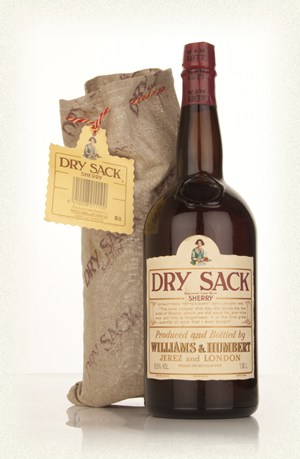
Dry Sherry (Spain)    


The aroma is very balanced, with sweet pear and green almonds. After a while it becomes more intense, with more hints of floral and olive brine. Nicely smooth and elegant, it never looses its fresh, fruity touch.  Fino sherries generally have a good amount of acidity at first (green apple, lemon juice), then more of a bright nutty flavour.. The finish is rather short but clean and fresh.


     Campari  (Italy)

Back in the 1970’s there were advertisements that said One in 10,000 Americans enjoy Campari – Do you?  I think that reputation came because the bitterness associated with Campari.   It has a very pleasant grapefruit, lemon and clove bouquet.   The taste starts off a little spicy and sweet, but then slowly and boldly turns to a bitter bite.    I have found it best with Soda and Lemon or in the classic Negroni cocktail


Picon  (France)

Orange is the dominant flavor, though quinine, cinchona, and genetian are also known ingredients.    Takes an acquired taste.  Many other aperitifs blossomed using this formula.  Amaro CioCiaro, Ramazotti Amaro and Amaro Nonino


  Cynar  (Italy)

Artichoke is the primary flavoring ingredient , but it does NOT taste like artichokes.   This bitter is made up of at least 13 various herbs and plants.  The aroma is definitely artichoke, but the taste is bitter with lots of those herbs coming through.   It has a long lingering bitter aftertaste.


Dubbonet  (France)

A proprietary blend of herbs, spices and peels, and the medicinal quinine .  Dubbonet was used in the mid 1850s while French Foreign Legion solider fought in Africa.   This was to help with the problems of malaria

A very complex taste.  Cherry, mint and walnut aromas, with notes of lemon zest, cardamom and toffee… with flavors of orange, nuts, chocolate and coffee; finishes fairly sweet, with lemon and herb notes.


Fernet-Branca (Italy )It is a bitter, aromatic spirit made from over 40 herbs and spices, including myrrh, rhubarb, chamomile, cardamom, aloe, and saffron, with a base of grape distilled spirits, and colored with caramel coloring. I have tried this many times and to be honest, it is not easy to drink.  But it is suppose to be great for the digestive system.


Pernod (France)

The bouquet features appealing aromas of licorice that are simultaneously dry, spicy, herbal and vegetal. Palate entry is first dry then off-dry, minerally, slatey and anise-like; mid-palate features the anise, but also nicely salty.

To me, its a finer and lighter version than the Italian Anisette or Sambuca


The difference between an Aperitif and a Digestif

Aperitif – Start of a meal .   Meant to stimulate your appetite.  Generally dry and bitter, with a low alcohol content.  Several examples were given above

Digestif – End of a meal.   Meant to help with digestion.  Generally a bit higher in alcohol than an Aperitiff and  sweeter.  Some examples are
Ports
Sherry
Cognac


Wine Types

ALL TYPES OF WINE

There are several different types and styles of wines   Almost every country in the world makes some type of wine.  Wine is such a generic term, so lets try to break it down into some major understood categories.

Table Wine  The purge definition is wine of moderate quality considered suitable for drinking with a meal.  By definition, table wine are wines that are between 8% and 15% alcohol. This makes  up the majority of wines that almost everyone has had and tasted.   Its your Cabernet Sauvginon, Merlot,  Chardonnay,  Sauvginon Blanc, Rose and much more.   In the United States it can mean just about any wine that is not sparkling, not fortified and is generally inexpensive and easy drinking.  Not so in Europe.  They have many different classifications of wines, many that include Table Wine  Vin de Table ,
Vin de Pays , Vin de France and vino da tavola. 

As I mentioned above, table wines in USA generally are the inexpensive wines, ranging from $5 to $10 a bottle.  So, they are affordable to almost everyone who wants to try wines.   They can be nice wholesome wines, but I would never classify them as distinct or having a lot of characteristics.  However,  this is the wine class that so many Americans can first start to drink wine.   Overall, these simple table wines are easy to drink.  They lack those intense characteristics of Oak, Smoke, Cassis, Tannin and more.   In the past 5 years or so, many American winemakers have started to make blends.  These wines are probably the easiest to drink and do demonstrate the tastes of various types of grapes.

In Europe, its a different story.  Table wine, or what they call it can be on the pricy side.  Paying up to $50 a bottle from wines from Burgundy is not unheard of.  In Italian, the Sassicaia or Tenuta  San Guido have grapes that are generally not the typical Italian grape and are classified as DOC, since there was no classification of grapes  like Cabernet Sauvignon in Italy so they were called
vino da tavola , selling for about $170 a bottle

Champagne  Is a sparkling wine made only from the region of Champagne in France.  It is legally accepted that only sparkling wines made from the grapes grown in the Champagne region call be labeled Champagne.   The laws are very strict , including the making process which calls for a secondary fermentation (after the initial fermentation) which creates the carbonation.   Many different grapes can be used for making Champagne, but the most popular are Pinot Noir, Pinot Meunier, and Chardonnay.    These champagnes are aged in dark cool caves in racks called the riddle and the person that turns these weekly is called the riddler

The French process for making Champagne is called
méthode Champenoise.   Contrary to what many people
believe,  Dom Perignon did not invent champagne.  He was however responsible for many advances in French Champagne, included the special bottle.  You will probably notice that Champagne bottles are heavier than most wine bottles.   Also, on the bottom, there is a larger than normal indent.  This is called the Punt.   The primary function of this punt is to evenly distribute the pressure of the carbonation in the wine.   Some wine makers question this theory, but it is something you will find on all champagne bottles.

Sparkling Wine  Sparkling wine can be made the exact same way the classic French wines are made.   But since they are not made from grapes grown and the wine produced in the Champagne region of France, they can be called only Sparkling Wine.   This does not mean that they are inferior.  There are many Sparkling Wines that I have tasted that I will compare to many great French Champagnes.   Each country has a name for their version of Sparkling Wines

Germany   –  Sekt
Italy             –  Prosecco
Spain          –   Cava
Portugal   –   Espumante.

Fortified Wine  is a wine to which a distilled spirit, usually brandy, is added   The purpose is to stop the fermentation process , kill the yeast and leave behind residual sugars.   Most fortified wines contain between 16% and 20% alcohol.   Class fortified wines are  

Port
Sherry
Maderia
Marsala


Non-Grape Wines  Wines can be made from various types of fruits.  Fruits that can be made into wine range from the familiar (blackberries and pineapples)   One of the most widely produced non-grape fruit wines is cider, or “apple wine,” which is made from fermented apples.   They still go through a fermentation process using Yeast which turns the natural sugars into alcohol.   I have not had a lot of experience with fruit wines.   The ones I have tasted are from the Silo Winery in Sherman CT    They make wines from raspberry, blueberry,  and others.   I am not a fan of the taste of these wines, but they make an excellent source of a wine reduction for cooking!


***  THE 100-YEAR-OLD LOOPHOLE THAT MAKES CALIFORNIA CHAMPAGNE LEGAL  You might have seen the word Champagne used on Korbel Sparkling Wines.   The loophole, is that IF the sparkling wines were originated before 2006, they were allowed to continue to use the term Champagne on the labels.  Sparkling wines originated after 2006, must stick with the Sparkling Wine name.


Sauternes

Wine’s  Liquid Gold!

Sauternes has got to be one of my favorite dessert wines.   I remember having my first domestic Sauterne (Gallo) in the early 1970’s.   Just a sweet white wine with not a lot of flavor.  Not again.    Then on a trip to France in 1974, I had a taste of a real French Sauterne.   Now that was more that I ever hoped for.   It was full, rich with amazing aromas and flavors.  The nose was as if I just started to smell the autumn air full of pleasant aromas, spices and much more.   Then the taste, filled my mouth with this golden like honey liquid that hit every inch of my tongue and its senses.   There was apricot, honey, pear, apple and so many beautiful flavors, all mixing together to create a wonderful taste.   The finish was about as amazing as the taste.   It lingered and lasted it seemed for minutes.  I could almost feel, the wine gliding down my throat.  I would have to say in all of my wine experiences, no other wine has had that long lasting finish as a good Sauterne.

Now, a good French Sauterne is not inexpensive.    It comes from the village of Sauterne  ( Sauternais district )in the Graves region of Bordeaux.   The grapes used are Semillon, Sauvignon Blanc and Muscadelle.   But what really makes this wine special, is the over ripening of the grapes.

The French term is Botrytis Cinerea or Noble Rot 

This Noble Rot is also used in making the famous German Trockenbeerenauslese and the Hungarian Tokaji Aszú (many variations with the numbers 3,4 or 5)

Probably the most famous of all French Sauternes is Château d’Yquem.  It was rated as a Superior First Growth, the only Sauterne given this rating.   I was fortunate enough to taste a 1959 Château d’Yquem.  It was a wine that I will never forget.   These wines when properly stored can last a century!

The development of Botrytis cinerea is the key to a syrupy wine. In favorable conditions, with a combination of alternating rain and sun and a beautiful autumn season, grapes experience degradation through the development of this exceptional noble rot. This famous fungus roasts grapes by drying them out, which concentrates the sugar.  Harvest takes place exclusively by successive sorting (between three to five passages). Only grapes that have reached the ripening status are harvested, so the harvest must be hand-operated. That’s why yields are low (25 hl/ha maximum and even 8 hl/ha for some producers) and prices are high.

Once harvested, grapes are pressed, which ensures the delicate and progressive extraction of juice. After a slight settling, the must ferments in barrels (20% of barrels are renewed each year). The slow fermentation lasts from three to four weeks. Breeding is done in barrels for 12 to 18 months, depending on the vintage. Wines are bottled after a single  filtration.   Sauternes wines must have a minimum of 13% alcohol content and pass a tasting exam. There is no regulation about the exact amount of residual sugar that the wine needs to have.

Sauternes has been granted Protected designation of origin (PDO), and comes from the communes of Sauternes, Fargues, Bommes, Preignac, and Barsac, all of which are situated in the Graves region.

I am most familiar with wines from Barsac.  It is made the same way as a Sauterne, but generally is a bit lighter in body and less expensive.  I have never had any of the wines from those other communes.

A little story:   in 1837,  Marquis de Lur-Saluces  went to hunt wolves in Russia and gave the order to wait for his return before beginning the harvest. His journey home was delayed, and the noble rot had turned the grapes into prestigious wine nectar by the time he returned.  https://frenchfoodintheus.org/849

Do yourself a big favor, when  you have a little extra cash, splurge and buy a bottle of a French Sauterne.   You dont need to buy the Yquems,  since there are many other excellent Sauternes.

Chateau Giraud
Chateau Lafaurie-Peyraguey
Chateau Raymond-Lafon
Chateau Guiraud (Barsac)

Just like the classification of Red Bordeaux, there is a 1855 Classification of Sauternes and Barsac.   You will notice that Château d’Yquem. is not on this list, that is because it has its own special ranking –  Premier Cru Supérieur

First Growth Premiers Crus
La Tour Blanche
Lafaurie-Peyraguey
Clos Haut Peyraguey
Rayne Vigneau
Suduiraut
Coutet
Climens
Guiraud
Rieussec
Raubaud Promis
Sigalas Rabaud

Second Growths (Deuxièmes Crus)

de Myrat
Doisy Daene
Doisy Dubroca
Doisy Vedrines
d’Arche
Filhot
Broustet
Nairac
Caillou
Suau
de Malle
Romer
Lamothe Despujols
Lamothe Guignard


Ports

VINTAGE PORTS Warre 1985 , Pocas 2011 , Pintas 2011 , Corte 1997

Ports.     My first introduction to port wine was back in 1972 when customers were buying gallons of Gallo Port.  All I remember about that was it was a sickening sweet wine.


Today,  Ports have become one of my favorite after dinner wines.    But what is a Port?    The original  true ports come from Portugal and are called
vinho do Porto from the Duro valley

in northern Portugal.   Ports are classified as a fortified wine, which means that some form of distilled spirit, mostly brandy is added.   When this is added before the fermentation process,  the alcohol kills the yeast and leaves the residual sugar, which results in a sweet wine.   When it is added during the fermentation process, this will result in a dryer style of wine.

Port wine is made from 5 different grapes … (Tinta BarrocaTinto Cão, Tinta Roriz (Tempranillo), Touriga Francesa, and Touriga Nacional.   These grapes are very small and have dense fruit with produces concentrated and long lasting flavors.   Although they may be planted separately, the varieties are normally harvested and fermented together.   Each grape variety contributes its own particular character – such as the intense flavours of woodland fruit, delicate floral scents, exotic spicy notes or the wild resiny aromas of gumcistus – to the nose of the wine. The grape varieties work together like instruments in an orchestra to create a subtle, complex and multi-dimensional harmony.

Once they are picked, the grapes are taken to the winery. On the Taylor Fladgate estates they are carried in small trays to ensure that they are kept in perfect condition. On arrival in the winery they are evaluated by the wine maker and inspected on a sorting table before being de-stemmed. In the traditional process, still used to make the wines from Taylor Fladgate’s own estates, the grapes are then placed in wide, thigh-deep granite treading tanks known as lagares. Here they are trodden by foot.

The first stage of treading is called the corte, or ‘cut’, and involves crushing the grapes, which at this stage are still relatively solid, to release the juice and pulp from their skins. During this initial stage the treaders link up in a tight line and advance very slowly shoulder to shoulder across the lagar treading methodically and in unison to ensure that the grapes are thoroughly crushed. When the corte has been completed, the second stage begins. This is called the liberdade or ‘liberty’. The treaders now work individually, moving freely around the lagar ensuring that the grape skins are kept submerged under the surface of the wine. After a few hours the fermentation begins and the heat and alcohol it produces begins to release the colour, tannins and aromas from the skins allowing them to be diluted in the fermenting wine. The treading is sometimes supplemented by the use of long wooden plungers called macacos used to punch the skins down under the surface of the wine.

This phase of the process is vital to the making of quality Port. Research by Taylor Fladgate’s wine making team shows that, although expensive and laborious, treading is still the best way of achieving gentle but complete extraction, producing wines with structure, depth of flavour and balance. Similar results have, however, been achieved by mechanical extraction systems, particularly by the innovative fermentation tanks developed by Taylor Fladgate and installed at the company’s winery at Quinta da Nogueira.

When about half of the natural sugar of the grape juice has been turned into alcohol by the fermentation, the wine maker gives the signal for the fortification process to start. The treading stops and the skins are allowed to rise to the surface of the lagar where they form a solid layer. The wine fermenting under this cap of skins is then run out of the lagar into a vat. As the fermenting wine pours into the vat, a very clean young wine brandy is added to it. This colourless neutral spirit, at strength of 77% alcohol, is usually added in a ratio of about 115 litres of brandy to 435 litres of fermenting wine although this proportion can vary.

The addition of the spirit raises the strength of the wine to a level where the yeasts responsible for fermentation can no longer survive. The fermentation stops before all the sugar in the juice has been turned into alcohol and some of the natural sweetness of the grape is thus preserved in the finished wine.

Credit to: https://www.taylor.pt/us/what-is-port-wine/how-is-port-made

Port wine generally ranges from 16% to 18% alcohol.

Types of Ports 

Ruby  Bright ruby red color, generally the sweetest of all ports.   Does not  improve with age.  Normally aged from four to six years.


Tawny  Made like the Ruby, but is aged in wooden barrels that allow for oxidation and evaporation.  These ports pick up a golden brown color and are not as sweet as the Ruby port.  Most Tawny ports are store in wood with several different vintage years.   Thus when you buy a Tawny Port you will find the age as 10, 20, 30, or 40 year old.


Late Bottle Vintage  These ports were originally destined to become vintage ports, but for whatever reason are left in the barrel  longer than expected.  Most LBV are aged  4 to 6 years in the bottle  This produces a Vintage like Port but without the need for bottle aging.


Vintage  Vintage ports  are from one year’s harvest.   They  are aged in stainless steel or wood for a maximum of two and a half years before being bottled.  Then they start to age in the bottle from ten to forty or more years.  Unlike Tawny Ports, the Vintage Ports maintain the ruby color and sweetness but with so much elegance and smoothness.  Vintage ports  can last almost forever.   I have had a Vintage Port from 1915 which was rich and full.  The store in Long Island I worked for had


The IVDP (Instituto do Vinho do Douro e Porto) is situated in an old and unassuming bank building in Oporto. In a governmental decree issued on the tenth of April in 1933, the Port Wine Institute was established. Its main mission is to administer quality and guarantee the origin of Port. The IVDP also has the authority to perform sensorial tests on Port wine and accept or reject the samples prior to their being bottled.IDVP’s Seal of Gurantee.

The requirement for Ports exported with this seal has changed greatly over the years.  For many years it was mandatory,  after 1997, Port wines should always have these seal.


Another fact that always amazed me was the white ‘chalk’ mark on the bottles of Port.  The chalk mark, sometimes known as the splash mark

,     is a dash of white chalk or paint placed on the side of a bottle of Vintage Port to show in which position it was stored in the Port house’s cellar.


One of my favorite ways to enjoy Port is with Nuts and a cigar.   But since I had quadruple bypass heart surgery in 2018, I have to forgo the cigar!

Ports are a treat, you really should try one