

Organic vs Natural Wines
Basic Definition and Terms
“Organic wine” is made with grapes grown on an organic farm—the same way an apple orchard could be organic. … “Natural wine” is a loose term that describes wines made with minimal intervention in the vineyards and in the cellar, but it can be a bit of a misnomer.
Natural wine is more of a concept than a well-defined category with agreed-upon characteristics. In its purest form, it is wine made from unadulterated fermented grape juice and nothing else. “People think that natural wine is a fad or a new thing, but it’s the traditional way to make wine
“Organic” is a system of farming and food processing, as well as a label. … Sulfites are allowed in small amounts (less than 100 mg/L (ppm)); this wine cannot be labeled as “organic” but can mention the use of organic grapes. 2 – wine made from organic grapes with no added sulfites
Simply stated, organic produce and other ingredients are grown without the use of pesticides, synthetic fertilizers, sewage sludge, genetically modified organisms, or ionizing radiation. … Organic meat, poultry, eggs, and dairy products come from animals that are given no antibiotics or growth hormones.
I’ve read so many articles regarding Organic and Natural wines. I’ve tasted many of them. My overall opinion so far is that, these wines are not very expensive ($10-$20 range) and the taste is nothing to get excited about (so far) This does not take away from the quality of the wine or the people that make it.
When I tried explaining this to many customers in the retail wine shop, I tried to keep it as simple as possible, without getting into the details and chemistry behind it.
Natural Wine The main ingredient (Grape, Fruit, Plant, etc) is allowed to turn to wine naturally without the addition of any yeasts. This was the method used in ancient Greek and Roman times. Some natural winemakers will add a minimal amount of sulfites. This is required to ensure that the wine stays the same from when it was first bottled until a consumer drinks it
What it isn’t
Organic Wine. Many times, I use the phrase Green control. This is very similar to Green Farming. This means there there is NO non-artificial, chemical ingredients added. No artificial fertilizers or insect control can be used. Only natural soil (compost) and minerals can be used and pest control is maintained using other living organisms (such as bees). As with natural wines, there always is the addition of minimal amounts of sulfites.
Different countries have different regulations and controls on what can be called organic wines. In the United States the premium control given is Certified wine. There is an intensive certification process that a wine maker must go through to obtain that level. Chile, handles this differently. They utilize IMO Control (Institute for Market Ecology).
Now about the standard normal process of winemaking
“Conventional” winemaking — shorthand for non-natural wine — is defined by technical intervention. In the vineyard, that intervention comes in the form of pesticides and herbicides. In the cellar, intervention generally comes in the form of lab-grown yeast (to control the fermentation process and regulate flavor), acid (to increase the wine’s acidity, which in turn can help the wine age better), and sulfites added at the time of bottling (to preserve flavor). Many winemakers also add sugar, which doesn’t make the wine sweet but instead, through turning into alcohol, creates the perception of “body.” (It’s common practice in Burgundy.
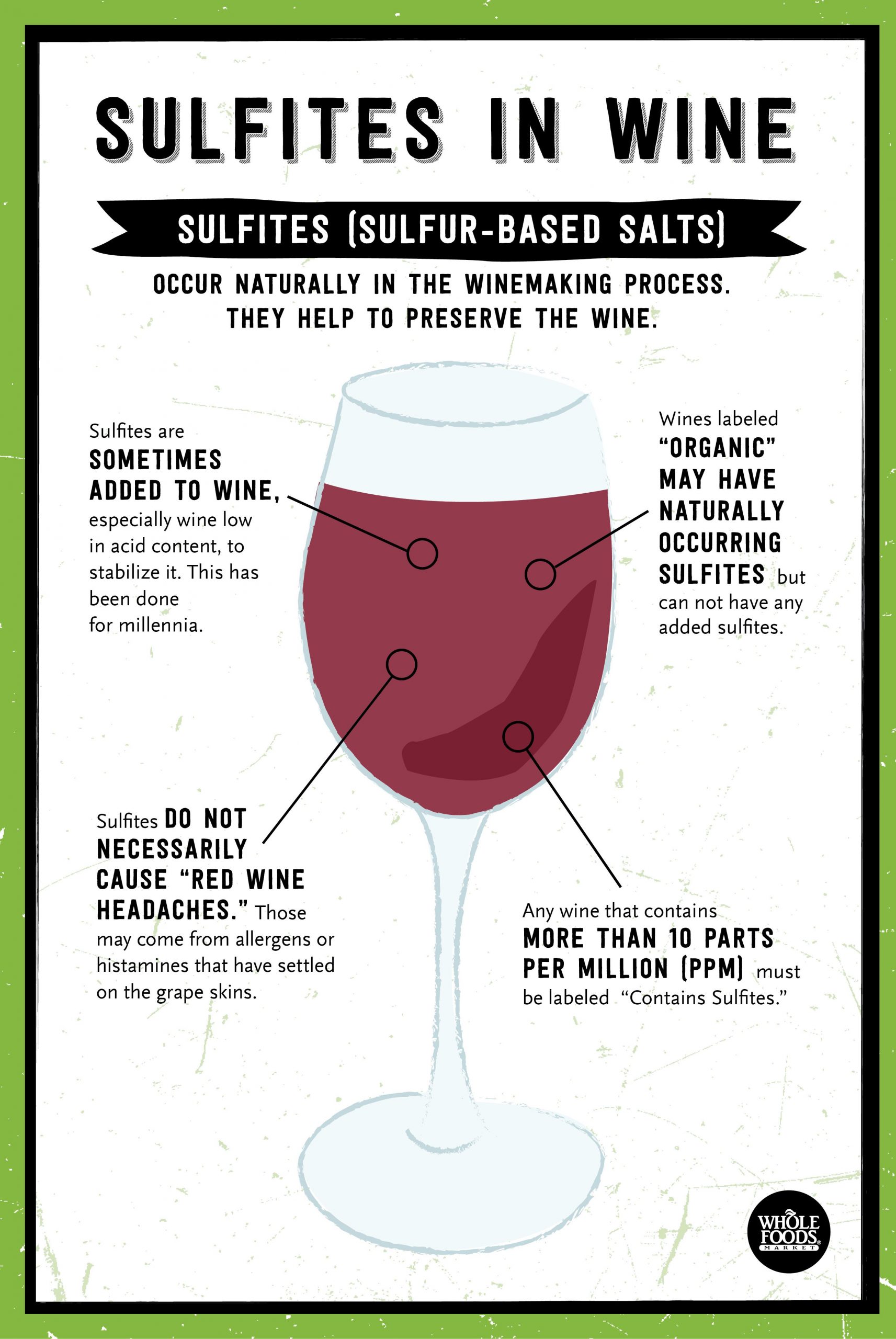
Going off topic now! Just the word sulfite brings up so many different discussions. People blame the headaches that get after drinking red wine on sulfites. In reality, white wine has more sulfites than red wine does. Also, if you look at sulfite charts on different foods and beverages you will see that wine is always at the very bottom in the amount of sulfites they contain.
There is NO such thing as a wine without sulfites. What you will look for are wines that do not contain any ADDITIONAL sulfites. But always keep in mind that sulfites are a natural by product of grape fermentation.
So, the next logical question asked “Then why do I get headaches after drinking red wine?”
There are two answers:
– Antihistamines. Red wine can contain more histamines than white wine.
People with allergies therefor can get headaches after drinking red wine.
– Consuming too much wine!
There is another method called Biodynamic But for the purposes of this discussion, I am not going to get into those differences or examples. Thats another topic.

Today there is a strong movement to organic and natural products. Most people are trying to move to products that overall are better for a person’s health. This is very good movement. My son, who besides being a professional chef, has a degree in Nutrition. One thing he always told me when it comes to products…. “If the ingredients label contain more than a handful of items or items that you are hard pressed to identify, then GET RID OF IT”
Besides going to my natural and organic foods/beverages/etc, there is also a big concern regarding Vegetarians and Vegans. But most wines are NOT!
WHY?
The reason that all wines are not vegan or even vegetarian-friendly has to do with how the wine is clarified and a process called ‘fining’. … Traditionally the most commonly used fining agents were casein (a milk protein), albumin (egg whites), gelatin (animal protein) and isinglass (fish bladder protein).
Adding to that, many of the oak barrels use in aging wines are held together by horse glue. So, you have the animal influence right there. There are some wines that are aged in OAK that the barrels are not held together by animal glue. One method, is the stainless steel process.
Here are some wines that can be called 100% vegan
- Bellissima Prosecco. …
- Blossom Hill. …
- Charles Shaw Red Wine Varieties. …
- Cooper’s Hawk Vineyards. …
- Cycles Gladiator. …
- DAOU Vineyards. …
- Frey Vineyards. …
- JUSTIN Wines.
SO, what are the good Organic or Natural wine?
(I am taking this directly from the internet, these are not my personal choices, but instead an general. consensus)
- Domaine Carneros 2009 Brut Vintage Cuvée. (Gayot.com) …
- Madroña 2011 Signature Collection Dry Riesling. (Gayot.com) …
- Santa Julia 2012 Chardonnay Orgánica. (Gayot.com) …
- Sokol Blosser 2012 Pinot Gris. …
- BioKult 2010 Rosé …
- Famille Perrin 2011 Nature Côtes du Rhône. …
- Gérard Bertrand 2010 Cigalus. …
- Benziger 2011 Joaquin’s Inferno.
-
11 New Natural Wines to Buy Right Now
- 2018 Sans Wine Co Sauvignon Blanc. …
- 2018 Los Chuchaquis ‘Methode Ancestrale’ Albariño, Stirm Wine Company. …
- 2017 Barrow Vineyard Reserve Dry Riesling, Bloomer Creek Vineyard. …
- 2018 Kalkundkiesel Blanc, Weingut Claus Preisinger. …
- 2018 Tsolikouri, Baia’s Wine. …
- 2018 The Prince in His Caves, The Scholium Project.
Bottom line, it is always your choice. What ever life style you are living, you eating or drinking habits Its always your choice. Knowing the details behind your decisions is always beneficial I hope in some way I have shed the light on the topic about Organic vs Natural wines!