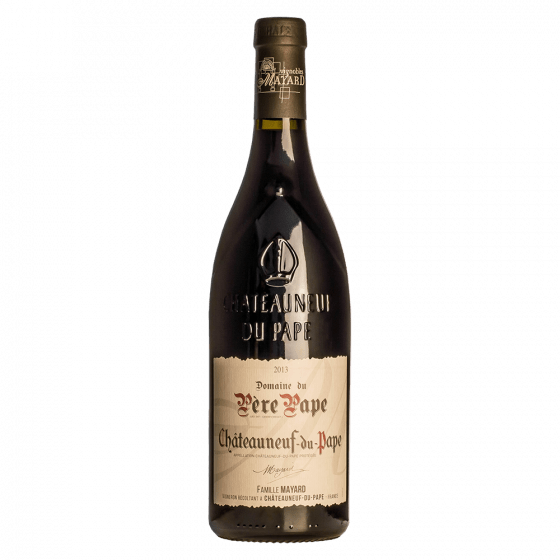
Beaujolais nouveau

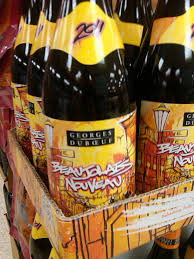
Beaujolais Nouveau  made from the Gamay grape produced in the Beaujolais region of France.   
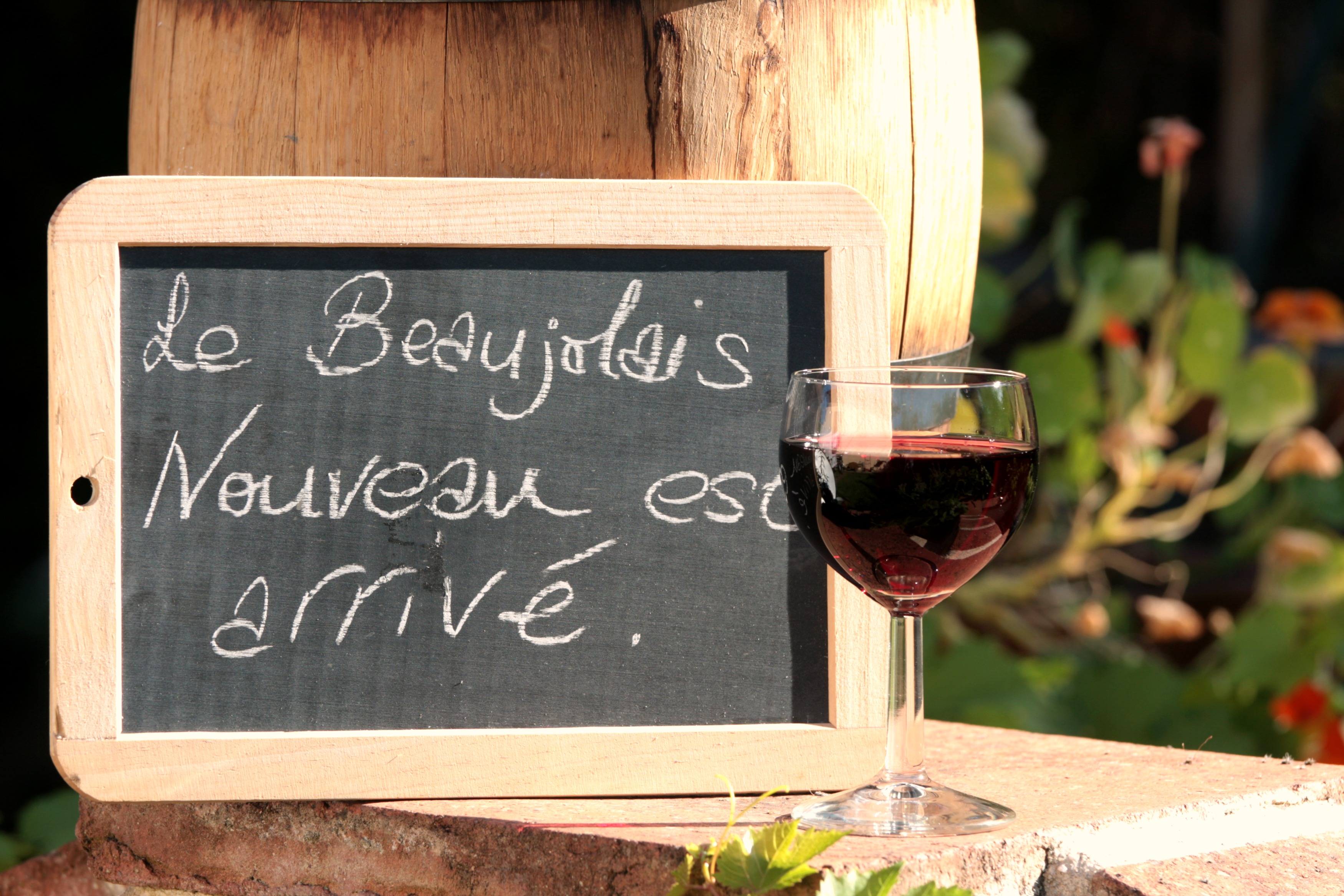
 

This wine is fermented  just a few weeks before being released for sale on the third Thursday of November. This Beaujolais Nouveau Day used to see heavy marketing, with races to get the first bottles
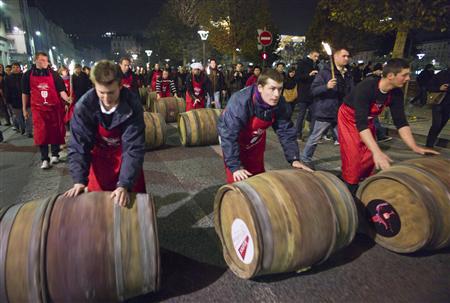
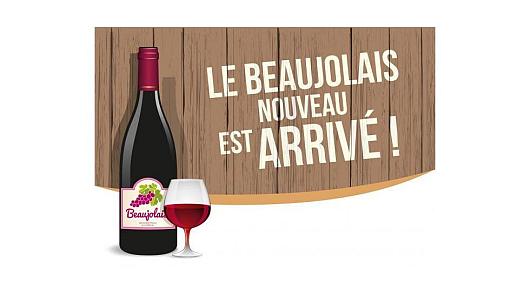
to different markets around the globe.   This special wine occasion started in the 1950’s   The various wine makers were in a race to see who could get their wine to Paris first!    Then in the 1970’s, winemaker and business man  Georges Duboeuf, pushed and publicized the wine and the associated festivities.  Banners proclaiming
Le Beaujolais Nouveau est arrivé!  
I remember working at my first wine retail store in the 1970s, that the arrival of the first Beaujolais Nouveau was a major event.   At that time, there were only 3 or 4 French wine producers that were involved.   I still remember the first time I tasted a Beaujolais Nouveau.  It was something that I have not tasted before.  It was light, it was fruity, it had a slight sparkle to it, it wasnt dry, yet it wasnt sweet.   Your mouth was treated to all this goodness and it was tasting one of the freshest things you can think of.   The finish was not lingering, but the taste made you want to have another sip and another and another.

In the late 1990’s, there were probably over 20 different wine houses that were making this wine.  Still everyone rushing to get to be the first to reach the states!.   It was a fun event and fun time.   We used to advertise weeks before the arrival, like posting the arrival of a new born baby.   People used to ask us daily,  When is it coming in?   The first to arrive at our store would get top billing, the best display area in the store!   We had signs and banners surrounding the display, plus had bottles all over the counter. 
BUT something happened!  And to me, it was not a good thing.   That joyful , delicious , fun wine changed.   Now it was becoming a dull rather sweet wine, lacking any character, void of any effervescent.  It was disappointing.   At first, I thought it might have been that particular wine maker, but then tasking the nouveau time after time from different wine houses, it was all the same.

It became a semi sweet wine with almost no characteristics.

The worst part of this, besides the major disappointment of such a fun wine, was the way the wine was handled in the retail shops.  The original Beaujolais Nouveau’s were meant to be consumed before Christmas.  So, basically, they had about a month shelf time.   Most retail owners, banking on the popularity of this wine, would be cases and cases from several different wine makers.

Customers started to shy away from these wines now, but the retailer was left with 20 or 30 or more cases of the wine.   And thus they sat and sat, on the floor, in a out of the wine display area.     I used to taste one of these each month to see what was happening to them.  By the beginning of Spring, these wines were basically non descriptive and probably best used for cooking or for making wine vinegar!.

Such a shame,  It was a total joy and then it was lost

Why, I really dont know, I dont know who or where to place the blame.   I think, just the commercial hype in getting these wines to America as fast as possible, had something to do with their downfall.

Perhaps, some day, there will be another wine, another nouveau that can be as exciting as the Beaujolais Nouveau’s from the 1970’s were.
 

Pinot Grigio Yes? No?

I think in the last 10 years almost every American has order or has drank one type of Pinot Grigio or another.

The retail wine shops are flooded with all sorts of Pinot Grigios from the inexpensive $5.99 up until the $20 range.

America fell in love with Pinot Grigio.  Why?

Its inexpensive
Its clear, crisp, almost neutral, no oak, no citrus, just easy drinking
It is available everyone!

But can there be a more complex expensive Pinot Grigio?  For starters, Pinot Grigio is the Italian name for the French PInot Gris.  PInot Gris, are generally more complex than any Pinot Grigio.

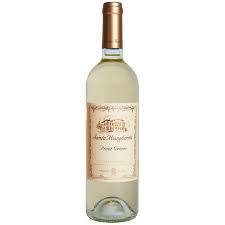
The best Pinot Grigio’s come from two northern provinces of Trentino-Alto Adige and Friuli-Venezia Giulia.   In 1979, the owner of Terlato Wine Company in Italy released Santa Margherita.   This was the first Pinot Grigio in America that was not inexpensive and do have some complexity and body.

In the retail store, Santa Margherita was the wine that customers would only purchase once in a while.   While, anyone who tasted this wine, agreed it was so much nicer than the general Pinot Grigios, BUT they would rather  spend the approx $20 on a Chardonnay, Sancerre or another classic white.

There just didn’t seem to be the market for above average Pinot Grigios.  But you do need to do yourself a favor and try one.   You will find quickly how a more sophisticated Pinot Grigio can taste.  Those elite growing areas,  Friuli and Alto Adige are close to the boundaries of the Alps and Adriatic sea.  This area takes full advantage of that great wine growing climate.

What also separates the complex Pinot Grigios from the common ones is the soil.   The grapes are planted to ensure quality and not quantity.   The soil can be described as having a lot of  marl and sandstone.   The results in the wine with mineral flavors, but limits the quantity of the grapes grown.   This lower yield produces more body, more complexity and a fuller wine.

Still bottom line, I dont believe the American consumer is ready to start to spend over $20 for any Pinot Grigio!

About


Growing up in an all Italian family, cooking was always a central part of daily life.  So much emphasis was placed on every meal.   Nothing was just plain and simple, even breakfast had to be somewhat special.   There there were two days a week that had to be kept aside.   Wednesdays  and Sundays were reserved for the big Italian meal.  Especially Sundays.   Around 2:00 in the afternoon, everyone had to start getting ready for dinner.  No matter where you were, what you were doing, it all stopped and you came home.

I remember my grandmother starting to cook for the Sunday meal around 8:00 in the morning   Back in the 1960’s there wasnt alot of canned items, so, for the tomato sauce, it was fresh tomatoes from the garden, crushed and stained.  It was almost always home made pasta. I remember my grandmother drying the fresh pasta on an irony board.  Everything was fresh.   Herbs from the garden, vegetables from the garden, about the only thing that we didnt  grow or have ourselves was the meat.    But I do remember one of my uncles who raised lambs.  He butchered them, hung them in the garage so we could have veal!

The typical Sunday meal consisted of this:

Soup
Crisp garden salad, oil and vinegar only
Pasta dish, (Ravioli, Lasagna, Spaghetti, etc) along with gravy meat
Gravy meat was Sausage, Meatball, Beef Braciole, PigSkin (agodina)
Lots of Italian Bread
Antipasto
Beef Roast with Potatos (no gravy)
Italian Ice and Espresso for dessert

Now when the family got together for holiday, there were 15 or 20 people coming for the meal.

We would generally setup a ping pong table or put one or two 4×8 pieces of plywood over a pool table or some other means of support.

The meals were basically the same as I described above, but for Holidays, the following were always added

Eggplant Parmigiana
Fritto di verdure Misto (Italian Fried Vegetables)
Fritto di Misto  (fried fish, scallops, octopus, calamari, shrimp)
Second pasta dish
Second roast, normally Pork

So, it was easy to see growing up, food was such an important part of daily life.


I still remember as a little boy, sitting in a chair watching my grandmother cooking.  She would spend hours every day preparing for each meal of the day.   It was her life, her love.   Nothing made her happier then to see everyone eating all the food that she prepared and put on the table.

I know that this affair with food fueled my interest in cooking.  As early as 15 years old, I would always like to try to make a meal in the kitchen.  Tried to imitate what my grandmother did., but that was impossible!  Over the years, I developed my own style of cooking.

I am the type of cook, who may look at a recipe, but doesn’t follow it.  I like to get the general idea of how a given food dish is made, but from there, I let my imagination and taste buds take over and then I follow that path.

I remember when I graduated from High School (1968) , I wanted to become a chef.  At that time, the only cooking shows were Julia Child and Graham Kerr (The Galloping Gourmet) and I was always watching them.   But my father said no, he was an IBM person for years  and had it set in stone that his sons were going to also become IBMers.

I did work for IBM for 35 years, but I have always maintained my love for cooking and food.  I do about 95% of the cooking in our house,

and I also do about 100% of the mess in the kitchen and about 5% of the cleanup!

My son graduated from the French Culinary Institute at the top of his class and spent almost a year in Italy as a cooking instructor.   I never did become that chef, but I have sort of lived out my fantasy through my son’s experiences.


All of the recipes that I am including here are my own recipes.   I may have looked up some basics of a particular recipe,  but then I do a lot of improvising.

Exception:
French Onion Soup  – Julia Child recipe, but I did make a number of alterations

Risotto Cakes

CAULIFLOWER RISOTTO CAKES

1              Pound Cauliflower
1 ½         Prepared Risotto
2/3         Cup Panko
4 oz        Shredded Fontina cheese
¼             Cup flat leaf parsley
2 eggs
Salt/pepper

Preheat oven to 400 degrees.  Pulse cauliflower florets until finely chopped.  Spread on a baking sheet and bake at 400 (I changed that to 375) for 40 minutes, stirring occasionally.

Prepare Risotto.  Follow the directions on the package.   It comes out best when you slowly add liquid/wine and keep stirring.  That will ensure a creamy texture for your Risotto.

Combine  Califlower, Risotto, Panko, Parsley and Cheese , salt and pepper.
Add eggs and form mixture into 8 3-4 inch circles.
Saute in nonstick pan with a little olive oil.   About 4 minutes per side.

Sauce:

4-5 Tablespoons Mayonnaise
1 Tsp Capers
¼ Juice Lemon
1 Tsp Dijon
½ Tsp Ketchup

 Serve
With Sautéed Spinach on the bottom, 2 Cakes with lemon slices on top.   Side with sauce

Wine
Crisp California Sauvignon Blanc   


Making Wine

Wine making   

has been around for thousands of years.   Wine making is not only an art, buts a science also.  The actual making of wine requires little human intervention, but it each wine maker may have different techniques or ways of adding or changing things.

From a simple home owner making wine from a kit to the most sophisticated Chateau in France, there are the same basic steps that are required.     This is called the 5 step process

1. HARVESTING

Wine grapes are the only fruit that have the necessary natural components to make natural and stable wine.   When the grapes are actually harvested

will determine much of the characteristics of that wine.   The acidity,  sweetness and flavor of the wine.   Determining the exact time to harvest is a science and itself.   Harvesting can be done by hand or using mechanical machines.  Many wine makers prefer doing it by hand, since that will give them 100% control of what is picked and how it is done.

2.  CRUSHING and PRESSING  It was fun watching Lucille Ball  stomp around a barrel of grapes.   Some areas still continue to use this fun process.


Today, most of the crushing of wine is done mechanically.  

Still many use this method of crushing and pressing the grapes.   Either way, the liquid that results from this crushing/pressing is called must.   This is simply fresh squeezed grapes that contain, the skins, the pits, the stems, the seeds and more.   Then the process of removing those items begin.   For red wines, the skins are kept longer, giving the red color , deeper bouquet and provide tannis, which gives wine that extra long life.  With white wines, the skins and such are removed much sooner than it is with reds.

3. FERMANTATION

Here is where natural or commercial yeasts are added to the wine.  This fermentation continues until all the sugar is converted into alcohol, resulting in a dry wine, or remove, leaving residual sugar for a sweeter wine.  The fermentation process can take anywhere from 10 days to over a month

4. CLARIFICATION

Clarification is the process in which solids such as dead yeast cells, tannins, and proteins are removed. Wine is transferred or “racked” into a different vessel such as an oak barrel or a stainless steel tank. Wine can then be clarified through fining or filtration.  The clarified wine is then racked into another vessel and prepared for bottling or future aging.

5. AGING and BOTTLING 


Aging and bottling is the final stage of the wine making process. A wine maker has two options: bottle the wine right away or give the wine additional aging. Further aging can be done in the bottles, stainless steel tanks, or oak barrels. Aging the wine in oak barrels will produce a smoother, rounder, and more vanilla flavored wine.   Here is you will read a certain wine is aged in oak for xx months.


Glasses


Years ago they may have been one or two different types of wine glasses.   Since then, the market is flooded with a wine glass to go with a specific wine.  Is that all necessary?  Not really, but there are some basics about what glass to use with red or white wines.   Not that the wrong glass will take away from tasting the wine, but the right glass may make it easier.

I am sure some of you older folks will remember the classic champagne glass.

These were the glasses that many newly married couples got as part of their wedding registry gifts.  We still have a set that pretty much looks like this picture.

But to really appreciate champagne and how much effort the wine makers put into it, having a better shaped glass is so much better.  

This shape allows the drinker to watch as all the tiny bubbles slowly rise up the glass and an endless display.


Red wine glasses generally should have a bigger bowl.

This allows the drinker to put their noses right into the glass to appreciate the various bouquet/aromas that red wines have.   This type of glass also allows you to swirl the glass more so that the aromas can be even more detectable, plus you can examine the legs of the wine.   When you see these legs (tears) they are an indication of the alcohol content of the wine.  The higher the alcohol, the large legs you will see.   That should also represent that the wine will have a full body.

White wine glasses generally have a more of a U shape and more upright helping the aromas to be release and keeping the wine temperature more constant.  


Port and Sherry glasses should always be smaller than your Red or White wine glass.    

This helps direct these wines to the back of your mouth so that the sweetness does not overwhelm you


Cognac While Cognac and Brandy are not wines, they are distilled from grapes, not from grains like whiskeys are.   I had a kit to take wine and to distill it into a brandy.  It was a fun experiment, not resulting in any good brandy, but interesting.  


The glasses used for Cognac are different then those for other wines.   They allow the drinker to swirl the cognac to release its enormous boquet which will aid in the actual tasting of the cognac.   When I drink cognac, the first thing I do is put an ice cube into the glass, swirl it around a couple of times and then dump the ice cube out.   Then I pour my cognac.  Adding that little bit of water, really brings out more of the flavor in the cognac.   Try it sometime.

However  While the appropriate glass can enhance the pleasure in drinking wine, please do not refrain from drinking wine because you do not have the proper glass!  I think the only vessel I do not like drinking wine out of is, a plastic cup!  My wife feels real strong about this.  She wants her wine glass!  When we go out on picnics or other outdoor events, even boating, she always brings one of her wine glasses.


Bologanse

Bologanse Sauce


Ingredients

2 pounds of ground beef
1 pound of ground pork   
1 pound of ground veal
1 Can Tomato Paste
2 Cans Tomato (Puree,  Chopped, Whole, etc) I put them in a blender to make a puree)
3 tbs Olive Oil (or more)
3 cloves or garlic, minced
2 onions, minced
2 celery stalks minced
2 carrots, minced
1 bottle dry red wine  (something that you would drink)
Salt/Pepper
Grated Parm Cheese (or better, a chunk of it with the rind)
3/4 cup whole milk
1/2 Whole Nutmeg (need a nutmeg or cheese grater to grate it) 
1/2 oz to 5 oz Crushed Red Pepper Flakes


Procedure

Sauted the garlic, onions, celery and carrots over low heat for 20-30 minutes until they are real soft
Remove

Saute Beef, drain fat, Saute Pork, drain fat, Saute Veal, drain fat
Add all meats together, add 1 can tomato paste over medium heat until blended.  Add tomatos
Add wine and salt/pepper

Simmer, simmer and simmer for 3-6 hours.  Add water/wine/tomatos if necessary.
You want the sauce to be thick….
Add Milk, Nutmeg and cheese.
Simmer for about 1 hour more

(You can add more milk/nutmeg/cheese per your taste, plus Hot pepper)

(You can freeze this sauce and reheat later.  We sometimes make double this amount and freeze
a bunch for later on)
Serve over short pastas (Rotini/Fuzilli/Penne/etc)
Add more cheese

Wine
A Super-Tuscan from Italy  

Bourguignon

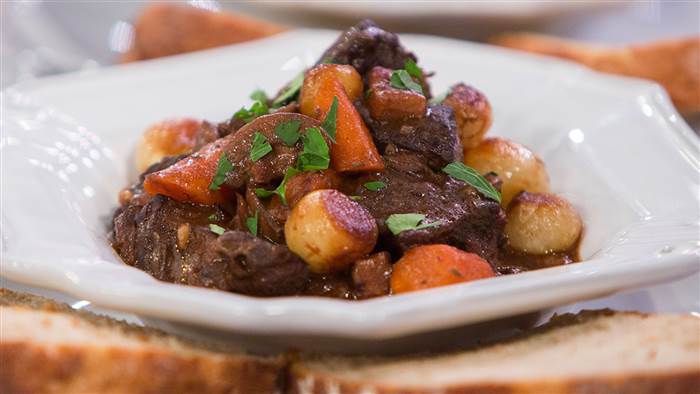
BEEF BOURGUIGNON


Ingredients  

1 cup chopped bacon 1 clove garlic, minced
24 pearl onions, peeled 1 bouquet garni
1 lb mushrooms, halved salt and pepper to taste
1 ¼ cup beef stock
`Layer the following (onion, herbs, meat; repeat)
1 large onion, sliced thin
Few sprigs parsley
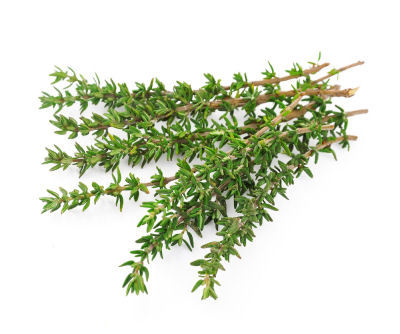
Few sprigs fresh thyme

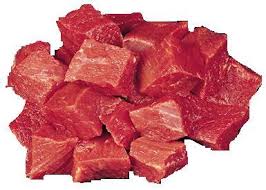
2 lbs top round (bottom round or other stewing meat is fine), cut in cubed chunks 

Combine the following and pour over all of above to marinate for at least 4 hours
2 tbs brandy
1 ¾ cup red burgundy
2 tbs olive oil
¼ cup butter

Procedure

Melt butter in a casserole, add bacon and fry until golden. Remove and set aside.
Add onions and fry until golden.  Remove and set aside.
Add mushrooms and fry, stirring for 1 min.  Drain and set aside.
Remove beef from marinade. Strain marinade and set aside.
Brown beef in batches.  Return all to pan, sprinkle with flour and stir for 1 min.
Gradually stir in marinade, then stock, garlic and bouquet garni.
Salt and pepper to taste.
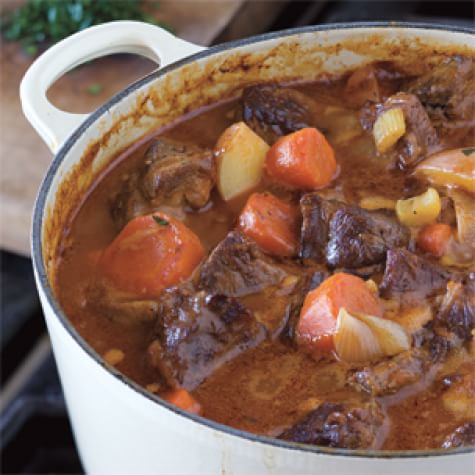
Simmer 2 hours or until meat is tender.  
Skim fat. Add bacon, onion, mushrooms.
Cover and cook for an additional 30 min. Discard Bouquet garni and serve with noodles, rice, or parsley potatoes.


 BEST MADE THE DAY BEFORE!  Serves 6 but can easily be double, tripled

Wine
French Cote d RhoneMorgan or for the bold, a  Châteauneuf-du-Pape