Storing Wine


Storing wine can be as simple as putting two or three bottles in the bottom of a closet or spending thousands of dollars on a temperature controlled wine storage unit.   Obviously, there are two deciding factors…..   How much are  you willing to spend?  and How much room do you have?    Of course, I did leave out one other factor.. How many bottles of wine do you plan to store?

There are 3 main factors that you need to follow no matter how you store wine.

Temperature
Light
Humidity

Temperature  So much is discussed as to what is the correct temperature to store your wines.  The ideal temperature is between 53 to 55 degrees.   But for many that is impossible.  What is more important is the fluctuation of temperatures.  You never want to see more than a 10 degree up or down in the temperature where you keep your wines.  I have store wines for years in a closet that was 65 degrees.  No problems, the wines aged just fine.

Light  Just how beer can get skunky, wines do not like to have light shine on them.  The darker the storage area, the better.   Some people like to display their wine collections out in the open.   Unfortunately, The UV light that penetrates even the darkest bottle, essentially cooks the wine and will age it prematurely.

Humidty  Too much or too little is not good.   Too much humidity can lead to mold growth which can possible ruin your wine.   Too little humidity can lead to drying out your corks, allowing to my oxygen into the wine, which will eventually ruin your wine.   It can be difficult to determine what is the correct humidity.  Sometimes you may need to assistance of devices that will measure this to get to the exact humidity.   My feeling has always been, if I feel comfortable in the area where my wines are being stored, it should be ok

Here are other considerations when it comes to storing wines

Wines laying down to keep the corks moist

Corked wines should be kept on their sides.   When a bottle of wine that has natural cork is left standing upright, there is a possibility that air can get to the cork and start to dry it out.  Once that happens, the density of the cork changes and more and more air will get to the wine which can eventually ruin it.  Keeping corked wines on their sides allows the wine to always be in contact with the cork, preventing it from drying out.    This always brings up a question about retail shops.   They keep their corked wines standing up.  Isnt that a problem?   The better retail shops avoid this by rotating their stock.   Every week, I made sure any corked bottle that was standing upright was moved to a slot where it was on its side and replaced with another.

Open Wine  How long can a bottle of wine stay opened and be good?  This again can be subjective.   I know people that have opened bottles of wine in their refrigerator for weeks and are still drinking it.    The wine may still be good, but…    Personally, once I open a bottle of wine, I am looking to finishing it off that same evening.  Even 24 hours after opening a bottle of wine, oxidation is going to take over and start to break down the better qualities of the wine.

That is one of the reasons, I used to love to see half bottles.   Unfortunately, they seem to be out of style.


Selling Wine

Selling wine from a retail shop takes a person who is knowledgeable, fair and honest.  Over the past 40 years I have worked at three wine retail shops.  My primary job was to educate customers about wines and help them select the wine for them.


Knowledgeable  This is a key ingredient for any salesman.  To properly sell any product you have to know and understand that product.   Many times a customer would select a bottle of wine and ask me how it is.   If I have never had that wine, my answer would be.   I have never tasted that wine, but the vineyard has a good reputation, the grape from that region is known for its light and fruity appeal.   So, I am going to assume, its going to be something like that.   If you would like, I could show you something that I have personally tasted and is in the same grape and price point.    The worse thing any salesman can do is try to make up a story, lie to the customer about the product.  Its much better to just say,  I dont really know, but I will find out

Fair  When a customer comes in looking for a bottle of wine to serve with dinner, I would generally ask three questions

1.  What are you having for dinner?
2.  Are you an avid wine drinker or just starting out?
3. What is your price point?

This sets the stage so that I can start narrowing down the type of wine that I believe would best suite the customer.   Play fair.  Keeping in mind the answer to those three questions, should allow you to select a number of different wines.   Once I do get it down to a few, then I ask more questions about their likes and dislikes about wine.   I also tell them to throw away the notion that you have to have White wine with Fish and Red wine with Meat.   Whats more important is what you like.   If you dont like dry wines, but prefer sweet, then I will find a nice sweet wine for you.

 Honest  This is so much easier for a wine salesman than the owner of the store.  The owner needs to make sure the store is profitable, so they purchase wines that will give them the largest return of profit.     Sometimes those wines are good, but at times they are just borderline.    So, when the owner works with customers, more than likely they are going to direct the customer to those wines.   Its all about the money to them and it is their business.    Now on the other hand, since, I had no direct ties to profit, I do not have to worry about the profit margins (but still as an employee, I do have to keep that in mind) I could find wines that would be best for the customer, not what is just best for the store.   It could be one of those sale wines, but the key here would be to find the right wine for the person.   My biggest thrill  is when a customer  comes back and tells me how much they liked the wine I selected for them.   At that point,  I’ve established trust and confidence with the customer and they will generally allow me to select their wines for them in the future.

ONE MAJOR TIP FOR WINE SALESMAN
Never talk big wine snobbery words to a customer.   You do not need to use a lot of fancy wine jargon or terms that may go right over the head of a new customer.   Try to identify their level of wine experience and work with that.  Make the customer feel comfortable with you.   That will go a long way.

Buying Wine

Buying wine can be a scary experience for many people.  There are so many selections, so many different wines to choice from.   The wine displays are like advertisements.  They  have so many great words to say about the wine,  they provide descriptions of the wine and  many times a point value is displayed.    Than you  add the salesman who will attempt to steer you in the right direction.   But I have found from working in retail stores and being a customer myself, there are some basics that you need to understand.

What type of wine are you looking for and for what reason ?    
How much do you want to spend ?
What are your likes and dislikes ?
The Label

What Type and Why  This is very important.   You may be coming into a store just to find a bottle of wine that you can enjoy with that special someone that evening just to relax and enjoy each other.   Or you could be looking for a wine to serve with dinner with friends.   Still you could be selecting a wine to impress a business associate.   As you can see, there are many reasons why someone wants to buy a bottle of wine.  Once you know which of these is important to you, you should be able to work with a wine salesman to help you.   If not, take your time, browse  the aisles, look at all the displays, read all the descriptions about the wine.   While some of the descriptions may sound so exciting, some may seem foreign to you.  They may talk about the wine having an apricot nose, a jammy finish, currant overtones.  Dont worry about that in the beginning.  Then there is the Point rating system.  There are three major wine organizations that rate  wines and give a point value to them.   You will always find those wines that have a 90 or above rating.   That is suppose to indicate the quality of the wine.   Two things to keep in mind here.  That does not mean that you are going to like that wine!  and secondly, many of those points are advertising related and like any other marketing industry there are some gives/takes on how a review is done

The Cost  This is an important consideration.  If you are basically new to wine, I would suggest not spending a lot of money on a bottle of wine.   There are so many very good wines that you can purchase in the $8 to $12 range.    So many customers have asked me over the years,  Is a $100 bottle of wine ten times better than a $10 bottle?   My answer is generally No, but it  depends.   For many people new to wine that $100 bottle is not going to be to their liking, mainly due to some of the complexity of that wine.   While experienced wine drinkers will say yes.  It really depends on your level of wine experience and appreciation.   For the person first buying wines, it is a good idea to purchase 4 or 5 wines of different grapes styles (Merlot, Cabernet Sauvignon, Chardonnay, Rose, etc) all about the same price range.   Take the home and try them out to see which ones you really like.   Then the next time you go shopping,  try another vineyard of the grape style that you liked.   Then after several months, purchase those same grape styles, but at slightly higher price.   Do this slowly and see if you can notice any differences between the same type of wine, but at different price points.

Not Happy with the wine
Happy Customer

Likes and Dislikes  This is very subjective.  Each person has their own likes and dislikes about anything.  The same goes for wine.   Some people dislike any wine that is dry and will drink only sweet wines.   Then you have some people that say they dont like wine at all, or they done like red wine or white wine.   I’ve always believed there is a wine for everyone,  you just have to find it.  In the beginning, I suggest sticking with your likes, but I also encourage people to branch out after a while.   I have found that people who like sweet wines, the more they try different wines, they start to gravitate to drier wines.  And for those folks that say, I dont like wine at all  The white or red blends are perfect wines for them.  They are generally soft and so easy to drink.  Any salesman should be able to so you the many blends that are on the market today.

The Label This can be a two edged sword.  Wine labels contain detailed information about the wine, almost to the point where you can anticipate what the wine will taste like.    But on the other hand, because of smart marketing ideas, there will be labels that will just catch your eye.  So many people have purchased wines because they like the label without knowing anything about the wine or type!

To buy wines on a regular basis,  it is important to get to know your salesman.  You may want to visit many different wine retail shops to look over their inventory, their displays and  to talk with some of their salesman.   Is the person pushy?  Are they just trying to sell you any wine?   Or will they spend time with you listening  

to what you like and dont like, etc  When you find a salesman that you can trust, then you will have made your wine buying that much easier.

Over time, you will develop better skills in selecting the wines that you want. Part of this process is also finding a wine salesman  that you trust and know that they are working with you to find the right wine at the right price just for you.

In the end, purchasing wine should be a fun event, something that you can look forward to do and find excitement about all the different wines.
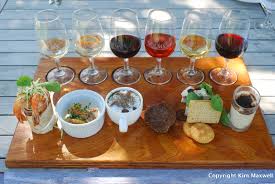
Food and Wine Pairing

 Food and Wine Pairing     Stolen from the Wine Folly

  1. The wine should be more acidic than the food.
  2. The wine should be sweeter than the food.
  3. The wine should have the same flavor intensity as the food.
  4. Red wines pair best with bold flavored meats (e.g. red meat).
  5. White wines pair best with light-intensity meats (e.g. fish or chicken).
  6. Bitter wines (e.g. red wines) are best balanced with fat.
  7. It is better to match the wine with the sauce than with the meat.
  8. More often than not, White, Sparkling and Rosé wines create contrasting pairings.
  9. More often than not, Red wines will create congruent pairings.

But it is also very subjective in terms of the likes and disk likes of individuals. The above set of sort of golden rules are important to remember, but that does not mean you can not alter any of those.    This goes back to when people said that You had to serve white wine with fish and red wine with meat   I am very glad that semi-rule has basically been eradicated.  You drink the wine you like with the food you like.  That being said, follow some tips/rules and principles you can create a marriage in heaven between food and wine.

I have paired this wine types with food types over the years.   While they might not be everyone’s first choice, it was the marriage between both the food and wine that made me select what I did.

Pinot Noir:   You can serve this with just about any meal, meat, fish, spicy, etc.  I like to use it for most of my barbecues.  Be it pizza grilled , salmon grilled, or a simple burger.

Chardonnay:  I love it best with Roasted Chicken

Sauvignon Blanc:   My shell fish wine.  I especially love it with Lobster, but I have enjoyed it so many times with steamed clams,  clams and linguine

Sancerre:  Even though a Sancerre is essential a Sauvignon Blanc, to me it has more body and a bit of French crispness that is lacking from most other Savigunon Blancs.  I love to pair his with Shrimp, especially Shrimp Scampi.

Zinfandel:  My favorite pairing.  A bold Zinfandel from Lodi and a Rack of Lamb.  The Rack of Lamb I serve with a Fresh Rosemary/Garlic Zinfandel reduction.  The fullness and spice/pepper from the Zinfandel just goes great with the Lamb.

Cabernet Sauvignon/Bordeaux:   I love this wine with any red rich piece of beef.   Prime Ribs, Filet Mignon, NY Stip Steak, etc.   My favorite pair is a French St Emillion Bordeaux with a perfectly cooked Chateaubriand.   The first time I had this was at a French restaurant in Manhasset, Long Island.    The meat just melted in my mouth, no need for a knife and the wine was a 1964 Chateau Clos Fourtet.

Pinot Grigio:   I serve this with almost any light pasta dish, especially those with a cream sauce.   I like the crisp and acidity when served with something like Fettuccine Alfredo.

Syrah or Shiraz:  With a real spicy BBQ dish.  I love making Chicken wings that are marinated in a wine glaze containing Ghost Chili Peppers.   Now, since those are the HOTTEST peppers in the world, I really needed something to tame the heat.   If it wasnt for a Shiraz, I would probably opt for a crsip IPA!

There are so many more, as time goes by, I will probably add to this list.

For several years I ran 7 course wine dinners for about a hundred people.   I would select the wine theme  (ie Champagne, CT Wines, Wines from Argentina, etc) and then I would work with the caterer in coming up with the best food course to serve with my wine.   This was a give and take procedure with several trials before I got exactly what I wanted.   I was fortunate enough to be able to tap into my son’s skills, since he is an established formal chef.

I still remember one dinner when I was serving  Susana Balbo Signature Malbec  with  Bife de lomo (tenderloin) along with a Chimichurri sauce.

Everyone who tasted the meat and drank the wine thought it was one of the best combinations that they have ever had.   That is what I always strive for when pairing food and wine


Some Food and Wine pairing I have enjoyed over the years

Oysters with a French Loire Valley Muscadet
Rack of Lamb with a California  Old Vine Zinfandel with fresh rosemary sauce  Clams  over Linguine with a chilled Italian Gavi
Any Italian pasta dish (with or without cheese) with a Barbera d’ Asti
Caviar with Champagne
Lobster with Sauvignon Blanc
Roasted Chicken with a full bodied, medium oaky Chardonnay
Escargot with a French Sancerre

The list could go on and on.  But again its really up to your taste.   Try to look for wines that will compliment the food.     To get really in depth knowledge of Food and Wine pairing, I suggest you visit 
https://winefolly.com/tutorial/getting-started-with-food-and-wine-pairing/


One last statement, one of the best marriages made in heaven is

  Rich Chocolate with a Full bodied Cabernet Sauvignon

Tasting Wine

Tasting wines should always be a fun experience.   Over the years, so much emphasis has been placed on all the various attributes about wine that it has become more and more difficult for people just to enjoy the tastings.

Anyone can taste and enjoy a new glass of wine.   But there are certain aspects of tasting that can enhance your experience without it becoming an overwhelming task.   There are some basics about wine that everyone should be aware of.    This doesn’t matter if you are tasting a Red, White or Rose wine.

Color and Clarity
Aroma/Boquet
Taste  (Dry, Sweet)
Body
Finish

Color   This is the ‘hue’ of the wine color.   Most white wines should always be light in color, some may have a pale yellow tone, some a deeper golden color, while some may be almost colorless.   But you always want to look for the clarity of the wine.  Should be brilliant, not cloudy and without any particles.

Aroma/Boquet   In pure terms, Aroma comes from the type of grape in the wine, while Boquet is what is developed after the wine is fermented.   Personally, I use these terms interchangeable.   I am sure you have watched people tasting wines where they almost put their entire nose into the glass!   May look a bit strange, but this is one way in which you can start to detect all the different aromas/boquet in different wines.    Here is where you will hear the terms: vanilla, chocolate, mint, blackberry, currant, smoke and much more.   Dont be concerned about all of this, just try to pick out an aroma that you can smell.  And if you cant, dont worry about it.

Taste (Dry,Sweet)  This is probably the easiest one for anyone to distinguish.  Basically, dry wines are those that all of the sugar has been fermented out, while sweet wines maintain some residual sugar.   Your tongue will be the judge to determine a dry wine from a sweet wine.

Body  This is a difficult attribute to describe.  You will hear full body, thin, lean, etc.  What does all that mean.  The easiest way to identify the body is to use an analogy of milk.  Heavy Cream to Non-Fat    A full bodied wine fills your mouth just as heavy cream would do.  And on far opposite, a thin wine would be like having non  fat milk.

Finish  For me, this is one of the most important attribute about a wine.  The finish is how long the taste of that wine stays with you after you swallow.   Is it a quick hello and goodbye?  or is it a long lingering aftertaste that stays with you for a long time to remember.

These are just some very simple terms in basic wine tasting.   Its enough to get you started so that you can enjoy tasting wine  at a retail shop, with friends or any place.   One thing I can guarantee is that after you start tasting wines for a while, you will develop more intense feelings about it, picking out subtle differences between grapes.    My biggest advice is to always take notes about the wines you are tasting.


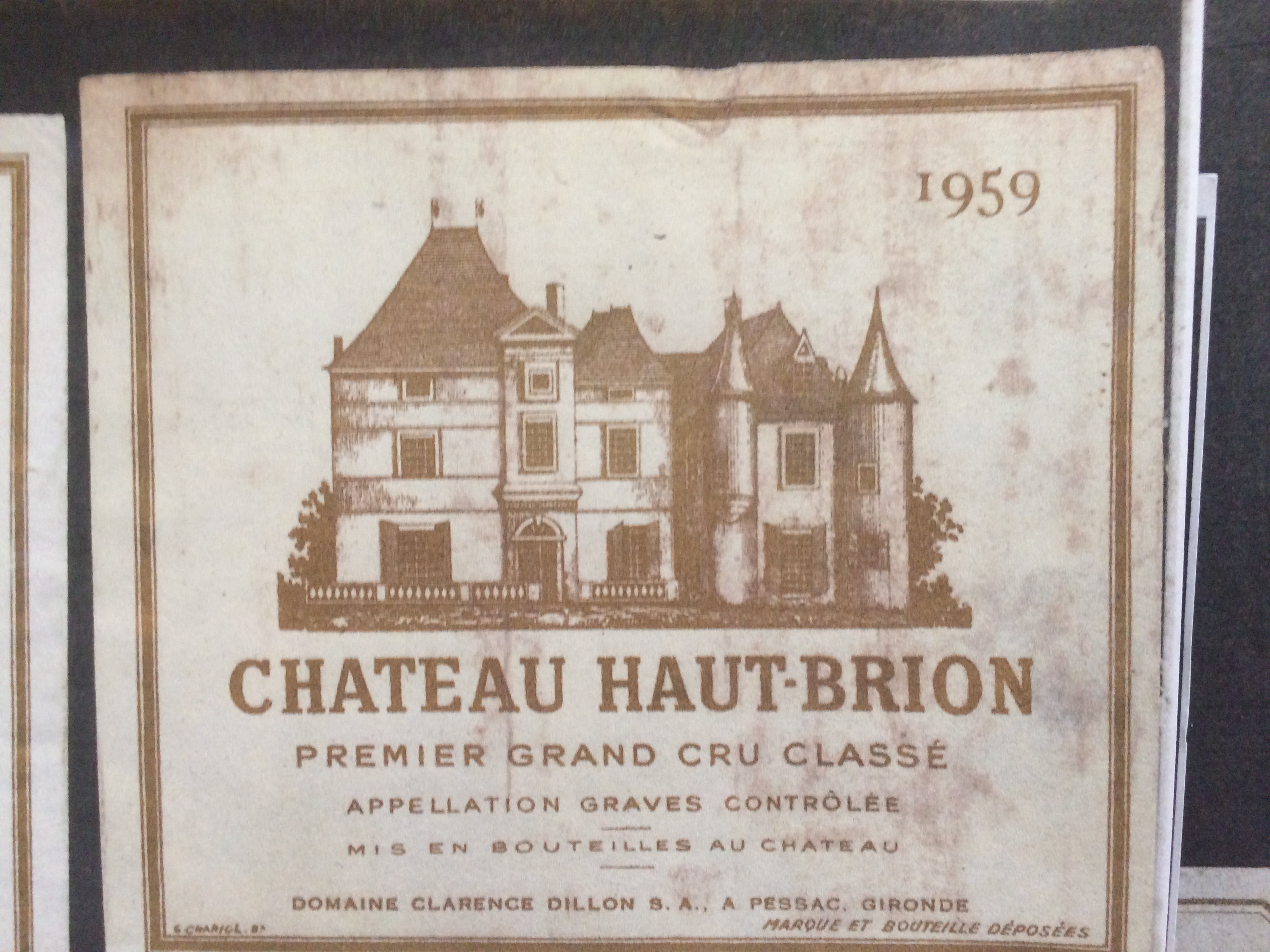
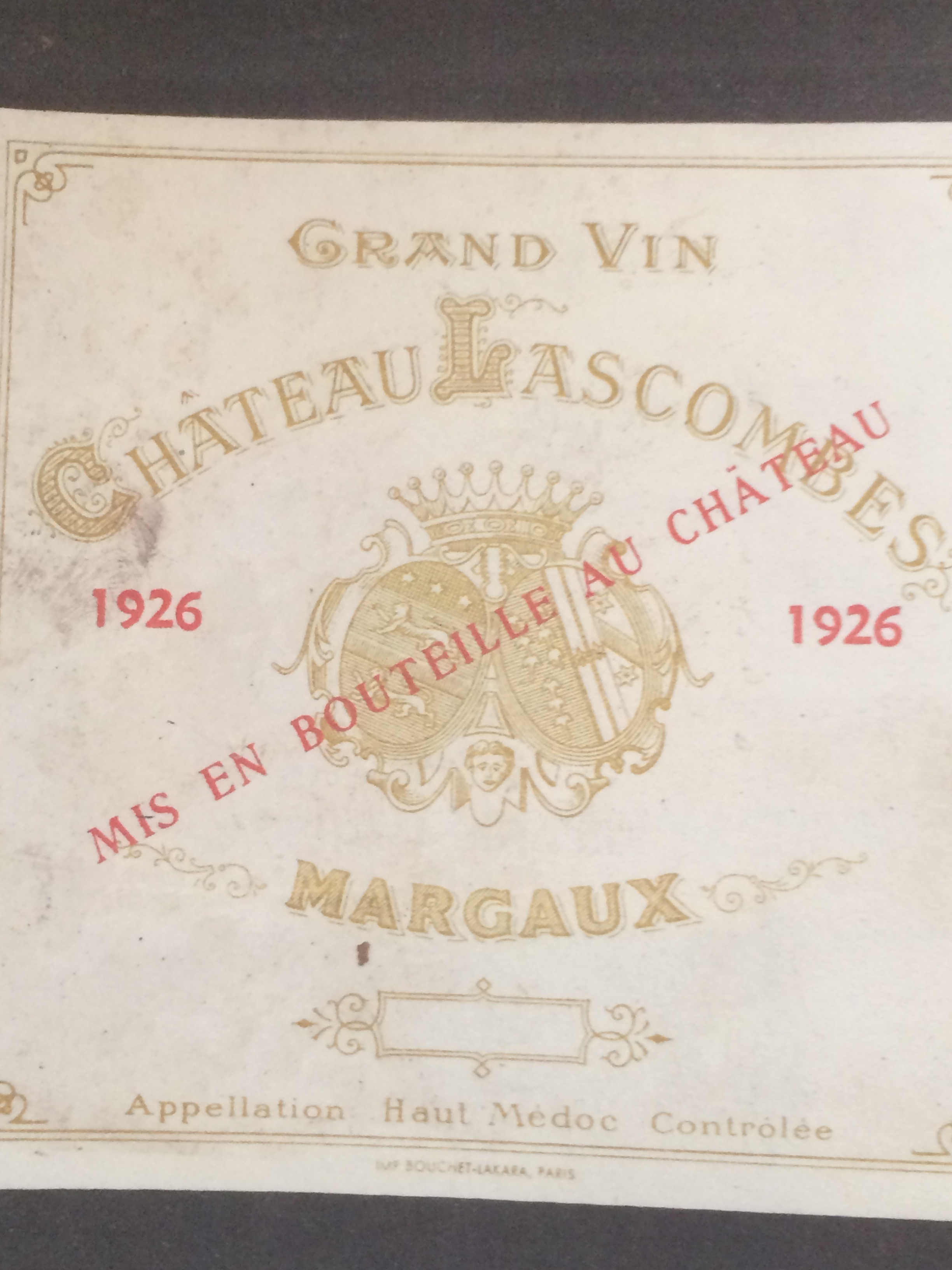
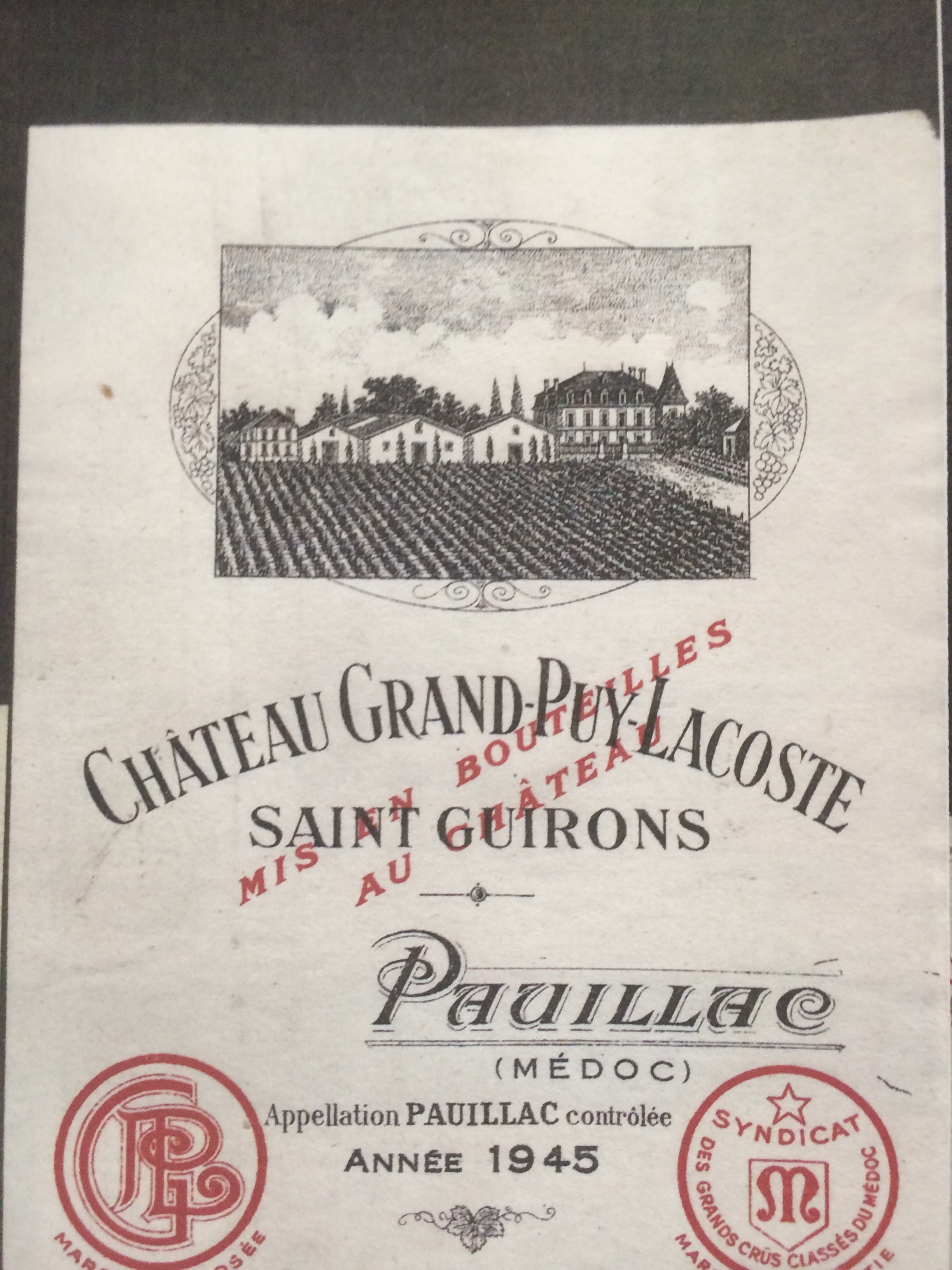
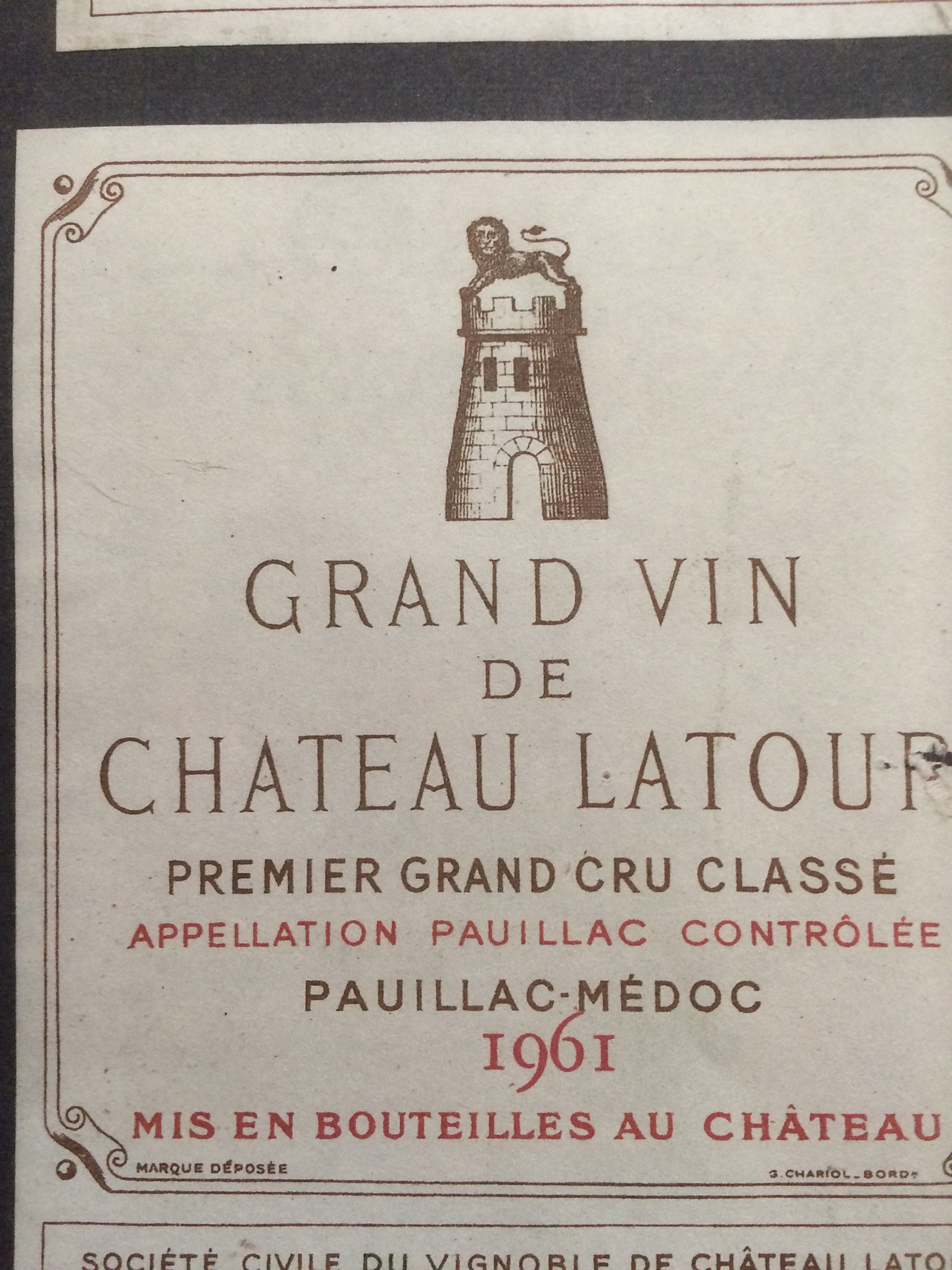
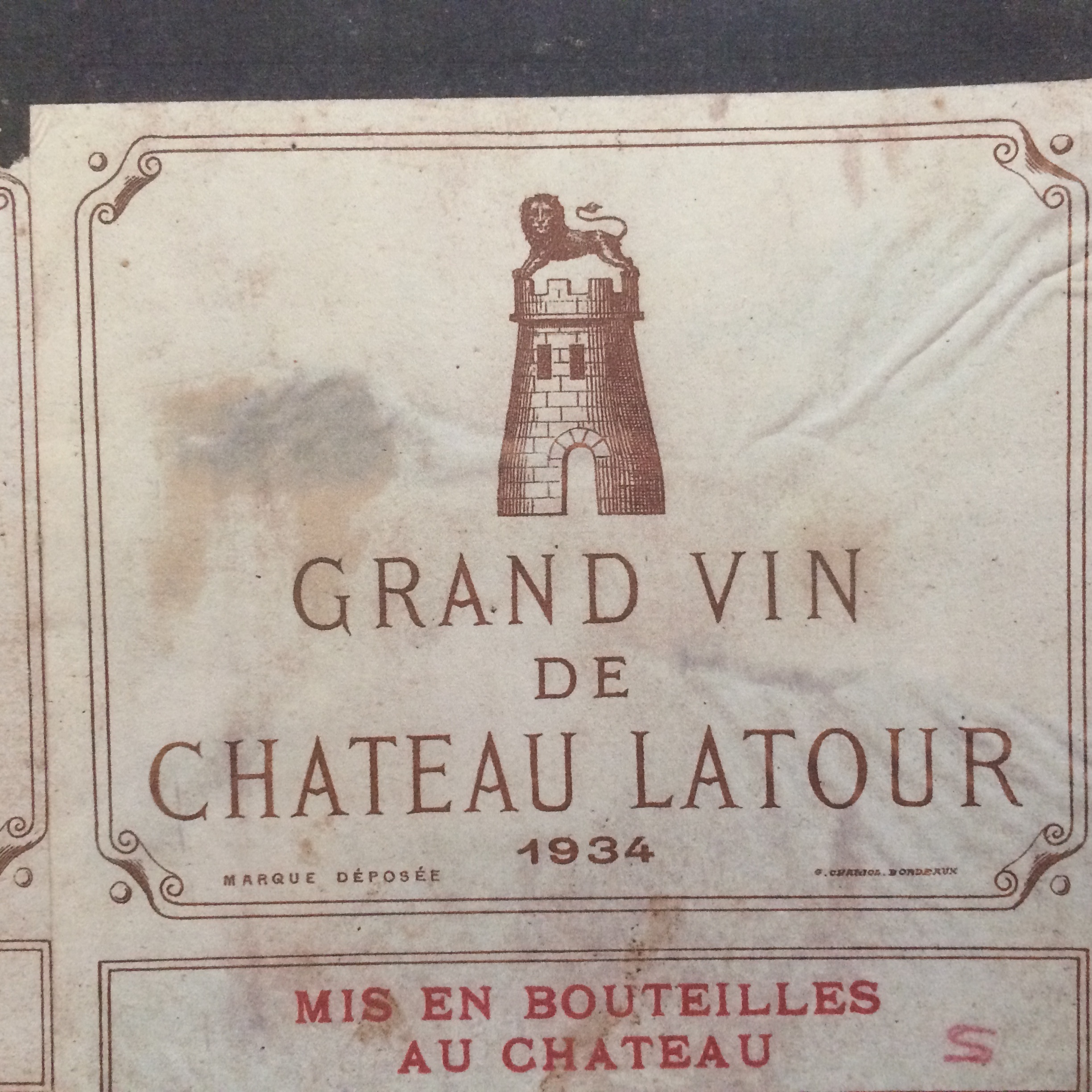
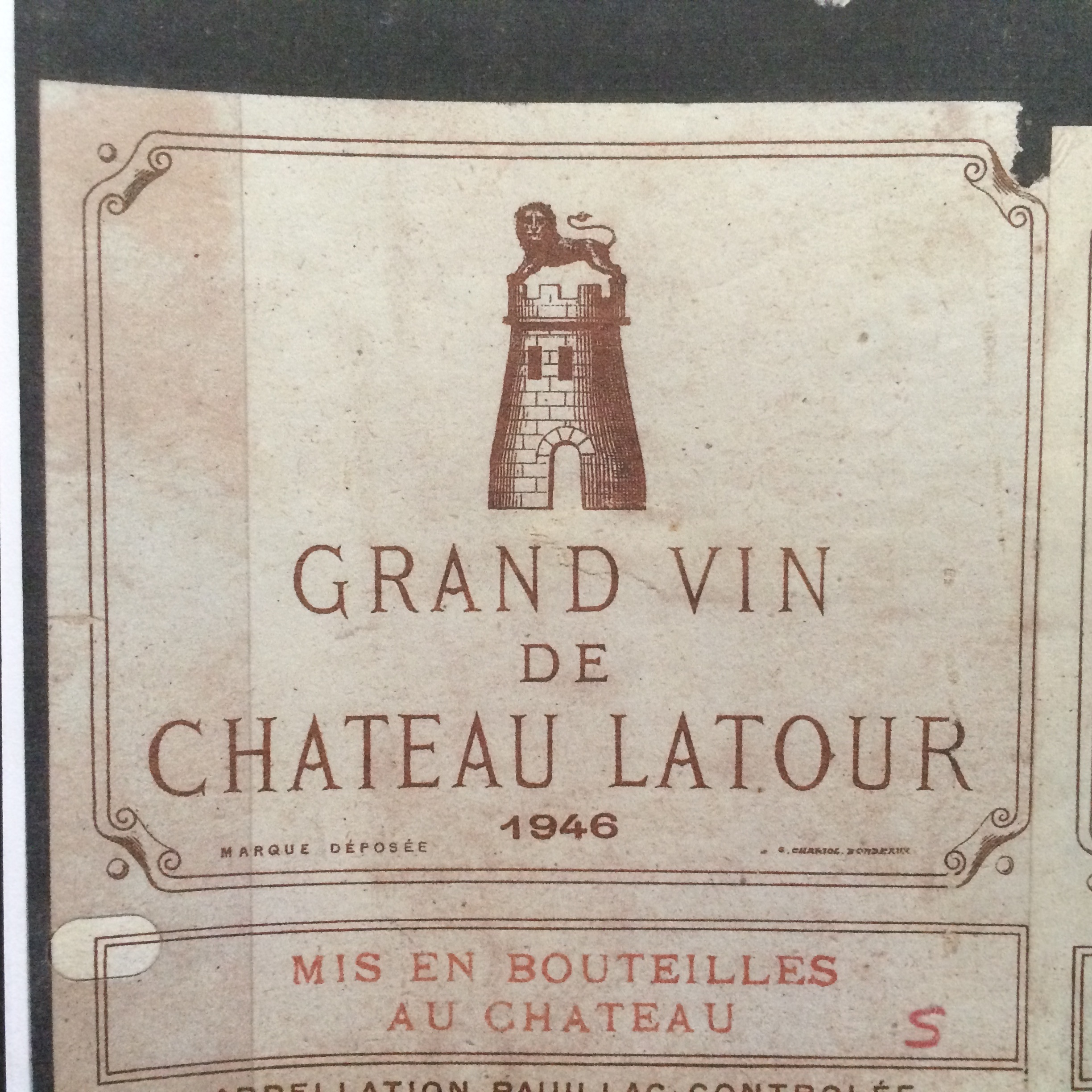
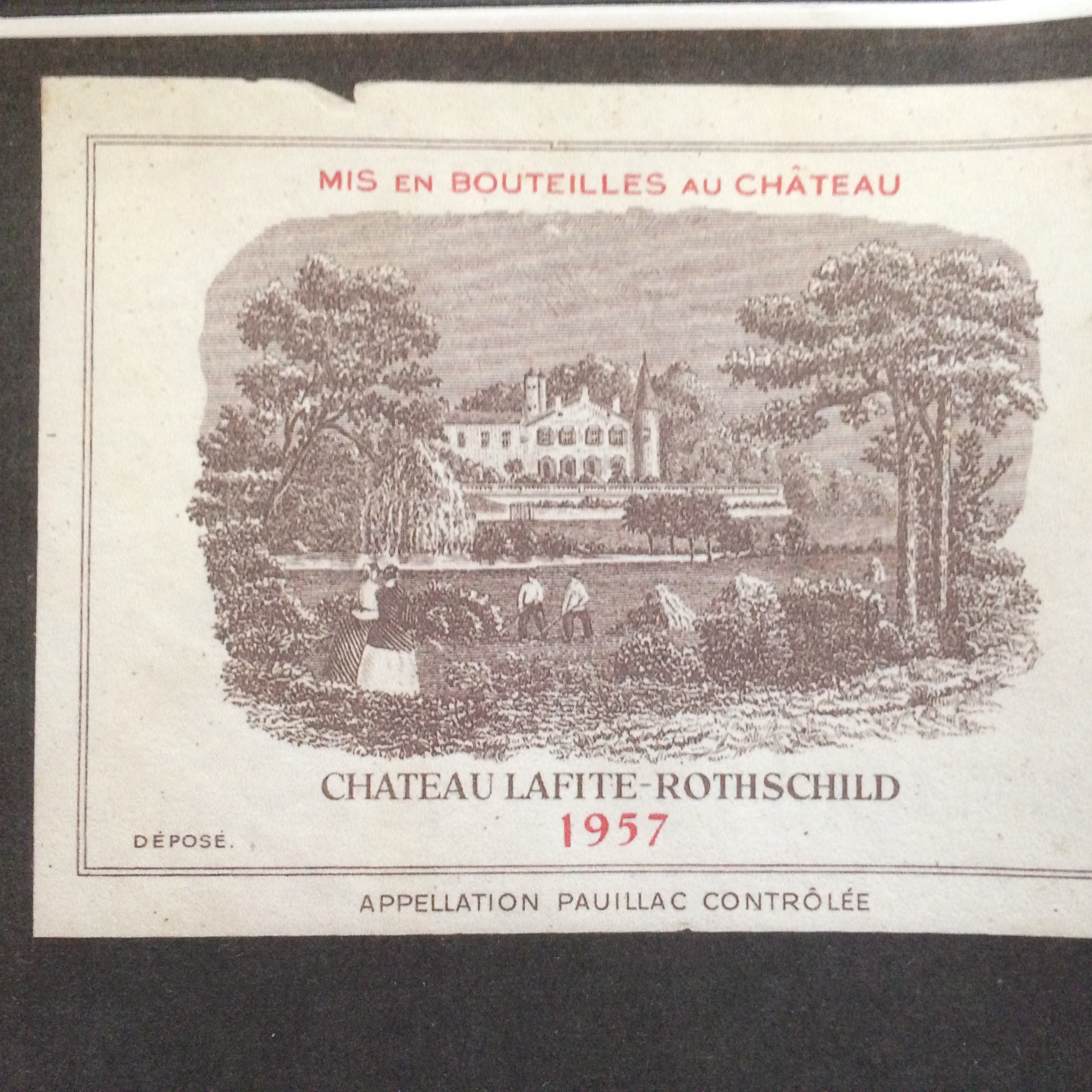
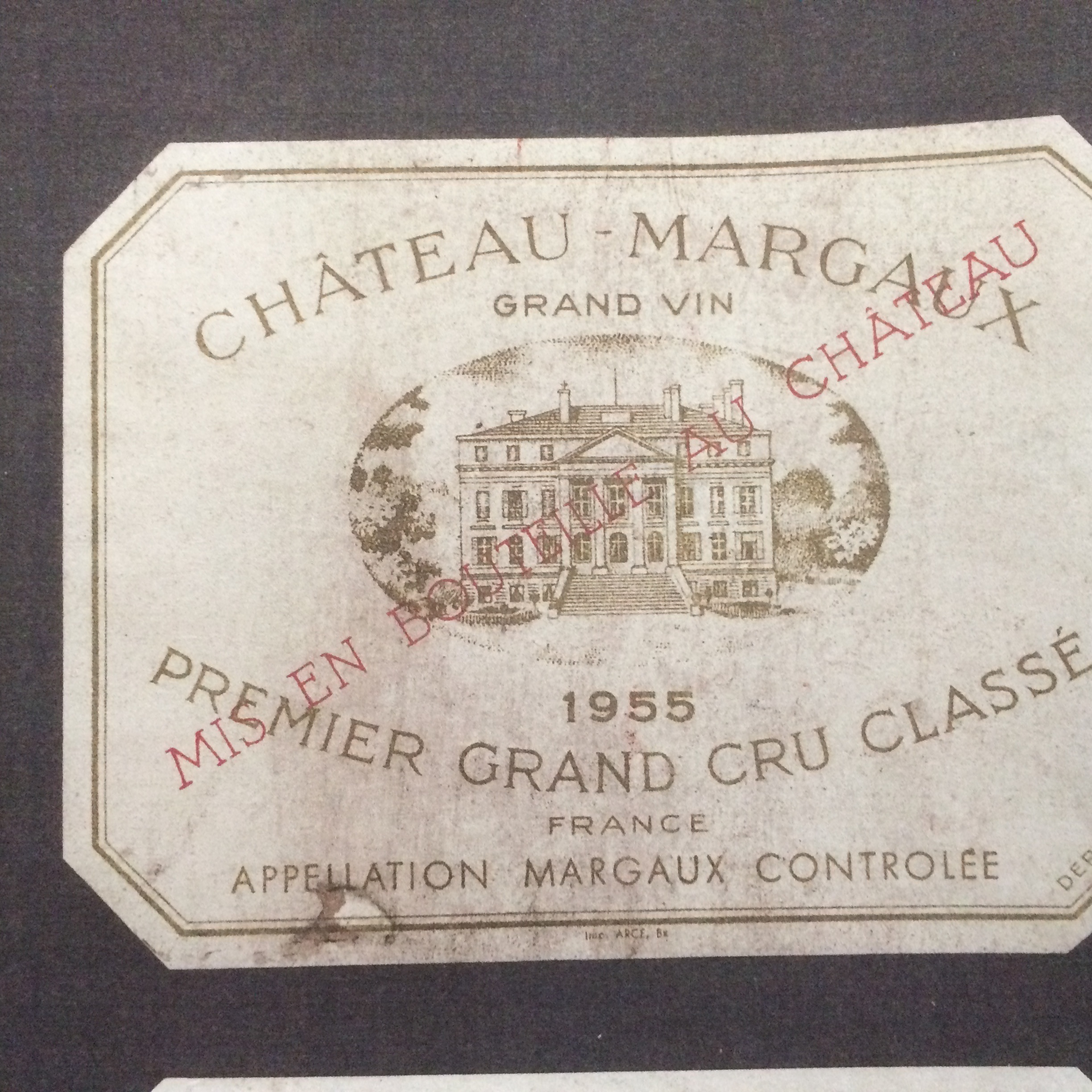
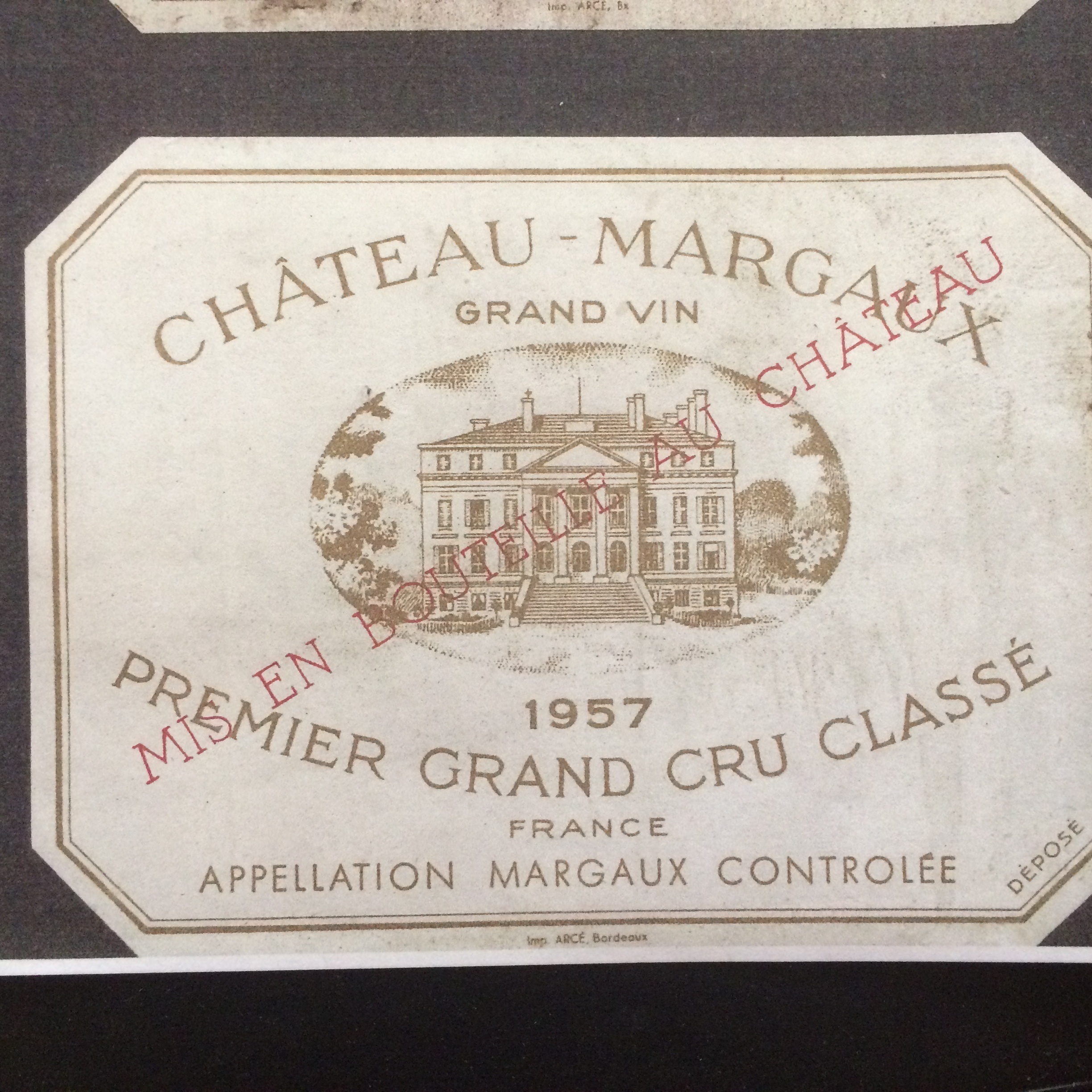
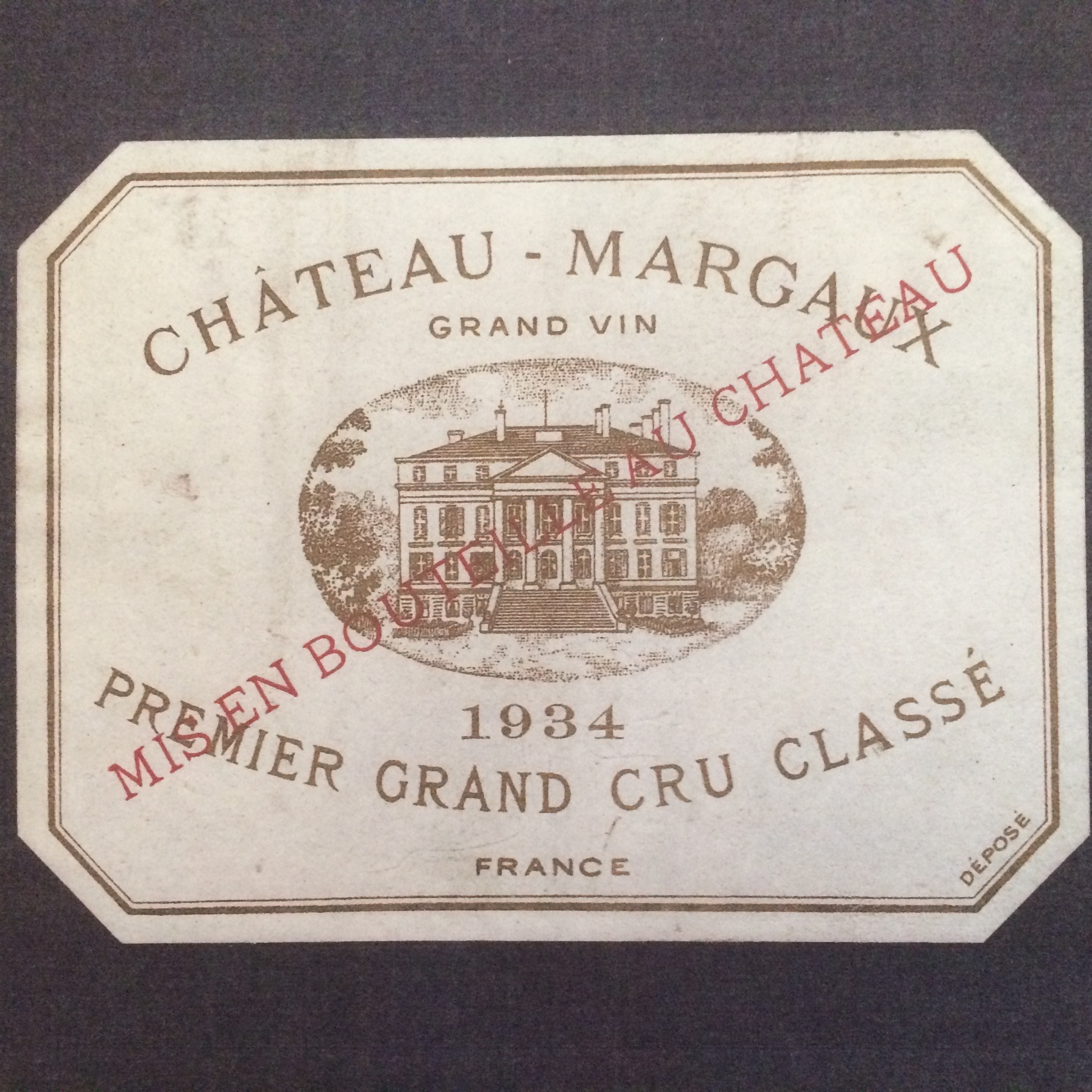
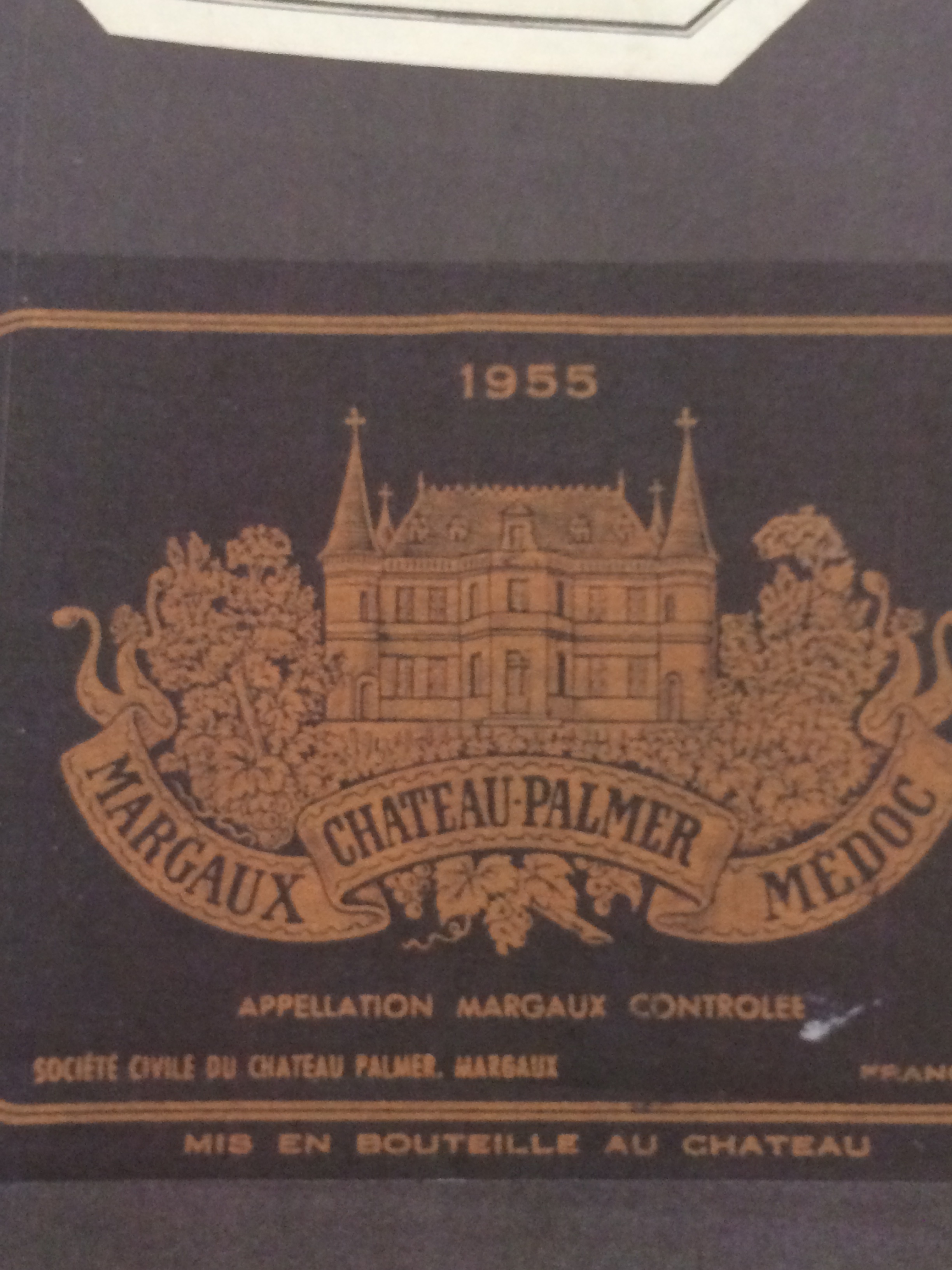
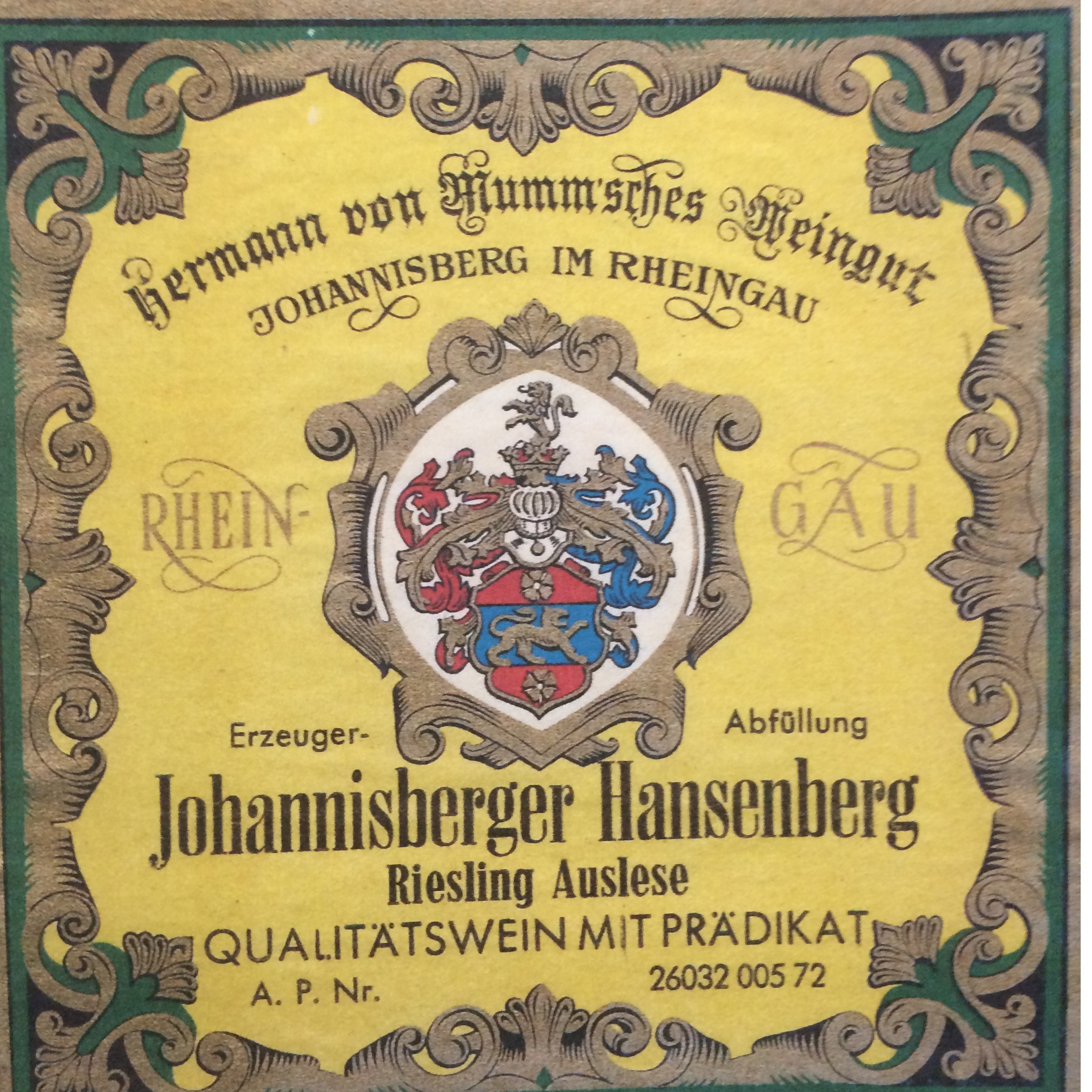
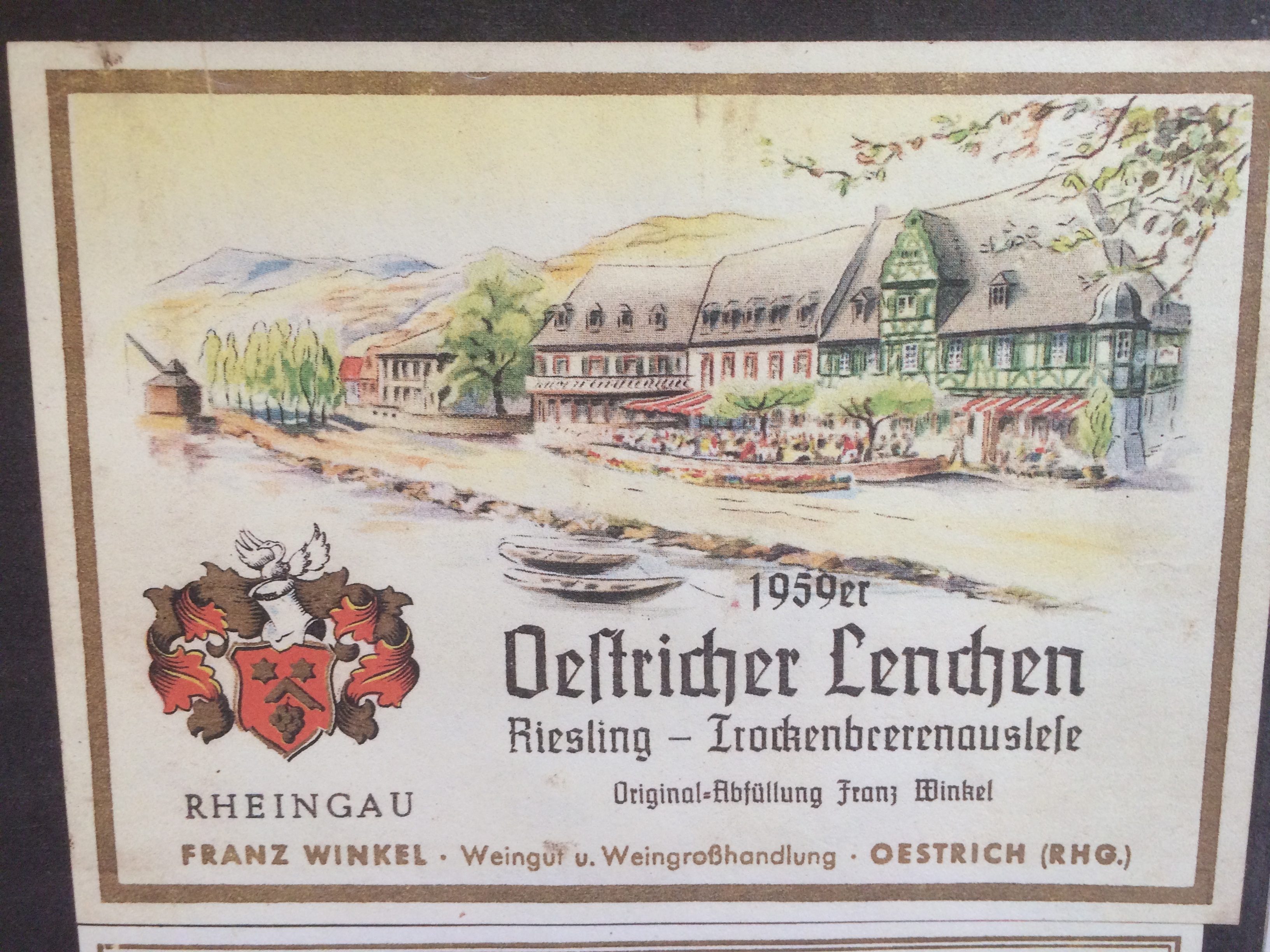
Labels of wine that Ron has had over the years

Chateau Haut Brion 1959
Chateau Lascombes 1926
Chateau Grand Pul Lacoste 1946
Chateau Latour 1961
Chateau Latour 1934
Chateau Latour 1946
Chateau Lafite Rothschild 1957
Chateau Margaux 1955
Chateau Margaux 1957
Chateau Margaux 1934
Chateau Palmer 1955
Johnannisberge Hansenberg Riesling Auslese


Oeftricher Lenchen Riesling – Trockenbeerenauslele 1959


Cork

 Every since I was a little boy, I remember all bottles of wine had corks that 

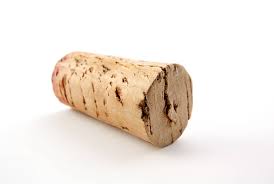
needed to be pulled out using a winged cork screw.  There was always something magical about how the cork screw went into the cork and without a lot of effort, the cord would pop out with  little fanfare.     Natural cork is very expensive, it actually adds to the cost of the wine.  Cork is grown in Portugal and comes from cork trees (Sobreiro) that need to be at least 25 years old.  But then the cork can only be harvested (stripped)  every 9 years.   Even though these cork trees  can live for over two centuries,  there has been a decline in the quantity of cork trees and the quality cork (harvested too soon, poor techniques)  That is making natural cork more and more expensive.


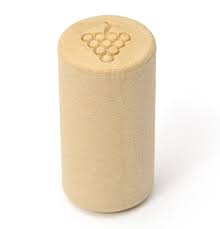
About 10 years ago, some wine makers came up with the idea of using artificial cork. 


These corks were so smooth and dense and were excellent in keeping oxygen out.  But these corks presented a new challenge.  They could be very difficult to remove without breaking the cork screw or chipping the bottle!

One of the worst enemies of wine is oxygen (oxidation), but at the same time it is also its  best friend.  Once you open a bottle, the living wine starts to breathe.   For many young reds, this allows time for those harsh tannins to turn from little brats into cozy comfortable  grandparents.

At the same time however, once the wine is exposed to the air, it  starts to break down.  This oxidation process eventually will make the wine almost tasteless over  time. (much depends on the type of wine)    So what was next?

The nostalgic screw top.   

We all remember those that came on inexpensive bottles of wine and the jug wines.   But in reality, the screw top is an excellent way to preserve wine.  It keeps air from coming into contact with the wine better than all other stoppers.     One drawback, on that special occasion, do you really want to see the waiter opening a bottle of wine by twisting the cap!


Which is really the best?  The best for us or the best for the wine!

This is a topic that can go on and on and around and around.   I know that the old school wine folks will insist that only real cork should be used and that it is the best  .   But why, I question?  It does provide the best fit when it comes to being placed in the bottle.  BUT since cork is a natural resource, in time, that resource will begin to dry up.

When that starts to happen, the cost of using natural cork will continue to rise.   Just like we have to pay more money for daily game tickets because the salaries of the professional athletes continues to rise. All of this is passed on to the consumer.  The cost of using natural cork has to be included in the price of the wine.  Add to this, that the number of trees in  Portugal and Spain producing quality cork is

diminishing.


So, its Rocky vs Apollo Creed...    The Great Wine Cork Debate!
Natural corks vs synthetic corks:  Which on wines?

Weighing in at so many pounds, the challenger * Synthetic wine corks *

The Good
-Synthetic corks DO effectively prevent the most annoying ‘cork taint’
-The second advantage of synthetic wine corks is simply economics: they’re cheaper
The Bad
-Synthetic corks don’t expand/contract within the bottle
-Synthetic corks can be difficult to remove
-Synthetic corks can’t allow small amounts of oxygen that help age bottled age   

Standing in the other corner, is our champion from Spain.   Weighing in at the perfect weigh is  * The Natural cork *

The Good
– Harvesting does not kill the trees
– Can be recycled
– An old and generally effective method of enclosing wine
– Allows wine to breathe; best for aging
The Bad
Susceptible to cork taint
– Take a long time to age and can only be harvested every 9-12 years

The WINNER  ?


I still remember reading To Cork or Not to Cork by George Taber and how interested I became on this simple subject.    A few paragraphs from his  book

For nearly four centuries virtually every bottle of wine had a cork in it. But starting in the 1970s, a revolution began to topple the cork monopoly. In recent years, the rebellion has been gathering strength. Belatedly, the cork industry began fighting back, while trying to retain its predominant position. Each year 20 billion closures go onto wine bottles, and, increasingly, they are not corks.  
The cause of the onslaught against cork is an obscure chemical compound known as TCA. In amounts as low as several parts per trillion, the compound can make a $400 bottle of wine smell like wet newspaper and taste equally bad. Such wine is said to be “corked.” While cork’s enemies urge people to throw off the old and embrace new closures, millions of wine drinkers around the world are still in love with the romance of the cork and the ceremony of opening a bottle. 
With a thorough command of history, science, winemaking, and marketing, Taber examines all sides of the debate. Along the way, he collects a host of great characters and pivotal moments in the production, storage, and consumption of wine, and paints a truly satisfying portrait of a wholly intriguing controversy. As Australian winemaker Brian Croser describes it: “It’s scary how passionate people can be on this topic. Prejudice and extreme positions have taken over, and science has often gone out the window.”

1855 Bordeaux Classification

The Official 1855 Classification

First-Growths   Premiers Crus

Château Lafite Rothschild Pauillac
Château Latour Pauillac
Château Margaux Margaux
Château Haut-Brion Pessac, Graves (since 1986, Pessac-Leognan)

Château Mouton-Rothschild (became a first-growth in 1973) Pauillac

Second-Growths Deuxiemes Crus

Château Rausan-Segla (Rauzan-Segla) Margaux
Château Rauzan-Gassies Margaux
Château Léoville Las Cases St.-Julien
Château Léoville Poyferré St.-Julien
Château Léoville Barton St.-Julien
Château Durfort-Vivens Margaux
Château Gruaud-Larose St.-Julien
Château Lascombes Margaux
Château Brane-Cantenac Cantenac-Margaux (Margaux)
Château Pichon-Longueville-Baron Pauillac
Château Pichon Longueville Comtesse de Lalande (Pichon-Longueville-Lalande) Pauillac
Château Ducru-Beaucaillou St.-Julien
Château Cos-d’Estournel St.-Estèphe
Château Montrose St.-Estèphe

Third-Growths  Troisiemes Crus

Château Kirwan Cantenac-Margaux (Margaux)
Château d’Issan Cantenac-Margaux (Margaux)
Château Lagrange St.-Julien
Château Langoa Barton St.-Julien
Château Giscours Labarde-Margaux (Margaux)
Château Malescot-St.-Exupéry Margaux
Château Cantenac-Brown Cantenac-Margaux (Margaux)
Château Boyd-Cantenac Margaux
Château Palmer Cantenac-Margaux (Margaux)
Château La Lagune Ludon (Haut-Médoc)
Château Desmirail Margaux
Château Calon-Ségur St.-Estephe
Château Ferrière Margaux
Château Marquis-d’Alesme-Becker Margaux

Fourth-Growths Quatriemes Crus

Château St.-Pierre St.-Julien
Château Talbot St.-Julien
Château Branaire-Ducru St.-Julien
Château Duhart-Milon Rothschild Pauillac
Château Pouget Cantenac-Margaux (Margaux)
Château La Tour Carnet St.-Laurent (Haut-Médoc)
Château Lafon-Rochet St.-Estèphe
Château Beychevelle St.-Julien
Château Prieuré-Lichine Cantenac-Margaux (Margaux)
Château Marquis de Terme Margaux

Fifth-Growths Cinquiemes Crus

Château Pontet-Canet Pauillac
Château Batailley Pauillac
Château Haut-Batailley Pauillac
Château Grand-Puy-Lacoste Pauillac
Château Grand-Puy-Ducasse Pauillac
Château Lynch-Bages Pauillac
Château Lynch-Moussas Pauillac
Château Dauzac Labarde (Margaux)
Château Mouton-Baronne-Philippe (Château d’Armailhac after 1989) Pauillac
Château du Tertre Arsac (Margaux)
Château Haut-Bages-Libéral Pauillac
Château Pédesclaux Pauillac
Château Belgrave St.-Laurent (Haut-Médoc)
Château Camensac (Château de Camensac) St.-Laurent (Haut-Médoc)
Château Cos-Labory St.-Estèphe
Château Clerc-Milon Pauillac
Château Croizet-Bages Pauillac
Château Cantemerle Macau (Haut-Médoc)