

Wine Regions of France
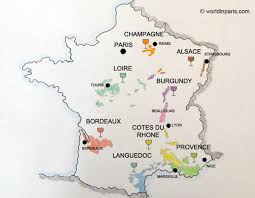
Its so difficult to start any blog about French wines. Their history is so rich and many of their wines are the most sought after and expensive wines in the word.
I had always be partial to French wines, since their wines is what I was first schooled . Most of my early wine tasting experiences centered around French wines. I was so fortunate, at the age of 22 to be able to taste so many of the greatest French wines made.
-
- The best vintages of all of the 1st growth Bordeaux
- The best vintages from the 2nd, 3rd, 4th and 5th growth Bordeaux.
- All of the 1st growth Sauternes.
- Red Burgundies: Romanee-Conti , Echezeaux, Gran Echezeaux, La Tache
- White burgundies such Corton-Charlemagne, Meursault, Puligny-Montrachet.
- Scores of other great French wines from Loire, Rhone and other areas.
I worked at one of the largest wine retail stores on Long Island, Steward Spirits. We specialized in French, German and Italian premium wines. Over 50% of the store was dedicated to those wines, wine 20% to other wines and the jug wines from USA. We had only about 20% in liquor, and 10% in cordials.
The owner made sure that his sales staff understood wine. He made it a point that we would taste at least 2 of the wines above, record notes, discuss the wine. This was done at least 3 times a week. So , after several years, we built up an extensive set of wine knowledge. I was at the top of my wine experiences at the time, though at a young age, many older customers did not take me serious. But over time, as I demonstrated what I knew, that all changed. I also realized that you never Know enough about Wine!
Major Wine Regions of France
Any conversation about wine regions in France has to include the areas of Bordeaux and Burgundy! Included in those regions are so many sub regions, that I could write an entire book about. Instead, I will just touch on the key areas.
Bordeaux
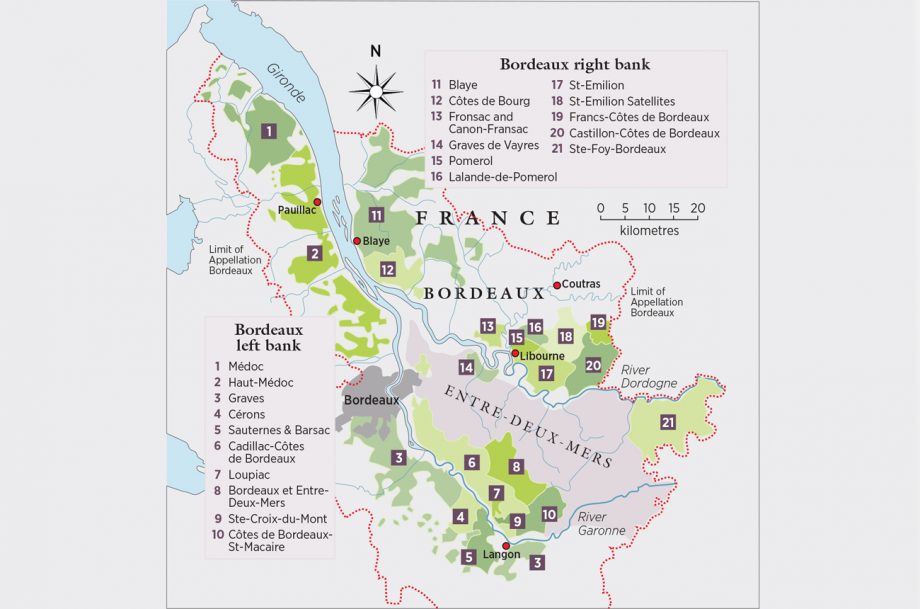
Located in the south western part of France, the regions of Bordeaux are northwest of the Gironde river. Here are the two major areas, the Left Bank and the Right Bank. The Left Bank is the area directly south of the Garonne River. The Right Bank is the area to the north of the Dordogne river
The Left Bank (Medoc) is home to some of the most famous Bordeaux appellations:
St-Estèphe
Pauillac
St-Julien
Margaux
Cabernet Sauvignon is the dominant grape. Merlot, Petit Verdot, Malbec and Cabernet Franc tend to play supporting roles.
The terroir is mostly flat with gravel topsoil and limestone underneath, although the composition can vary substantially from one vineyard to the next. Wines typically have more tannin and a bigger overall structure than their Right Bank counterparts. Pauillac, in particular, has a reputation for producing powerful, muscular wines.
The Right Bank is home to:
Pomerol
St-Emilion
Right Bank wines are predominantly Merlot-based, with Cabernet Franc, Cabernet Sauvignon, Malbec and Petit Verdot used as blending components. The terroir is comprised of a limestone surface with less gravel and more clay. It’s mostly flat with smaller vineyard plots than on the Left Bank, most notably in Pomerol. The wines tend to be rich in fruit, softer in mouthfeel with less tannin and acid. While some top wines can be aged for many years, there are plenty of wines that are also enjoyable when young.
Another major region is Haut-Medoc
The Haut-Médoc, basically the area in the Médoc that does not fall into one of the Fab Four wine villages (Pauillac, Margaux, St-Julien and St-Estèphe), is another mainstay of Bordeaux wine. In general, this is more of an area for values than absolute quality and luxury.
The Haut Medoc Bordeaux wine appellation is massive. In fact, the Haut Medoc appellation is the largest area under vine in the Medoc with a total of 4,198 hectares planted with vines. Almost 400 different chateau produce wine or operate vineyards in the Haut Medoc today. Out of that number, about 250 produce and sell their own wine. The remaining 150 growers sell their wine or grapes to local cooperatives or negociants.
In an average year, 2,333,000 cases of wine are produced. Cabernet Sauvignon is the main grape in the region. Only red wines are allowed by AOC law to be produced in the Haut Medoc. The few white Bordeaux wines made in the region are sold as Bordeaux Blanc wine. When you compare the Haut Medoc appellation with the other lesser communes, because there are so many different terroir and soils in Bordeaux, as well as diverse approaches to wine making, there is no particular style of Bordeaux wine produced here. It’s wide and varied. With hundreds of Chateaux, there are some that push the quality envelope as far as it can go, hoping to produce the best wines possible, while other chateaux are content to simply try selling what they make, simply because it says Bordeaux on the label. While only 5 chateau were included in the 1855 Classification from Haut Medoc, it is home to the majority of Cru Bourgeois classed chateaux.
Burgundy (Bourgogne)
The region stretches from Champagne to the Rhone, produces the greatest Chardonnay and Pinot Noir wines in the world, and the only Gamay wines ever to achieve classic status. Burgundy is an area rich in history, gastronomy and wine. 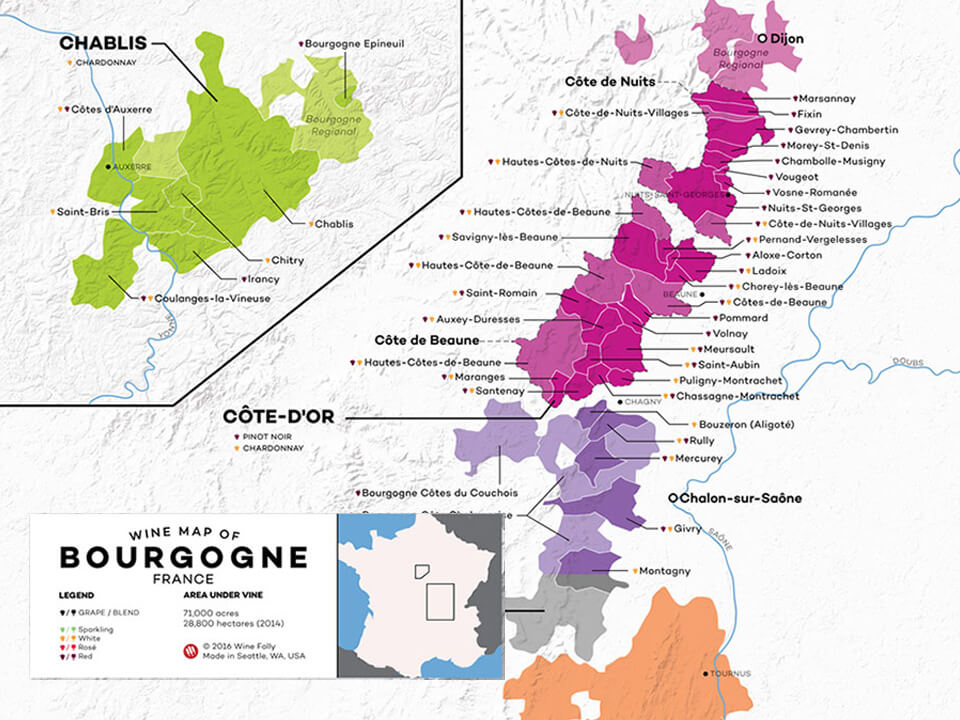
Provided by: WineFolly.com
Burgundy wines come from several distinct sub-regions, each with its own particular character. Four of these are located at the heart of Burgundy, in a narrow strip running for 75 miles (120km) between the towns of Dijon and Macon. From north to south they are the Cote d’Or (comprising the Cote de Nuits and Cote de Beaune), the Cote Chalonnaise and the Maconnais.
Chablis, situated in an isolated pocket of limestone hills in north-western Burgundy, produces white wines so distinct in style from those of central Burgundy that it is often treated as a region in its own right. A full 130 miles to the south of Chablis lies Beaujolais – treated by the wine world as a sub-region of Burgundy, despite being located in the Rhone-Alpes region.
The two key grape varieties of Burgundy are Pinot Noir and Chardonnay, both members of the extended ‘Pinot’ family of grape varieties. Their ‘poor cousins’ Gamay and Aligote are also grown throughout the region, producing more rustic styles of wine. Gamay is used in the red and rosé wines of Macon, while Aligote has its own appellation in the form of Bourgogne Aligote. In the late 14th century, the first Duke of Burgundy outlawed Gamay, dismissing it as unfit for consumption. It was still permitted within the Rhone administrative region, however, where it found a new home in Beaujolais.
The climates are precisely delimited vineyard parcels on the slopes of the Côte de Nuits and the Côte de Beaune south of the city of Dijon. They differ from one another due to specific natural conditions (geology and exposure) as well as vine types and have been shaped by human cultivation. Over time they came to be recognized by the wine they produce. This cultural landscape consists of two parts. Firstly, the vineyards and associated production units including villages and the town of Beaune, which together represent the commercial dimension of the production system. The second part includes the historic centre of Dijon, which embodies the political regulatory impetus that gave birth to the climats system. The site is an outstanding example of grape cultivation and wine production developed since the High Middle Ages.
MORE TO COME