Discussions about some of the best wine regions of major countries
in the world.
ITALY
FRANCE
GERMANY
SPAIN
AUSTRALIA
PORTUGAL
USA


Rons Experience and Fun with Wine and More over the years
Discuss the various major wine regions of specific countries
Discussions about some of the best wine regions of major countries
in the world.
ITALY
FRANCE
GERMANY
SPAIN
AUSTRALIA
PORTUGAL
USA
Wine Regions of Portugal
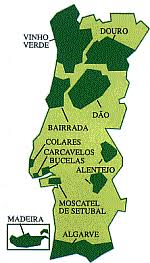
Major Wine Regions of Portugal
Douro Valley
The Douro River wakes in Spain, stretches like a lazy Sunday morning across the width of Portugal, and culminates as a yawn in Portugal’s second largest city, Porto. Along the way, it nourishes grape vines and olive trees, crosses sun-baked landscapes, and nods in passing to dozens of sleepy villages.
Working the Douro land isn’t easy – vines are grown in schist (a slate-like rock), on steep hills with man-made terraces, in harsh weather conditions.
The most famous wine from this region is Port. Its located in the upper Douro Valley in Northern Portugal. The important grapes used in making Port are:
Touriga Franca
Tinta Roriz
Tinta Barroca
Touriga Nacional
Tinta Cão
Tinta Amarela.
Grahams makes a really nice ruby port call Six Grapes
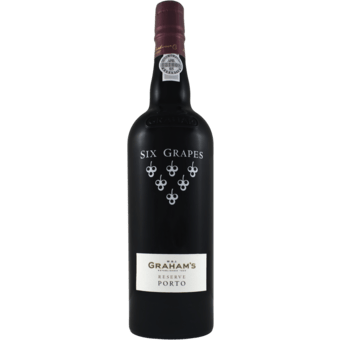
It generally sells for under $20 and it is worth every penny. When you are looking for a ruby port and at good price, this is the one to go for.
Minho
Think of sitting out in the sun on a hot afternoon and you are looking for something cool, fruity and fresh! Look, no further, the Portuguese
vinho verde. 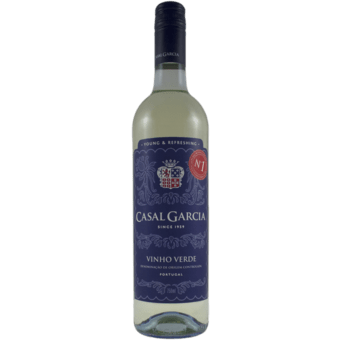 The translation of this wine means ‘green wine’ and young. This
wine tends to be very light and fresh with a hint of fizz which makes it perfect for a nice white wine spritzer.
The region itself is huge and rural, with vast plains of wheat, cork oaks and olives stretching into the distance. The hot Mediterranean climate yields many easy-drinking wines, especially reds. And while it’s only in recent decades that the region has grown in international prominence, its viticulture history goes all the back to the ninth century BC.
Grapes in the Dão region grow at higher altitudes, protected by mountains on all sides for a temperate climate. 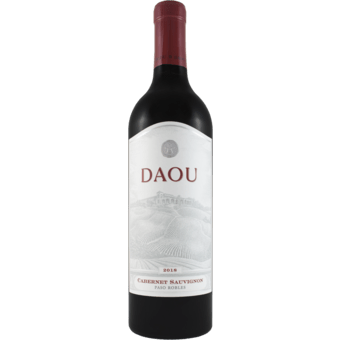 If rich, structured wines with good acidity are what you’re after, this is the place to find them. One of the most prominent and noble varietals of the Dão region is the Portuguese “queen” of grapes, the Touriga Nacional – an inky, rich and deeply aromatic grape that’s credited for giving many Dão reds their velvety smoothness.
Greater Lisbon contains nine sub-regions for wine, each with its own characteristics. One to visit is, Colares. This small subregion sits in the Sintra-Cascais natural park, with Sintra’s fairytale palaces to one side and a coastline of cute fishing villages on the other. Vines here are grown directly upon the sand, which looks strange and haphazard but yields great results – like the powerfully tannic reds blended from native Ramisco grapes.
Maderia
Its a lush tropical island and the most famous wine is Madeira wine.
How is it made? Most commonly the wine is placed in stainless steel vats that are heated to a temperature of 45-50 degrees Celsius for a period of at least three months, then left to rest for at least three months more. 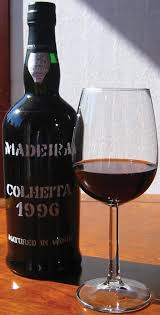 The highest quality Madeira wines forgo the artificial heating process, instead leaving barrels in the sun to heat naturally – sometimes for as long as 20-100 years.
Wine Regions of Australia
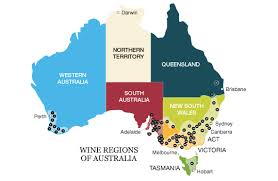
MORE TO COME
Wine Regions of United States
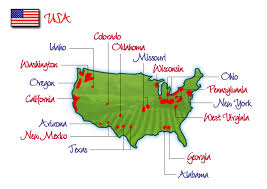
MORE TO COME
Wine Regions of Spain
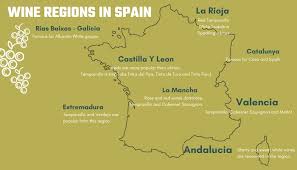
Located in North-Central Spain, near the Ebro River.
Rioja wines can vary in style, but usually have fruity and earthy flavours, with a very smooth taste. According to Rioja wine law, other grapes may be added to the primary grape ( Tempranillo ) Depending on what other grapes are used, the resulting wine can differ from winery to winery.
Rioja wines spend extra time ageing and all have unique classifications and regulations:
The Penedès wine region is located in Catalonia, North-East Spain. Set amidst the coastal hills of Serra del Garraf, this is considered one of the best of the Spanish wine regions – and one of the oldest. The most famous of the Penedès wine is Cava, a sparkling white wine worthy to challenge Champagne and Prosecco as the best European sparkling wines.
The Prioriat wine region is famous due to the fact that most vineyards are built on scarily steep terraces that climb the hills and mountains Priorat. Vines growing in the slate soil of Priorat have to dig extra deep to find water and nutrients. The warmth, and sunny exposure of this region produces some of the heartiest, richest wines around, while the poor, slate soils balances this power with a refreshing minerality.
The Ribera del Duero wine region is another of the most famous Spanish wine regions. Located on the elevated plateau in the southern plains of Burgos province, it stretches along the Duero river. The area receives moderate-to-low annual rainfall, and has long, dry, hot summers followed by harsh, cold winters. The grapes grown in Ribera del Duero are almost exclusively red – only one white grape (the Albillo) is grown here. Most of the wine produced in this region is Tempranillo (known locally as Tinto Fino),
The Valencia wine region is one of the oldest in Spain. Grapes have grown in Valencia since the Neolithic Era. Most of the wine produced here is exported around the world, putting Valencia on the international wine map! The ageing process in Valencia is different than that of Rioja or Ribera del Duero. Crianza wines are only cask-aged for three months, while Reserva wines are aged for no less than six months.
This increasingly popular region is most famous for its Rosado (rose) and red wines, which account for 95% of local wine production. The winters are cold and the summers are long, hot, and dry, producing a smaller yield than the larger wine regions, but consistently high quality.
Located in Central Spain, this is the world’s largest continuous wine growing region. There are more than 300 wineries and 22,000 grape-growers in the region, which is known for producing delicious Tempranillo and Garnacha wines.
Located in Castilla y Leon, this wine region is famous for producing crisp, flavoursome white wines using the Verdejo grape. The continental climate and high sunlight (2,700 hours per year) produces quality white wines.
This wine region occupies a great deal of Murcia and stretches into Castilla-La Mancha. With 3,000 registered grape-growers occupying 32,000 hectares of arable land, Jumilla produces a lot of Tempranillo, Garnacha, Merlot, Cabernet Sauvignon, Chardonnay, and Moscatel grapes.
Sherry is one of the most historic and famous wines in the world. Its popularity is thanks to its coastal location and the boom in overseas trading and exploration from the 15th century onwards. Ships would stock up on local wine, fortifying it with brandy to help it keep on the long, hot journeys. There are different types of Sherry, all with different degrees of sweetness
Fino. Bone dry, many times used as an aperitif
Manzanilla. Similar in dryness as Fino, but lighter in body
Amontillado. Has a brown hue. Nutty and a hint of mushroom
Palo Cortado. Best described as rich and regal
Oloroso. Can be Sweet or Dry, depending on the winemaker
Wine Regions of Germany
MORE TO COME
Wine Regions of France
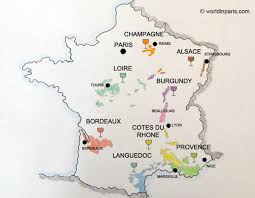
Its so difficult to start any blog about French wines. Their history is so rich and many of their wines are the most sought after and expensive wines in the word.
I had always be partial to French wines, since their wines is what I was first schooled . Most of my early wine tasting experiences centered around French wines. I was so fortunate, at the age of 22 to be able to taste so many of the greatest French wines made.
I worked at one of the largest wine retail stores on Long Island, Steward Spirits. We specialized in French, German and Italian premium wines. Over 50% of the store was dedicated to those wines, wine 20% to other wines and the jug wines from USA. We had only about 20% in liquor, and 10% in cordials.
The owner made sure that his sales staff understood wine. He made it a point that we would taste at least 2 of the wines above, record notes, discuss the wine. This was done at least 3 times a week. So , after several years, we built up an extensive set of wine knowledge. I was at the top of my wine experiences at the time, though at a young age, many older customers did not take me serious. But over time, as I demonstrated what I knew, that all changed. I also realized that you never Know enough about Wine!
Major Wine Regions of France
Any conversation about wine regions in France has to include the areas of Bordeaux and Burgundy! Included in those regions are so many sub regions, that I could write an entire book about. Instead, I will just touch on the key areas.
Bordeaux
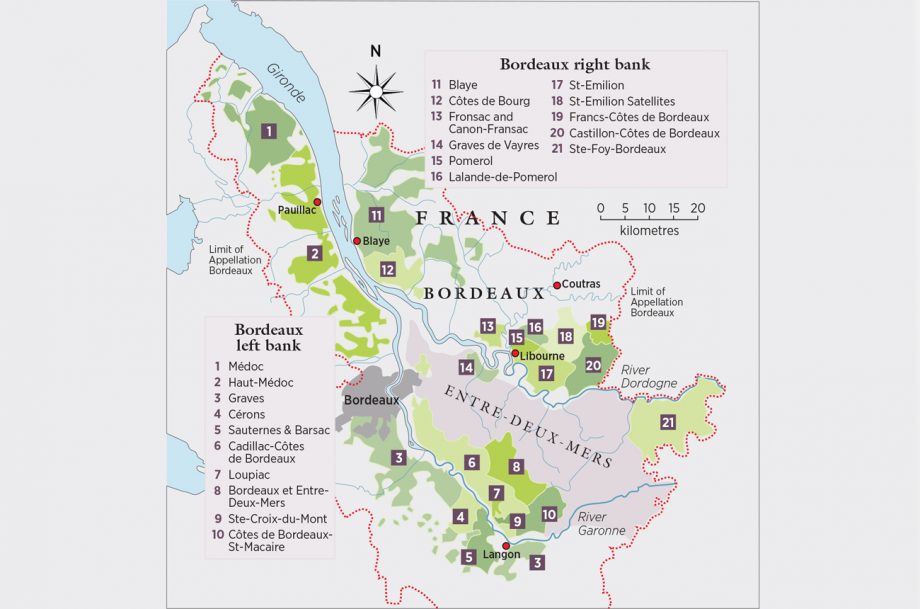
Located in the south western part of France, the regions of Bordeaux are northwest of the Gironde river. Here are the two major areas, the Left Bank and the Right Bank. The Left Bank is the area directly south of the Garonne River. The Right Bank is the area to the north of the Dordogne river
The Left Bank (Medoc) is home to some of the most famous Bordeaux appellations:
St-Estèphe
Pauillac
St-Julien
Margaux
Cabernet Sauvignon is the dominant grape. Merlot, Petit Verdot, Malbec and Cabernet Franc tend to play supporting roles.
The terroir is mostly flat with gravel topsoil and limestone underneath, although the composition can vary substantially from one vineyard to the next. Wines typically have more tannin and a bigger overall structure than their Right Bank counterparts. Pauillac, in particular, has a reputation for producing powerful, muscular wines.
The Right Bank is home to:
Pomerol
St-Emilion
Right Bank wines are predominantly Merlot-based, with Cabernet Franc, Cabernet Sauvignon, Malbec and Petit Verdot used as blending components. The terroir is comprised of a limestone surface with less gravel and more clay. It’s mostly flat with smaller vineyard plots than on the Left Bank, most notably in Pomerol. The wines tend to be rich in fruit, softer in mouthfeel with less tannin and acid. While some top wines can be aged for many years, there are plenty of wines that are also enjoyable when young.
Another major region is Haut-Medoc
The Haut-Médoc, basically the area in the Médoc that does not fall into one of the Fab Four wine villages (Pauillac, Margaux, St-Julien and St-Estèphe), is another mainstay of Bordeaux wine. In general, this is more of an area for values than absolute quality and luxury.
The Haut Medoc Bordeaux wine appellation is massive. In fact, the Haut Medoc appellation is the largest area under vine in the Medoc with a total of 4,198 hectares planted with vines. Almost 400 different chateau produce wine or operate vineyards in the Haut Medoc today. Out of that number, about 250 produce and sell their own wine. The remaining 150 growers sell their wine or grapes to local cooperatives or negociants.
In an average year, 2,333,000 cases of wine are produced. Cabernet Sauvignon is the main grape in the region. Only red wines are allowed by AOC law to be produced in the Haut Medoc. The few white Bordeaux wines made in the region are sold as Bordeaux Blanc wine. When you compare the Haut Medoc appellation with the other lesser communes, because there are so many different terroir and soils in Bordeaux, as well as diverse approaches to wine making, there is no particular style of Bordeaux wine produced here. It’s wide and varied. With hundreds of Chateaux, there are some that push the quality envelope as far as it can go, hoping to produce the best wines possible, while other chateaux are content to simply try selling what they make, simply because it says Bordeaux on the label. While only 5 chateau were included in the 1855 Classification from Haut Medoc, it is home to the majority of Cru Bourgeois classed chateaux.
Burgundy (Bourgogne)
The region stretches from Champagne to the Rhone, produces the greatest Chardonnay and Pinot Noir wines in the world, and the only Gamay wines ever to achieve classic status. Burgundy is an area rich in history, gastronomy and wine. 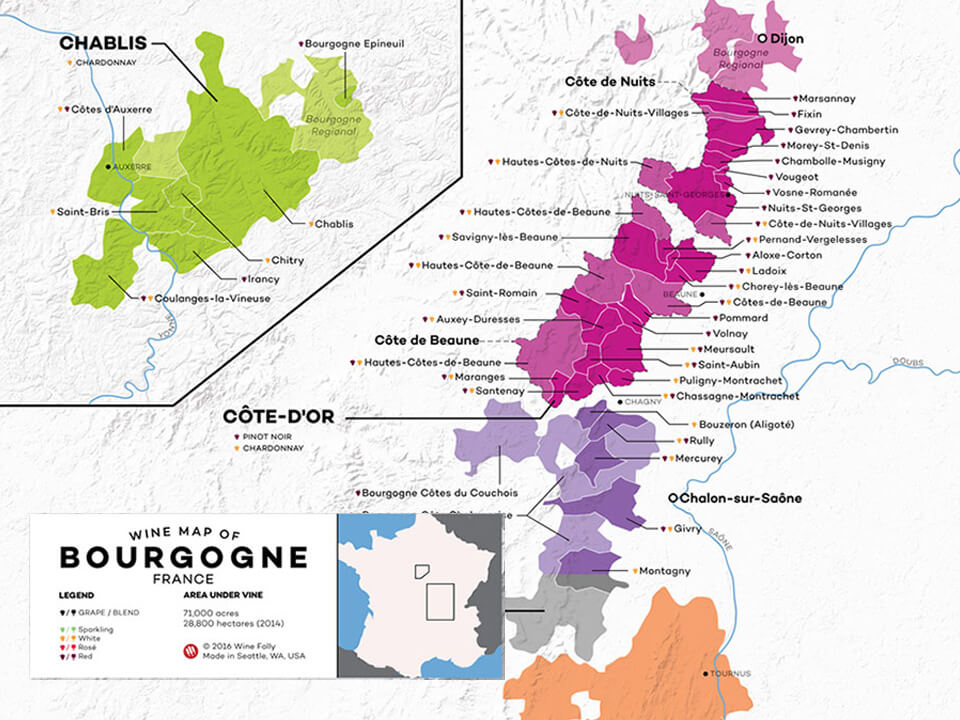
Provided by: WineFolly.com
Burgundy wines come from several distinct sub-regions, each with its own particular character. Four of these are located at the heart of Burgundy, in a narrow strip running for 75 miles (120km) between the towns of Dijon and Macon. From north to south they are the Cote d’Or (comprising the Cote de Nuits and Cote de Beaune), the Cote Chalonnaise and the Maconnais.
Chablis, situated in an isolated pocket of limestone hills in north-western Burgundy, produces white wines so distinct in style from those of central Burgundy that it is often treated as a region in its own right. A full 130 miles to the south of Chablis lies Beaujolais – treated by the wine world as a sub-region of Burgundy, despite being located in the Rhone-Alpes region.
The two key grape varieties of Burgundy are Pinot Noir and Chardonnay, both members of the extended ‘Pinot’ family of grape varieties. Their ‘poor cousins’ Gamay and Aligote are also grown throughout the region, producing more rustic styles of wine. Gamay is used in the red and rosé wines of Macon, while Aligote has its own appellation in the form of Bourgogne Aligote. In the late 14th century, the first Duke of Burgundy outlawed Gamay, dismissing it as unfit for consumption. It was still permitted within the Rhone administrative region, however, where it found a new home in Beaujolais.
The climates are precisely delimited vineyard parcels on the slopes of the Côte de Nuits and the Côte de Beaune south of the city of Dijon. They differ from one another due to specific natural conditions (geology and exposure) as well as vine types and have been shaped by human cultivation. Over time they came to be recognized by the wine they produce. This cultural landscape consists of two parts. Firstly, the vineyards and associated production units including villages and the town of Beaune, which together represent the commercial dimension of the production system. The second part includes the historic centre of Dijon, which embodies the political regulatory impetus that gave birth to the climats system. The site is an outstanding example of grape cultivation and wine production developed since the High Middle Ages.
MORE TO COME
Wine Regions of Italy
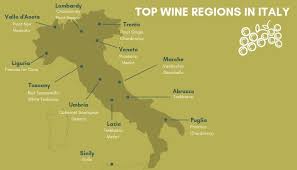
Italian wine is produced in every region of Italy, home to some of the oldest wine-producing regions in the world. Italy is the world’s largest producer of wine, with an area of 702,000 hectares (1,730,000 acres) under vineyard cultivation, and contributing a 2013–2017 annual average of 48.3 million hl of wine. I
These are the major wine regions of Italy. There are many more, but these are the ones that have produced some of the great Italian wines:
Piemonte wine Is the range of Italian wines made in the region of Piedmont in the northwestern corner of Italy. The best-known wines from the region include Barolo 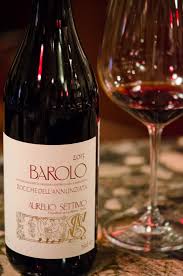 and Barbaresco. They are made from the Nebbiolo grape. Barolo has been called the King of Wines from Italy.
Other popular grapes used for red wine production are Barbera and Dolcetto. Wine made with the Barbera grape is often fruity, with high acidity. It can be delicate with less tannin than wine made from the Nebbiolo grape.
Barbera is the most widely planted grape in the region, but Nebbiolo and Dolcetto account for a significant portion of the area’s red wine production as well. With white wines, Moscato is the most prominent with its sparkling and frizzante style wines. Other notable white wines include styles made from the Cortese grape in Gavi as well as blends of Cortese with Arneis and Favorita from Colli Tortonesi and Alto Monferrato.
The Piedmont produces more DOCG wines by volume than any other Italian wine region with nearly 84% of all the areas wine production falling under a DOCG designation. The area has no Indicazione Geografica Tipica (IGT) classification, in contrast to Tuscany where IGT wines or Super Tuscans make up a significant portion of that region’s wine production.
Venetian wine is produced in Veneto, a highly productive wine region in north-eastern Italy.
The broader area comprising Veneto, Friuli-Venezia Giulia and Trentino-Alto Adige/Südtirol is known collectively as the Tre Venezie, after the Republic of Venice. Veneto is the most populous and biggest denominazione di origine controllata (DOC) producer of the three regions. Although the Tre Venezie collectively produce more red wine than white, the Veneto region produces more whites under DOC and is notably home to the Prosecco and Soave wines.
Tuscan wine (Italian Toscana) is Italian wine from the Tuscany region. Located in central Italy along the Tyrrhenian coast, Tuscany is home to some of the world’s most notable wine regions. Chianti, 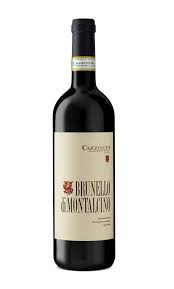 Brunello di Montalcino and Vino Nobile di Montepulciano are primarily made with Sangiovese grape whereas the Vernaccia grape is the basis of the white Vernaccia di San Gimignano.
Super Tuscans are an unofficial category of Tuscan wines, not recognized within the Italian wine classification system. Although an extraordinary number of wines claim to be “the first Super Tuscan,” most would agree that this credit belongs to Sassicaia, 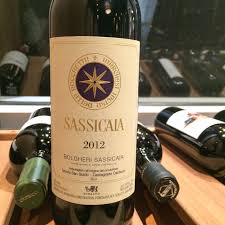 the brainchild of marchese Mario Incisa della Rocchetta, who planted Cabernet Sauvignon at his Tenuta San Guido estate in Bolgheri back in 1944. It was for many years the marchese’s personal wine, until, starting with the 1968 vintage, it was released commercially in 1971.[6] The growth of Super Tuscans is also rooted in the restrictive DOC practices of the Chianti zone prior to the 1990s.
Abruzzo (Abruzzi) is an Italian wine region located in the mountainous central Italian region of Abruzzo along the Adriatic Sea. It is bordered by the Molise wine region to the south, Marche to the north and Lazio to the west. Abruzzo’s rugged terrain, 65% of which is mountainous, help to isolate the region from the winemaking influence of the ancient Romans and Etruscans in Tuscany but the area has had a long history of wine production.[1][2]
Today more than 22 million cases of wine are produced annually in Abruzzo, making it the seventh most productive region in Italy, but only 21.5% of which is made under the Denominazione di origine controllata (DOC) designation. More than two-thirds of the region’s wine is produced by co-operatives or sold in bulk to negociants in other Italian wine regions in Tuscany, Piedmont and the Veneto for blending.The most notable wine of the region is Montepulciano d’Abruzzo produced with the Montepulciano grape that is distinct from the Sangiovese grape behind the Tuscan wine Vino Nobile di Montepulciano.Together with Trebbiano d’Abruzzo, Montepulciano d’Abruzzo is one of the most widely exported DOC wine from Italy, particularly to the United States.
Puglia (Apulia to many English speakers) is a long, thin wine region in the far south-eastern corner of the ‘boot’ of Italy. Probably the most familiar wine from this region is Primitivo. While they are genetically the same grape, both clones of the Croatian grape Crljenak, the main difference between Primitivo and Zinfandel are the eventual style of both of these wines. With terroir and winemaking style affecting the finished product. Zinfandel is distinctively Californian. This has been said to be the oldest grape used in producing wine.
Sicily’s most famous wine, Marsala, was first made in the city of that name on the western coast by the Woodhouse firm, which also sold Port. Like its sisters Port and Sherry, Marsala is a fortified wine with an alcohol content of around twenty percent
Nero d’ Avola
This hearty red is Sicily’s most popular non-fortified varietal, now produced by numerous Sicilian wineries. Often compared to Syrah, it is sometimes blended with other reds but usually allowed to stand on its own. A full-bodied red like this one is not easily overlooked, and dozens of wineries