

Wine Regions of Italy
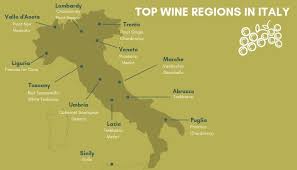
Italian wine is produced in every region of Italy, home to some of the oldest wine-producing regions in the world. Italy is the world’s largest producer of wine, with an area of 702,000 hectares (1,730,000 acres) under vineyard cultivation, and contributing a 2013–2017 annual average of 48.3 million hl of wine. I
These are the major wine regions of Italy. There are many more, but these are the ones that have produced some of the great Italian wines:
Piemonte wine Is the range of Italian wines made in the region of Piedmont in the northwestern corner of Italy. The best-known wines from the region include Barolo 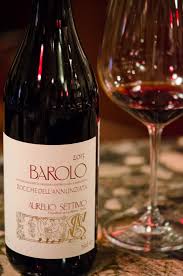 and Barbaresco. They are made from the Nebbiolo grape. Barolo has been called the King of Wines from Italy.
Other popular grapes used for red wine production are Barbera and Dolcetto. Wine made with the Barbera grape is often fruity, with high acidity. It can be delicate with less tannin than wine made from the Nebbiolo grape.
Barbera is the most widely planted grape in the region, but Nebbiolo and Dolcetto account for a significant portion of the area’s red wine production as well. With white wines, Moscato is the most prominent with its sparkling and frizzante style wines. Other notable white wines include styles made from the Cortese grape in Gavi as well as blends of Cortese with Arneis and Favorita from Colli Tortonesi and Alto Monferrato.
The Piedmont produces more DOCG wines by volume than any other Italian wine region with nearly 84% of all the areas wine production falling under a DOCG designation. The area has no Indicazione Geografica Tipica (IGT) classification, in contrast to Tuscany where IGT wines or Super Tuscans make up a significant portion of that region’s wine production.
Venetian wine is produced in Veneto, a highly productive wine region in north-eastern Italy.
The broader area comprising Veneto, Friuli-Venezia Giulia and Trentino-Alto Adige/Südtirol is known collectively as the Tre Venezie, after the Republic of Venice. Veneto is the most populous and biggest denominazione di origine controllata (DOC) producer of the three regions. Although the Tre Venezie collectively produce more red wine than white, the Veneto region produces more whites under DOC and is notably home to the Prosecco and Soave wines.
Tuscan wine (Italian Toscana) is Italian wine from the Tuscany region. Located in central Italy along the Tyrrhenian coast, Tuscany is home to some of the world’s most notable wine regions. Chianti, 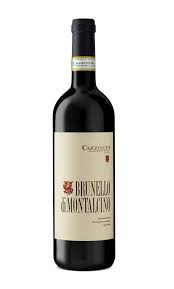 Brunello di Montalcino and Vino Nobile di Montepulciano are primarily made with Sangiovese grape whereas the Vernaccia grape is the basis of the white Vernaccia di San Gimignano.
Super Tuscans are an unofficial category of Tuscan wines, not recognized within the Italian wine classification system. Although an extraordinary number of wines claim to be “the first Super Tuscan,” most would agree that this credit belongs to Sassicaia, 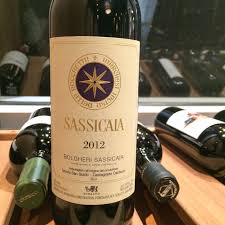 the brainchild of marchese Mario Incisa della Rocchetta, who planted Cabernet Sauvignon at his Tenuta San Guido estate in Bolgheri back in 1944. It was for many years the marchese’s personal wine, until, starting with the 1968 vintage, it was released commercially in 1971.[6] The growth of Super Tuscans is also rooted in the restrictive DOC practices of the Chianti zone prior to the 1990s.
Abruzzo (Abruzzi) is an Italian wine region located in the mountainous central Italian region of Abruzzo along the Adriatic Sea. It is bordered by the Molise wine region to the south, Marche to the north and Lazio to the west. Abruzzo’s rugged terrain, 65% of which is mountainous, help to isolate the region from the winemaking influence of the ancient Romans and Etruscans in Tuscany but the area has had a long history of wine production.[1][2]
Today more than 22 million cases of wine are produced annually in Abruzzo, making it the seventh most productive region in Italy, but only 21.5% of which is made under the Denominazione di origine controllata (DOC) designation. More than two-thirds of the region’s wine is produced by co-operatives or sold in bulk to negociants in other Italian wine regions in Tuscany, Piedmont and the Veneto for blending.The most notable wine of the region is Montepulciano d’Abruzzo produced with the Montepulciano grape that is distinct from the Sangiovese grape behind the Tuscan wine Vino Nobile di Montepulciano.Together with Trebbiano d’Abruzzo, Montepulciano d’Abruzzo is one of the most widely exported DOC wine from Italy, particularly to the United States.
Puglia (Apulia to many English speakers) is a long, thin wine region in the far south-eastern corner of the ‘boot’ of Italy. Probably the most familiar wine from this region is Primitivo. While they are genetically the same grape, both clones of the Croatian grape Crljenak, the main difference between Primitivo and Zinfandel are the eventual style of both of these wines. With terroir and winemaking style affecting the finished product. Zinfandel is distinctively Californian. This has been said to be the oldest grape used in producing wine.
Sicily’s most famous wine, Marsala, was first made in the city of that name on the western coast by the Woodhouse firm, which also sold Port. Like its sisters Port and Sherry, Marsala is a fortified wine with an alcohol content of around twenty percent
Nero d’ Avola
This hearty red is Sicily’s most popular non-fortified varietal, now produced by numerous Sicilian wineries. Often compared to Syrah, it is sometimes blended with other reds but usually allowed to stand on its own. A full-bodied red like this one is not easily overlooked, and dozens of wineries