USA Grapes

Wine Grapes grown in the United States


Grape Acres Hectares
Chardonnay 106,000 43,000
Cabernet Sauvignon 101.300 41,000
Pinot Noir 61,800 25,000
Merlot 51,900 21,000
Zinfandel 47,000 19,000
Syrah 22,200 9,000
Pinot Gris 19,800 8,000
Sauvignon Blanc 14,800 5,000
Petite Syrah 11,400 4,600
Chenin Blanc 4,800 1,900
Barbera 4,800 1,500
Grenache 4,400 1,780


Other Facts:

  • Total grape growing in the USA is 1 million acres  which is 440,000 hectares
  • Most planted grape is the Sultanina (eating and raisins) accounting for 148,00 acres, 60,000 hectares which is about 14% of the total grape growing areas in the entire United States
  • Just grapes grown for wine account for 800,000 acres or 320,000 hectares

Bordeaux Blend

                         Bordeaux Blend Red Wine


Bordeaux Blend, at its most basic, is any combination of those grape varieties typically used to make the red wines of Bordeaux. The phrase, which seems to have originated with British wine merchants in the 19th Century, relates as much to wines made from the blend as to the grape variety combination itself (© Copyright material, Wine-Searcher.com). Far from being an officially defined or legal term, it is almost never used for wine-labeling purposes (although it occasionally appears on back labels). Its equivalent in the United States is Meritage, which is not only legally defined, but also a registered trademark.

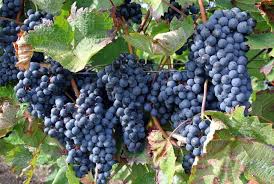
Cabernet Sauvignon  is probably the most famous red wine grape variety on Earth.  This grape produces wines  always seem to demonstrate a handful of common character traits: deep color, good tannin structure, moderate acidity and aromas of blackcurrant, tomato leaf, dark spices and cedarwood.   Until you start tasting this grape, you may not pick up on all of these traits.   But after drinking Cabernet Sauvignon, as a Bordeaux, as a USA Meritage, or as straight Cabernet from many different countries, you do start to notice these qualities.  The Cabernet Sauvignon  vines are highly adaptable to different soil types and climates and are grown at almost all soil conditions and environment. Wines made from this grape are known for their lasting qualities.   Some of the finer French Bordeaux and California Cabernet Sauvignon can last over 75 years.


Cabernet Franc  is a black-skinned French wine grape variety grown in most wine producing nations.  As a varietal wine, Cabernet Franc is light to medium bodied and often shows vegetal characteristics, in particular green bell peppers.   I’ve always found wines made exclusively from this grape to be fragrant and floral with a soft taste of fresh earth.  This grape  prefers cooler climates that are generally found in the French Bordeaux region.   A good portion of these vines are planted in the Loire valley in France.  You generally do not find many 100% Cabernet Franc wines, since they are generally used for blending.  The one exception is on the North Fork of Long Island, NY.   There you will find some of the better Cabernet Francs..


Merlot  Merlot is a red wine grape variety with strong historic ties to Bordeaux and the southwest of France. It is the predominant variety in most wines from Saint-Émilion and Pomerol, the area in which the variety originated.  The Merlot grape is fast growing and matures quicker than the other classic French Bordeaux grapes.   You can describe Merlot  as having a lot of fruit friendly flavors, plum and black cherry dominant.   Its also described as a very easy drinking wine.  They are generally less in tannin because the grape is so large, there is not much pips or thickness of skin, where the tannin comes from.


Petite Verdot  is a red wine grape whose small, thick-skinned berries are valued for their depth of color. Traditionally the variety  has played a small role in the classic blends of Bordeaux, but varietal Petit Verdot wines are now appearing in many regions of southern Europe, the Americas and Australia.


Malbec  is a black-skinned grape variety native to southwestern France (specifically the area around Cahors), but now better known as the iconic wine grape of Argentina.  Malbec typically ripens midway through the growing season and produces small, intensely colored grapes.   French Malbec tends to be more meaty, rustic and tannic, while examples from Argentina seem to be uniformly rich, ripe, jammy and juicy.    I have always appreciated a Malbec wine from Argentina.   The grape can  grow at so many different latitudes,  so that these wines from  Mendonza can range from average to outstanding.


Carmenere   is a dark-skinned grape variety originally from the vineyards of Bordeaux, and which has found a particularly suitable home in Chile. A late-ripening variety,  Carmenere needs high levels of sunshine and a warm summer to reach its full potential, but in the right environment it can produce fine, deeply colored red wines, with the attractive meaty plumpness of Merlot and the gently herbaceous, cedary notes of Cabernet Sauvignon.

Terroir


Terroir Definition. Terroir is how a particular region’s climate, soils and aspect (terrain) affect the taste of wine.

Wine is a living object.   From the time, the first roots where planted in the soil, till the grapes started to bloom and eventually be harvested, to the wine making process, bottling and then eventually in your glass.   All this time, the wine is living.  It cant speak, but it can talk to you while you use your many senses.

Lets first start with where the roots are planted.   Our first assumption, is that the overall climate is conducive to growing of grapes.  That is the weather and climate will allow the grapes to grow and finally ripen.   So, then all grapes and wines will be equal?   No!

The word Terroir  It combines, the soil, the slope, the sun, the climate, the winds and almost everything that comes natural within a given region.   Some grapes do much better o steep slopes, while some want the hot sun during the day, but a cooling breeze for the water at night.   Each vineyard owner, needs to analyze their overall terroir to help them determine what will be the best grape to grow to produce the best wine.

The study and effects of terroir on wine has become a major science in itself.  Analyzing the macroclimate of the area is key to determining a final product and what modifications the wine maker may need to use.

In the Bordeaux region in France, many of the First growth wines, have additional vine plantings around the main Chateau.   They reserve the prime areas for those special 1st growth wines, but then plant additional grapes in the surrounding areas.   They then produce wines, under a different label and name.   But you could have some of the best vines/grapes making the best wines growing on a southern exposed mild slope, and only less than 1/4 mile away, grapes growing on a southwest exposure and step slop produces average wines.

Nature plays such a key role in making the best wines.    So much is out of anyone’s control, but the vineyard owners, do a lot of research and spend money on making sure where they plant is going to potentially result in the best wines.

But its not all about nature, human intervention has to come into play.    The wine the vines are trained plays a key role in the development of the grapes.

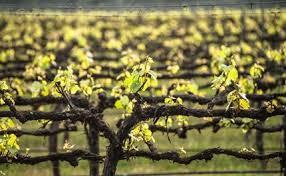
Some vines are made to grow upright, this allowing more  sun to reach each grape.   You will find these types of vines in areas that generally do not have long growing seasons.   I have seen so much of these styles of vines on Long Island and most of Connecticut.


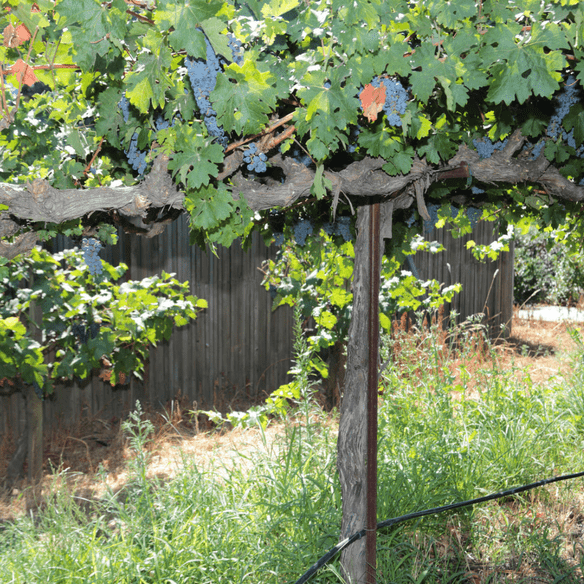
Then there are vines that grow more horizontal.  This provides an equal amount of sun, rain, wind to reach each grape  as they are growing.   This method is also somewhat easier when it comes time for harvesting, either, by hand or mechanical.  Here is a photo of typical Zinfandel vines in California  


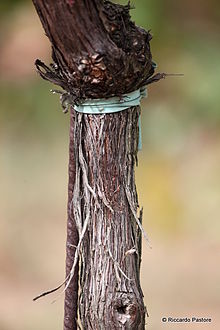
This is all called the  This is a trellising system, and it’s a tool used in many vine training systems worldwide.  Grape vines, unlike trees can not support themselves.   Therefore, they need some aid.   How the vine is trellised (see above) adds these factors to the eventual product

• vine balance
• amount of shade or sun on grapes
• ease of hand and mechancial harvest
• ease of hand and mechanical pruning
• amount of heat fruit gets from the ground
• likelihood of frost damage
• effect of wind

As I mentioned, the final product is not all about the natural terroir, but human intervention plays a key role.   These include decisions about pruning, irrigation and selecting the time of harvest   At the winery, the use of oak, cultured or ambient yeast, length of maceration and time in contact with lees, temperature during fermentation.

In France, particularly Burgundy, there is the belief that the role of a winemaker is to bring out the expression of a wine’s terroir. The French word for winemaker, vigneron, is more aptly translated as wine-grower rather than winemaker. 


Breathing

Why do we want  our wines to breath?

In the simplest of terms, Wine that has had a brief exposure to airis positive since it allows wine to breathe similar to stretching its legs after being cooped up in the bottle for so many years. This exposure has a positive effect on the wine after 25 to 30 minutes. Intensely tannic or younger reds may need up to a few hours.

What is it? Its simply allowing the wine to come into contact with the air.   This oxidation transfer can always be a two edged sword.   Too little, you have a harsh wine, too much, and the wine may be spoiled.

Which wines?  I have always found this to be true with red wines.   Almost any red wine will benefit from some time breathing.   Sometimes, it can be as little as 30 minutes, and with some Italian wines, I have let it breathe for over 3 hours!  The major reason behind allowing wines to breathe is to attempt to tame those wild tannins.

Tannin is a textural element that makes wine taste dry. Tannin is a naturally occurring polyphenol found in plants, seeds, bark, wood, leaves, and fruit skins. … As a characteristic of winetannin adds both bitterness and astringency, as well as complexity.

Some wines have what I call wild tannins.  They are harsh, bold and very noticeable.  Its what gives you that bitterness and puckering feeling as you sip on the wine.   Allowing air to come in contact with the wine, allows these tannins to mellow out.   I like to describe this process as taking a wild young brat and turning it around to be a gentle aging grandparent.

There are many different ways to accomplish this breathing.   I have always preferred the old fashion natural way.   That is, just withdrawing the cork and letting the wine stand!

Today, in restaurants, and many home tastings, people tend to get impatient.
So there are a number of different ways to speed up this breathing process.


Carafe  

With this method, the most air can be exposed to the wine as quickly as possible.  This can reduce the amount of time you normally need to let a wine breathe by almost 50%.  There are so many different styles and types of carafes, but they all serve the same purpose.

Decanting is a process similar to pouring wine into a decanter, except, the purpose is to clarify or remove sediment or particles from a bottle of wine.  This could have happened from a cork breaking into the bottle of wine, or from an old wine that has a lot of sediment.  The sediment is not bad for you, but its appearance may turn a few people off.  There is an art to decanting.  You generally tilt the carafe vessel and slowly pour the wine.  Always looking for any particles or sediment.  Some people, use a candle behind the bottle neck, to spot particles easier.   Even some people, take the lazy way out and use a cheese cloth to strain out any particles or sediment.  That works, but boy, is it so  much of an un-wine thing to do!


Aerators   Once again, the main purpose is to allow as much oxygen into the wine.  Using any one of the many different aerators accomplishes this.   I have found that using this method, the wine that is poured into the glass feels like it has been breathing for at least an hour.   So, this is a quick easy method to get those tannins tamed!


During one of my wine tastings, I ran an experiment.  I had a very young Italian  Montepulciano d’Abruzzo.   A very harsh tannin wine to start with.

First, I poured a little into  a glass and let everyone taste it and had them provide me with their responses.   Most of them felt the wine was too difficult to drink.

Second, I poured some of the wine through an aerator.  The people were quite amazed that the same wine tasted so much better and it was only minutes after opening the bottle.

Third, I poured some of the same wine into a carafe and let them taste it 30 minutes later.  All of the people noticed the difference and began to enjoy the wine.

Still, being an old fashion wine buff from the 1960s and 1970’s, the only method I really use is

pulling the cork and letting the wine breathe naturally.

Corkscrews

Think about this.  You have a really nice bottle of wine that you want to open, but you look around and you do not have any cork screw!   Now, I have see endless amount of Facebook pages on how to open a bottle of wine without a cork screw.   About 90% of those never work and you wind  up breaking the bottle.

Hence the Cork Screw! 
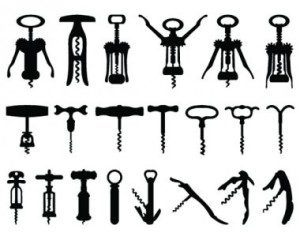
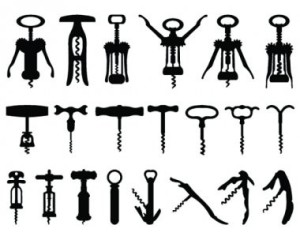
There are so many different types of corkscrews.  You could go into any department store, wine retail shop or online shopping centers and find endless amounts of corkscrews.  So many different types, sizes and shapes.

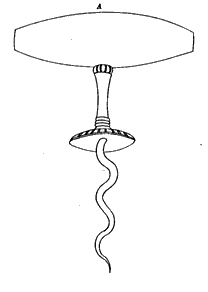
But before I even talk about the different cork screws, lets look at a little history.  No one knows for sure who the inventor of the corkscrew was, but it is believed it was derived from a similar device that would remove bullets that were stuck in a rifle.  However, the first known patent of the corkscrew dates back to 1795 by Samuel Henshall   
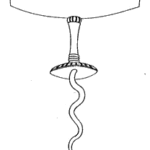
The top had a wooden handle, and a disc was added to prevent the from screwing too deep into the cork.  This cork screw proved to be so useful, it was widely used for over a 100 years.


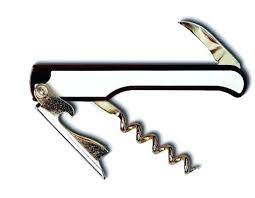
In 1882, Carl F.A. Wienke, filed a patent for the  Waiters Friend. 
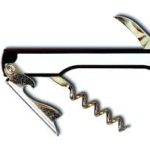
   This cork screw became very popular especially in restaurants and bars.  The lever action made it very easy to withdraw the most stubborn cork.


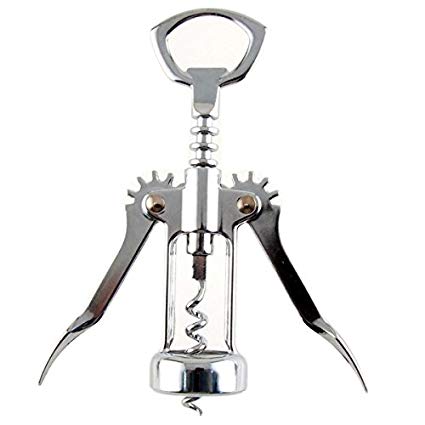
Another patent in 1888 by H.S. Heely was the double winged, or better known as the Winged corkscrew.  
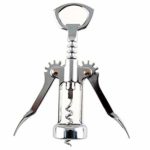
This became the most popular cork screw in people’s homes.  It was easy to use, hardly ever failed, and it was sort of magical as the cork came out of the bottle with hardly any effort.

Recently there have been so many different types of corkscrews put on the market.  Some table top, some mounted on a wall, some using forced air to pus out the cork.   They all work, it can just be a matter of taste and how you want to show your guests how you pull a cork.

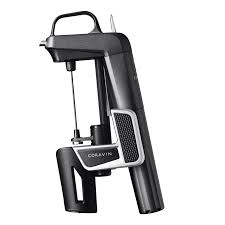
The most unique and to me most important development in cork screws is the Coravin  
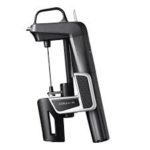
Most of us know that while oxygen can be a friend to wine, allowing it to breathe , helping reduce some of the harsh tannins in red wines.   But it also can be an enemy in that the longer a wine removes in contact with oxygen, it starts to break down.  This oxidation can ruin many a good wine.   The Coravin was patented , approximately 2010, so that it does not have to extract the cork, but instead, inserting a small needle and allowing the pouring of the wine without compromising the wine itself.   This has been a great way to allow the tasting of some of the more expensive wines in the world.

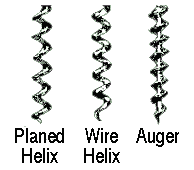
But back the basics that most people will be using in their homes.  Whatever cork screw style you find comfortable for you, the most important part is called the worm.  
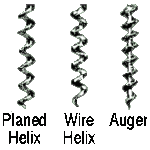
That is the part that penetrates the cork deep enough so that you can pull it out of the bottle.   But the most important thing about the worm is that it needs to be smooth.   Many of the early winged corkscrews basically had a auger for the worm.  It was sharper edges.  It penetrated the cork with ease, but unfortunately many times is ripped the cork, so out came the cork screw, but the cork remained in the bottled!

That always brought up another dilemma.  How to get the cork out of a bottle, when the cork is broken or chewed up.   The easiest way and I have seen countless people doing this, is to push the cork back into the bottle.  This does work, you may lose a little wine, and you probably will have some pieces of cork floating in the wine.   But you can carefully pour that into a carafe (which is an art in itself), or use something like cheese cloth to strain it.

Now, the formal way, but not always the easiest is using called
le-creuset-butlers-friend   
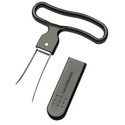
With this device, you push the two knife like blades onto either side of the cork.   Then you gently start to twist and turn, slowly pulling upward until the cork is removed.   Trust me, it takes some practice doing this.   I had purchased an inexpensive type (less than $15) and discovered that it never worked.  The knife blades were too thin.   I did go out and buy one for about $35.  Still it takes a bit getting to use it right, but it will work.

But then again, today we do have some many good wines that use the
metal screw top.   Virtually impossible to fail while opening a bottle of wine!

Making Wine

Wine making   

has been around for thousands of years.   Wine making is not only an art, buts a science also.  The actual making of wine requires little human intervention, but it each wine maker may have different techniques or ways of adding or changing things.

From a simple home owner making wine from a kit to the most sophisticated Chateau in France, there are the same basic steps that are required.     This is called the 5 step process

1. HARVESTING

Wine grapes are the only fruit that have the necessary natural components to make natural and stable wine.   When the grapes are actually harvested

will determine much of the characteristics of that wine.   The acidity,  sweetness and flavor of the wine.   Determining the exact time to harvest is a science and itself.   Harvesting can be done by hand or using mechanical machines.  Many wine makers prefer doing it by hand, since that will give them 100% control of what is picked and how it is done.

2.  CRUSHING and PRESSING  It was fun watching Lucille Ball  stomp around a barrel of grapes.   Some areas still continue to use this fun process.


Today, most of the crushing of wine is done mechanically.  

Still many use this method of crushing and pressing the grapes.   Either way, the liquid that results from this crushing/pressing is called must.   This is simply fresh squeezed grapes that contain, the skins, the pits, the stems, the seeds and more.   Then the process of removing those items begin.   For red wines, the skins are kept longer, giving the red color , deeper bouquet and provide tannis, which gives wine that extra long life.  With white wines, the skins and such are removed much sooner than it is with reds.

3. FERMANTATION

Here is where natural or commercial yeasts are added to the wine.  This fermentation continues until all the sugar is converted into alcohol, resulting in a dry wine, or remove, leaving residual sugar for a sweeter wine.  The fermentation process can take anywhere from 10 days to over a month

4. CLARIFICATION

Clarification is the process in which solids such as dead yeast cells, tannins, and proteins are removed. Wine is transferred or “racked” into a different vessel such as an oak barrel or a stainless steel tank. Wine can then be clarified through fining or filtration.  The clarified wine is then racked into another vessel and prepared for bottling or future aging.

5. AGING and BOTTLING 


Aging and bottling is the final stage of the wine making process. A wine maker has two options: bottle the wine right away or give the wine additional aging. Further aging can be done in the bottles, stainless steel tanks, or oak barrels. Aging the wine in oak barrels will produce a smoother, rounder, and more vanilla flavored wine.   Here is you will read a certain wine is aged in oak for xx months.


Glasses


Years ago they may have been one or two different types of wine glasses.   Since then, the market is flooded with a wine glass to go with a specific wine.  Is that all necessary?  Not really, but there are some basics about what glass to use with red or white wines.   Not that the wrong glass will take away from tasting the wine, but the right glass may make it easier.

I am sure some of you older folks will remember the classic champagne glass.

These were the glasses that many newly married couples got as part of their wedding registry gifts.  We still have a set that pretty much looks like this picture.

But to really appreciate champagne and how much effort the wine makers put into it, having a better shaped glass is so much better.  

This shape allows the drinker to watch as all the tiny bubbles slowly rise up the glass and an endless display.


Red wine glasses generally should have a bigger bowl.

This allows the drinker to put their noses right into the glass to appreciate the various bouquet/aromas that red wines have.   This type of glass also allows you to swirl the glass more so that the aromas can be even more detectable, plus you can examine the legs of the wine.   When you see these legs (tears) they are an indication of the alcohol content of the wine.  The higher the alcohol, the large legs you will see.   That should also represent that the wine will have a full body.

White wine glasses generally have a more of a U shape and more upright helping the aromas to be release and keeping the wine temperature more constant.  


Port and Sherry glasses should always be smaller than your Red or White wine glass.    

This helps direct these wines to the back of your mouth so that the sweetness does not overwhelm you


Cognac While Cognac and Brandy are not wines, they are distilled from grapes, not from grains like whiskeys are.   I had a kit to take wine and to distill it into a brandy.  It was a fun experiment, not resulting in any good brandy, but interesting.  


The glasses used for Cognac are different then those for other wines.   They allow the drinker to swirl the cognac to release its enormous boquet which will aid in the actual tasting of the cognac.   When I drink cognac, the first thing I do is put an ice cube into the glass, swirl it around a couple of times and then dump the ice cube out.   Then I pour my cognac.  Adding that little bit of water, really brings out more of the flavor in the cognac.   Try it sometime.

However  While the appropriate glass can enhance the pleasure in drinking wine, please do not refrain from drinking wine because you do not have the proper glass!  I think the only vessel I do not like drinking wine out of is, a plastic cup!  My wife feels real strong about this.  She wants her wine glass!  When we go out on picnics or other outdoor events, even boating, she always brings one of her wine glasses.


Grapes


I was  fascinated by the history of grapes , when they first were planted and used to make wine.   Then how all the various species of vine types made their way across the world creating specific styles of wine.

It all started over 6,000 to 8,000  years ago in the Near East.

Earliest record of fermented wine is from 8,000 years ago in Georgia. 
Earliest recorded winery is from 4,000 years ago in Amenia
9th century AD in the city of Shiraz created the finest wines in the Middle East
Eventually grape growing made its way to Europe and North America.

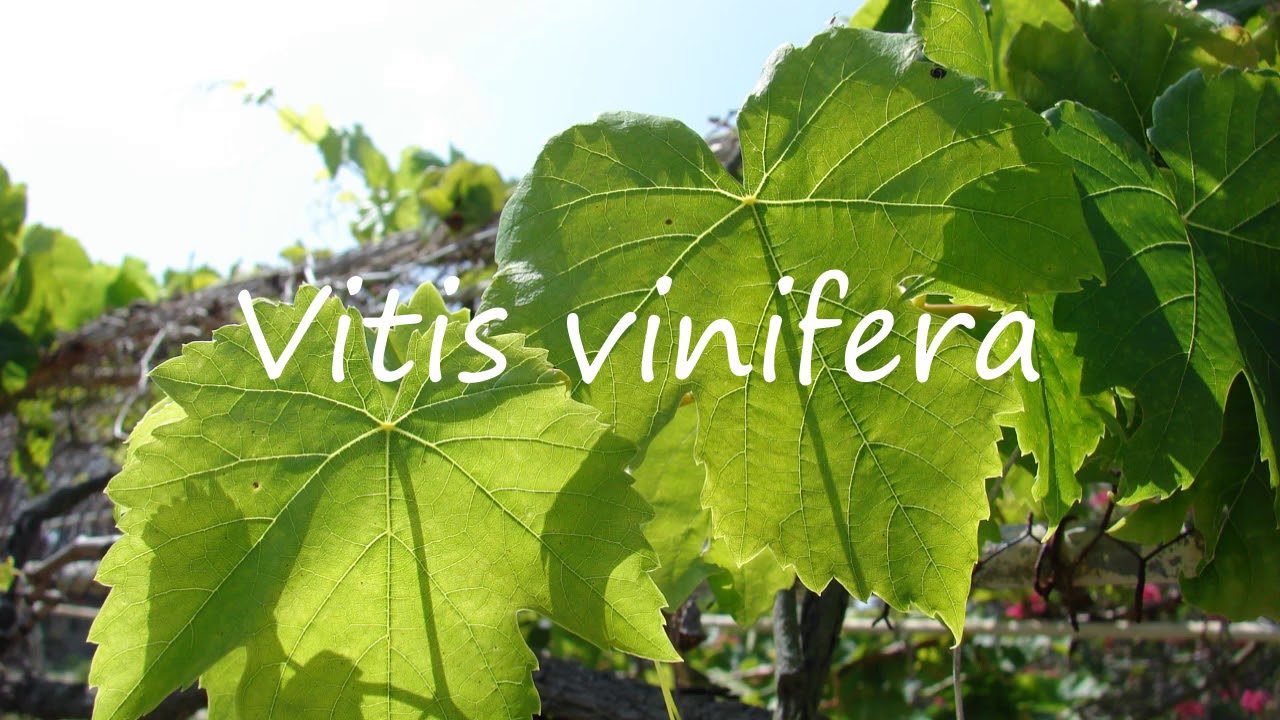
The main grape vine (or father of all vines) is  Vitis Vinifera


This is the main grape type used in making the wine classics from Europe, Australia, Germany, Italy, Spain and the United States.  From this original species came the common grape varieties we know today.  The Cabernet Sauvignon, Merlot, Chardonnay, Pinot Noir and more.

Further break out of the Vitis Vinifera grapes are

Amurenis              Mostly in Asian wines
Labrusca               North America, producing foxy wines, ie Concord
Mustangensis    Mississippi,Alabama,Texas, Oklahoma
Ripara                    Wines and Jams, East Coast USA up to Quebec
Rotundifolia        Wines and Jams, Southern USA Delaware to Mexico

Grapevines and grapes are grown just about in every country throughout the world.  Even in the driest or coldest of climates, there are grapes to be grown.  And where grapes are grown, wine is to be made.

Here are the top areas that plant vines / grapes for wine making purposes

Spain                               11,750  (all in km)
France                              8,640
Italy                                   8,270
Turkey                             8,120
United States              4,150
Argentina                     
2,080
Australia                       
1,642

The partial destruction of Grapes in Europe

Grape phylloxera  (an insect) originated in France.  By the late 19th century, most of Europe vines were destroyed by phylloxera, mostly in France.  Phylloxera insect is native to North America, where for the most part the grapes were resistant to the insect.  Not so with Vitis Vinifera.

To combat this, most European vineyards developed a practice of grafting

their vines onto North American root stocks.   This was not suppose to have any impact on the actual growing or quality of the grape.   But you will hear many stories that say, the French wines prior to phylloxera were superior to any wine grafted onto an American root!  Whatever the case, this practice saved Europe and allowed for the continuing growth and cultivation of grapes.

The Grapes  (Here are just some of the more popular)
I took this list from www.wineturtle.com to include a link to each of the following grapes.