

Wine Regions of Portugal
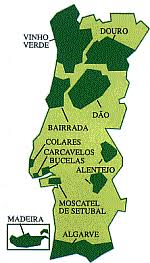
Major Wine Regions of Portugal
Douro Valley
The Douro River wakes in Spain, stretches like a lazy Sunday morning across the width of Portugal, and culminates as a yawn in Portugal’s second largest city, Porto. Along the way, it nourishes grape vines and olive trees, crosses sun-baked landscapes, and nods in passing to dozens of sleepy villages.
Working the Douro land isn’t easy – vines are grown in schist (a slate-like rock), on steep hills with man-made terraces, in harsh weather conditions.
The most famous wine from this region is Port. Its located in the upper Douro Valley in Northern Portugal. The important grapes used in making Port are:
Touriga Franca
Tinta Roriz
Tinta Barroca
Touriga Nacional
Tinta Cão
Tinta Amarela.
Grahams makes a really nice ruby port call Six Grapes
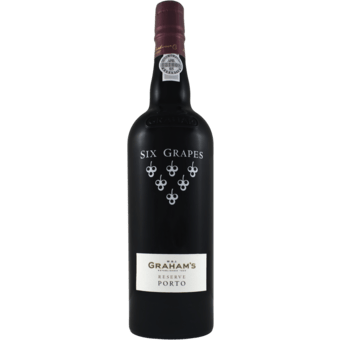
It generally sells for under $20 and it is worth every penny. When you are looking for a ruby port and at good price, this is the one to go for.
Minho
Think of sitting out in the sun on a hot afternoon and you are looking for something cool, fruity and fresh! Look, no further, the Portuguese
vinho verde. 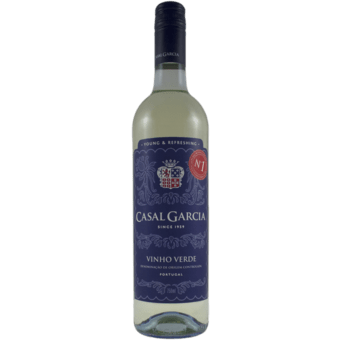 The translation of this wine means ‘green wine’ and young. This
wine tends to be very light and fresh with a hint of fizz which makes it perfect for a nice white wine spritzer.
Alentejo
The region itself is huge and rural, with vast plains of wheat, cork oaks and olives stretching into the distance. The hot Mediterranean climate yields many easy-drinking wines, especially reds. And while it’s only in recent decades that the region has grown in international prominence, its viticulture history goes all the back to the ninth century BC.
Dao
Grapes in the Dão region grow at higher altitudes, protected by mountains on all sides for a temperate climate.  If rich, structured wines with good acidity are what you’re after, this is the place to find them. One of the most prominent and noble varietals of the Dão region is the Portuguese “queen” of grapes, the Touriga Nacional – an inky, rich and deeply aromatic grape that’s credited for giving many Dão reds their velvety smoothness.
Lisbon
Greater Lisbon contains nine sub-regions for wine, each with its own characteristics. One to visit is, Colares. This small subregion sits in the Sintra-Cascais natural park, with Sintra’s fairytale palaces to one side and a coastline of cute fishing villages on the other. Vines here are grown directly upon the sand, which looks strange and haphazard but yields great results – like the powerfully tannic reds blended from native Ramisco grapes.
Maderia
Its a lush tropical island and the most famous wine is Madeira wine.
How is it made? Most commonly the wine is placed in stainless steel vats that are heated to a temperature of 45-50 degrees Celsius for a period of at least three months, then left to rest for at least three months more. 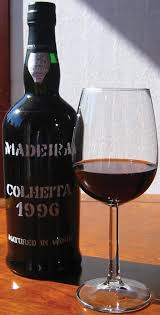 The highest quality Madeira wines forgo the artificial heating process, instead leaving barrels in the sun to heat naturally – sometimes for as long as 20-100 years.