

Wine Regions of Spain
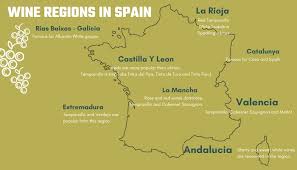
Rioja Wine Region
Located in North-Central Spain, near the Ebro River.
Rioja wines can vary in style, but usually have fruity and earthy flavours, with a very smooth taste. According to Rioja wine law, other grapes may be added to the primary grape ( Tempranillo ) Depending on what other grapes are used, the resulting wine can differ from winery to winery.
Rioja wines spend extra time ageing and all have unique classifications and regulations:
- Joven (young) wines are released without any oak ageing .
- Crianzas spend one year ageing in barrel and one in bottle.
- Reservas spend one year in barrel and two in bottle.
- Gran Reservas age in barrel for no less than two years, and three more years’ ageing in bottles.
Penedès Wine Region
The Penedès wine region is located in Catalonia, North-East Spain. Set amidst the coastal hills of Serra del Garraf, this is considered one of the best of the Spanish wine regions – and one of the oldest. The most famous of the Penedès wine is Cava, a sparkling white wine worthy to challenge Champagne and Prosecco as the best European sparkling wines.
Priorat Wine Region
The Prioriat wine region is famous due to the fact that most vineyards are built on scarily steep terraces that climb the hills and mountains Priorat. Vines growing in the slate soil of Priorat have to dig extra deep to find water and nutrients. The warmth, and sunny exposure of this region produces some of the heartiest, richest wines around, while the poor, slate soils balances this power with a refreshing minerality.
Ribera del Duero Wine Region
The Ribera del Duero wine region is another of the most famous Spanish wine regions. Located on the elevated plateau in the southern plains of Burgos province, it stretches along the Duero river. The area receives moderate-to-low annual rainfall, and has long, dry, hot summers followed by harsh, cold winters. The grapes grown in Ribera del Duero are almost exclusively red – only one white grape (the Albillo) is grown here. Most of the wine produced in this region is Tempranillo (known locally as Tinto Fino),
Valencia Wine Region
The Valencia wine region is one of the oldest in Spain. Grapes have grown in Valencia since the Neolithic Era. Most of the wine produced here is exported around the world, putting Valencia on the international wine map! The ageing process in Valencia is different than that of Rioja or Ribera del Duero. Crianza wines are only cask-aged for three months, while Reserva wines are aged for no less than six months.
Navarra
This increasingly popular region is most famous for its Rosado (rose) and red wines, which account for 95% of local wine production. The winters are cold and the summers are long, hot, and dry, producing a smaller yield than the larger wine regions, but consistently high quality.
La Mancha
Located in Central Spain, this is the world’s largest continuous wine growing region. There are more than 300 wineries and 22,000 grape-growers in the region, which is known for producing delicious Tempranillo and Garnacha wines.
Rueda
Located in Castilla y Leon, this wine region is famous for producing crisp, flavoursome white wines using the Verdejo grape. The continental climate and high sunlight (2,700 hours per year) produces quality white wines.
Jumilla
This wine region occupies a great deal of Murcia and stretches into Castilla-La Mancha. With 3,000 registered grape-growers occupying 32,000 hectares of arable land, Jumilla produces a lot of Tempranillo, Garnacha, Merlot, Cabernet Sauvignon, Chardonnay, and Moscatel grapes.
Jerez / Sherry
Sherry is one of the most historic and famous wines in the world. Its popularity is thanks to its coastal location and the boom in overseas trading and exploration from the 15th century onwards. Ships would stock up on local wine, fortifying it with brandy to help it keep on the long, hot journeys. There are different types of Sherry, all with different degrees of sweetness
Fino. Bone dry, many times used as an aperitif
Manzanilla. Similar in dryness as Fino, but lighter in body
Amontillado. Has a brown hue. Nutty and a hint of mushroom
Palo Cortado. Best described as rich and regal
Oloroso. Can be Sweet or Dry, depending on the winemaker