

ANYWHERE in the WATER in my BOAT

I have always found water to be such a peaceful place to be around. I grew up on Long Island and from the time I was about 4 years old, my family would always go to Long Beach. Thats where I first started to learn to swim.
Later on, my family and relatives would drive out to Stony Brook, Long Island for a day of fun, fishing , clamming, and eating. That was in the late 1950’s early 1960’s At that time, Stony Brook was nothing more than potato and duck farms. We would wait until low tide, put an old car tire inner tub in a wooden basket  and start clamming. This would go on for hours. At times, we would collect over 20 dozen clams.
As I got older, my friends and I would drive out to Stony Brook and repeat the same daily event, except as college students, you know there was a lot of beer. That started my love affair with clams.
During the ’70s, and 80’s on most sunny days during the summer, we would be at one of beaches at Jones Beach, or venture further out to Robert Mosses state park. Then on the special occasions, we would head out to the Hampton beaches and Montauk. I was totally in love with the beaches on Long Island and the Atlantic Ocean. Still to this day, I believe the Long Island beaches on the South Shore are some of the nicest anywhere. Clean, white sand, no big buildings, condos, etc anywhere near the bench. Sand dunes, boardwalks and of course the Jones Beach Theatre.
We moved to Connecticut in 1974. We were right next to Candlewood Lake, which is the largest man made lake in the state and most of the North east. It was water, which I loved, but it wasnt salt water! , so I had to compromise.
It was on this lake, that we brought our first Pontoon boat, A Fisher.  A pontoon boat is basically a living room on the water. We had so much room, seating and it was just so much fun. Eventually, we traded in that boat and we purchased the boat we still have today.
A Sweetwater. Brand new, with a lot of extras, radio, CD player, lights and more 
We boat from April until late October. Taking advantage of almost every nice day. Most of the time, it was just my wife and myself.  Sometimes cruising the lake, other times just floating around. But there were times when we had parties with 8 to 10 people. Many times there were other friends who had boats and we would all go out together.
The views on Candlewood Lake were really nice, even nicer when seen from a boat. 
But I think the two best times for being in the boat and taking it all the
scenery is at

night
or during the fall season

We’ve been in CT since 1975 and I can count the times on two hands the amount of times I have actually gone into the water! I just am not a big fan of fresh water, and I still love the smell and feel of salt water.
But since, fresh is all there is at the time, I learned to make the most of it.

Water and Wine – Two very important parts of my life
Candlewood Lake

On July 15, 1926, Connecticut Light & Power Company’s board of directors approved a plan to build a man-made reservoir in order to produce electric power. What would become Candlewood Lake was the first large-scale project in the United States to employ the concept of a pumped-water storage facility; basically, water from the Housatonic River was  pumped up a 13-foot-diameter pipe and then held in a large reservoir.
In all, there were 35 families who owned property in the area to be flooded and to which Connecticut Light & Power held the right of eminent domain, under which private property can be taken for public use. Most of these families sold their property to the company but a few refused and some of the lake bed property is still privately owned. 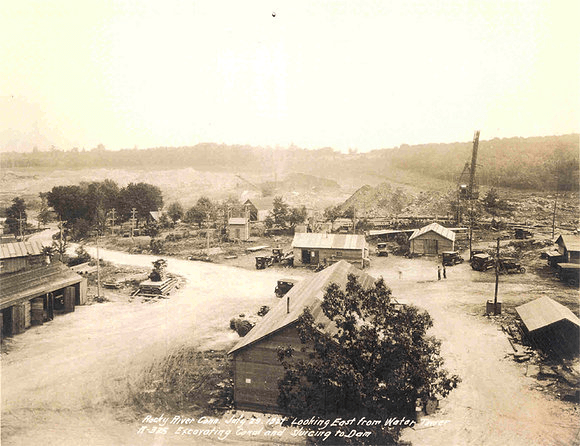 Approximately 100 buildings, including schools, houses, barns and churches were demolished or moved. Even gravestones were moved, as were remains that workers were paid $1 to exhume for reburial.
On February 25, 1928, water was first pumped into the valley and by September 29, 1928, the lake was officially complete at 429 feet above sea level. Candlewood Lake is 16 miles long, 3.2 miles wide with an average depth of 40 feet, and covers a surface area of 8.4 square miles or 5,400 acres.
Although it was almost called Lake Danbury, the new body of water ultimately got its name from New Milford’s Candlewood Mountain – which was named after the Candlewood tree, whose sapling branches were sometimes used as candles by early settlers.