Red Blends

 Red Wine Blends    an Easy and inexpensive way to enjoy wine!


I really have been excited since wine blends have been hitting the retail market.  No, I am not talking about the original blend,  the French Bordeaux, but I am referring to some very easy, soft drinking wines that are generally not expensive.

When I was in the retail business, anytime I had a customer that said that they did not like wine, or didnt like something too dry, too fruity, too tannic, or too of anything, I would point them in the direction of the wine blends.

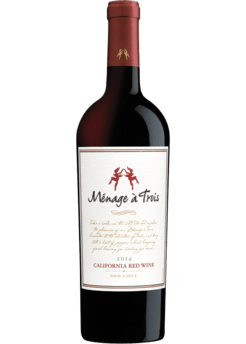
About 10 years  ago, if I remember correctly, the only blend that was common in retail shops was   Menage d Trois .   It was such a nice easy wine.  The best way to describe it is that it has  almost jammy flavors dominated by red berries, blackberries, and just a bit of plum. It’s has a creamy or velvety texture that helps make it very smooth and enjoyable to drink. It’s quite approachable as a drier red wine that is easy to drink either alone or with food.    It retails anywhere from $9.99 to $11.99.
Here is a list of some Red Blends that I have tried and feel that they are definitively worth having

All of the following basically have the same overall tasting notes.   Very soft,  a fair amount of fruit, low on tannins, good body, easy to drink with a average after taste.     My favorite of the group is Bogle’s Essential Red.   Retails for $9.99 and is such a nice pleasant wine.  We’ve served it at many of our outdoor parties, since it goes with so many different foods.   The retail store, Stew Leonards of Danbury calls it the Pizza Wine.  I also  enjoy Costco’s Kirkland Meritage, retails for a bit more $13.99, but well worth it.  It does remind me of some of the smaller Medocs from France.  It has that distinct multi-grape aroma and taste.   My least favorite is Cupcake’s Red Velvet.  I found it to be way to sweet, even though listed as a drier wine.

Apothic Red (they also make a Dark and a Crush)


Bogle Essential Red
Francis Coppola Roso


Kirkland Meritage


19 Crimes Banished Red


Cupcack Red Velvet


Collection

Building a Wine Collection

I’ve touched base with some of this in my post about storing wines.   So, for now, I am going to bypass any details about How to Store or Where to Store.

This is about selecting wines that you can start to build a wine collection.   One of the first things I have always told my customers, was to start small  and to keep in inexpensive.   A small collection of 12 different wines, all under $10 is a great way to begin any wine collection.

Buying and Selecting

What wines should I select?  This statement sort of goes along with the How should I stock my liquor cabinet?  I think the best way to start is to pick out 6 different types of grapes and purchase 2 bottles of each.    Definite wines to start out with should include:

Cabernet Sauvignon
Melot
Pinot Noir
Chardonnay
Sauvignon Blanc
Riesling

This will provide you with a good cross section of different wines that should satisfy many different tastes.  Once this is established, you need to put a plan in place for future buying.   When I go to wine shops, I generally pick out 6 wines that we would probably be drinking within the next 7 to 10 days and then I pick out 6 wines that I want to add to my collection.    Doing this monthly, it a matter of a year, you could have almost 100 bottles in your collection!

Organization

I have four different sections of m wine cellar.

Immediate drinking
For guests and parties
For aging 1 to 3 years
For aging over 5 year

This way, I always know I can select the right wine for the right occasion.   During the summer months, I will take the Sauvignon Blancs, Pinot Grigio, Roses  out of the cellar and keep them in the refrigerator so they remain cold.
I still keep some of those same wines at cellar temperature,

When I put those wines in for future storing, I keep them a little harder to reach then the other wines.  This so I will be hesitate about reaching up and out for that special wine

Types and Styles

I like to pick wines from different countries, but all having the same grape.
So my collection will always have Sauvignon Blancs from California, Washington State, New Zealand and Australia.    THe same applies to most of my wines, White or Red.   Its always interesting to see the difference between a Cabernet Sauvignon made in Australia, then from one made in California.

I think adding some Champagne and or Sparkling wine is a must.   Then start exploring the idea of adding some dessert wines (ie Sauternes, Barsac, Icewine, etc) and other fortified wines (ie Port, Sherry, Maderia, etc)

Keeping

Here is where everyone can differ with their ideas and still have a good wine collection.   In my cellar, I have sections reserved for the different types of wines, most broken down by grape (ie Cabernet Sauvignon / Bordeaux , Zinfandel, Pinot Noir, Shiraz) and by country.

Having a wine collection is such a fun and adventurous thing to do.   First, just picking out the wines and starting to store them is a lot of fun..  You just have to resist drinking them before you store them!   Knowing that with almost any occasion (ie friends stopping by, special events, special dinner, etc) you will have a wine in your cellar just for that moment

Building a wine collection is so easy to start and over time it can be one of the better education aspects of wine.   You get to purchase different grapes from different wineries, different countries, etc.   You start to taste each of these and realize, Wow they can be different

Enjoy your wine collection!

There are some folks, that just like to add on to their collection and keep adding without actually drinking many of them.  They could be looking to sell some of those wines at an action.

Me, I want to drink the wines I put aside


Sulfites

S U L F I T E S


The term sulfites is an inclusive term for sulfur dioxide (SO2),apreservative that’s widely used in winemaking (and most food industries) for its antioxidant and antibacterial properties. SO2 plays an important role in preventing oxidization and maintaining a wine’s freshness.

“Contains Sulfites.” These are words you see on almost every bottle of wine. Just two little words — yet so frequently misunderstood!

What are sulfites? Are they really bad? Do they cause wine headaches or other related ills?

Consumption of sulfites is generally harmless, unless you suffer from severe asthma    ** I will be coming back to this statement, because it is very important **

Some Facts about Sulfites

Many foods have higher levels of sulfites than wine

Any wine containing more than 10 parts per million (ppm) of sulfur dioxide must affix to the label ‘contains sulfites’.

Myth: Sulfites in Wine Cause Headaches. Medical research is not definitive on the relationship between sulfites and headaches. There are many other compounds in wine such as histamines and tannins that are more likely connected to the headache effect

Myth:  Red wine has extra sulfites, thus it causes more headaches.   The truth is that red wine generally has less sulfites than white wine.   In the opening paragraph, I stated that sulfites are also used as a preservative in wines.    Red wines on a whole, have more tannins than white wine.  Tannin is a stabilizing agent and red wines normally go through a go through malolactic fermentation, reducing the amount of sulfur dioxide that is needed.

Myth:  Wine should be avoided because it contains sulfites.   Most wines contain about 10 times less sulfites than most dried fruits.

Myth:  Sulfites are inherently unnatural. Apart from the potential allergic reaction, many people are against sulfites, because they feel they are an unnatural addition when making wine.  it is important to remember that sulfites are also a naturaby-product of the yeast metabolism during fermentation. So even if you do not add any additional SO2, your wine will still contain sulfites.   That is why ALL wines contain some level of sulfites.   You may read or hear about wines that contain no sulfites.   That is not true,  what is more accurate, is those wines do not contain any additional sulfites.

Additionally, one of the reasons that you see more wines labeled ‘made from organically grown grapes’ than labeled ‘organic wine’ is because in the US organic wine must not have any added SO2.

So Why Do I Get a Headache When I Drink Red Wine?  

Going back to answer one of the earlier statements I made.

All of these scientific facts, however, do nothing more than say that sulfites are probably not the culprit for the well-known phenomenon of red wine headaches. Other possible reasons include, as I mentioned above, histamines, the alcohol content itself, and tannins. The latest evidence points to the latter.

I have done some informal studying with a number of customers.  I had a group of about 25.  Some white, some red wine drinkers.  I gave them a brief survey about sulfites, plus I asked a bit about their own medical situation (ie asthma, allergies, etc)   After a month of having these folks drink wines and record when/if they had headaches, about 80% of the people who talked about headaches were those that had mild asthma or allergies.   The others included in that number were tea drinkers.   Tea is generally higher in tannin than wine is.


So , I think the bottom line can be established that SULFITES are not the culpruits for causing headaches in people that drink wine!

But to always be on the safe side, there are people who are over sensitive to any type of wine and even one glass can trigger a migraine.   But this is not the normal wine drinker population.


Credits:

https://www.thekitchn.com

The Customer

THE WINE CUSTOMER

Spending all these years with wine, either in a Retail, Wholesale or Private environment, I have picked up so many different scenarios regarding people and wine!

I think at the beginning, I will have to talk about the retail environment.  Here is when people come in looking at the inventory and when I asked if they need help.   One of their responses is I Dont like wine!   To me, in the retail business, that was a challenge.  I have always believed that there is a wine for everyone, and that everyone can find a wine that they will like

When I work with customers like this, I start to conduct a simple informal interview.  I asked them what beverages they like, what they normally drink, what do they have with meals, etc.   They I asked them about their experiences with wine.   What wines they have had and what was it about them that they didnt like.    I would say that over 70% of the customers I have dealt with regarding this, the wine they had was always Red and very dry!   To me, that can turn off anyone who really hasnt tasted wine.    I talked to them about the different styles of wines.   Do they like some fruity?  a bit on the sweet side?,  Red or white or rose?   Questions like this.     Then, I can narrow it down to a handful of wines that I think that they may like.

At times, I would open a bottle of wine that I think they may like for them to taste.  With some customers, I would even buy a bottle for them, to bring home to try.   None of these wines would be over $9.99.   I wanted to keep it as simple as possible.  

For those that liked sweet, I would start with some  White Zinfandel.   Personally, I think that is just sugar water, but for many its so delightful.  For those that like whites, I would go with a Chenin Blanc or Riesling, because I know there is enough grapy sweetness and low acidity that many will find easy to drink.   The reds are always the toughest.  15 years ago, I would have had  a much tougher time selecting one.   But in the past 10 or so years, many winemakers are making blends.  These are almost always so easy to drink and are priced under $10.

So, now the customer has either tasted the wine in the store, or has tasted it at home.  I wait until they come back again to find out their opinions.   Again, based on their feedback, and they didnt like it, I would go searching for another wine,  or if they did like it, I would find another one similar in style for them to taste.   This was a lot of fun for me, working with all the customers, plus it gave me the opportunity to earn their respect and confidence.   So, the next time, it would be much easier for me to recommend almost any wine..


Something that I have always found so interesting.   Those folks that only loved sweet wines.  They would drink it for years, you cold not get them to change the style.  But after a while, they started to gravitated away from those really sweet wines, onto something not as sweet.  Then after another period of time, could be a year or more, I found those same customers looking for drier wines!   To me, it was almost inevitable, that the progression of wine drinking for those folks that said they dont like wine is from

Sweet  ->  Semi-Sweet -> Dry

Sangria

SANGRIA !  A Fun wine to party with!

Back in the early 1970’s,  Yago Sangria   hit the market with a big splash!   This wine was different, full of fruit flavor, sweet and had such a colorful label, people rushed out to buy it.    I remember it was difficult just keeping enough of it in stock!

Sangria had its roots in Spain.  But In 1964, at the Worlds Fair, the Spanish world area started serving this fruity punch like wine to its visitors and history was made!

Since that time, sangrias have gained popularity as a fun outdoor party wine.
There are so many different recipes for sangrias, it seems like almost every other person you meet has a slight twist on the ingredients.    There are two basic formal styles of sangria.   The original, traditional Spanish style and the newer Mexican style.  The biggest difference is that the Mexican version is generally higher in alcohol content.   That is because brandy or other liquors are added to the wine mix.

Mexican Sangria Recipe:   

INGREDIENTS:

2 bottles of red wine (recommended: Rioja)
2 cups brandy
1 cup fresh orange juice
1 orange, sliced
1 lemon, sliced
1 lime, sliced
1 apple, cored, and cut into thin wedges
1 pear, cored, and cut into thin wedges
1 (750-ml) bottle club soda, chilled
Brown sugar or granulated sugar (for glass rims)

DIRECTIONS:

Combine the wine, brandy, juice, and fruit in a large container or glass pitcher. Cover and chill completely, 1 to 2 hours or overnight. Add soda to mixture when ready to serve. Using a little lime juice wet the rim of the glass and then coat it with brown or granulated sugar.  Serve with ice. (Note:  I always remove the fruit after 12 hours in the wine, I found if it stayed longer, there would be too much of an acid flavor to the sangria)

The nice thing about making sangria, is that there really isnt any firm rules.   There are so many recopies for Red sangria,  Rose sangria, and one of my favorites, White sangria.    Here you start with a crisp light white wine, such as a Vino Verde or Sauvignon Blanc.  I’ve always used Prosecco instead of the still wine!.   I will add summer fruits, grapes, canteloupe, peaches, apricots, etc


What ever style of sangria you like,  Red, Rose, or White,   Dry or Sweet,  Mild or High in alcohol,    its always a fun wine to have.   Just knowing the ingredients and  what the wine taste likes,  makes you feel like being in an outdoor festival.


Next time you go to a barbecue, think about making some sangria to bring to share with all the company.  I am sure it will be a big hit!

Beaujolais nouveau

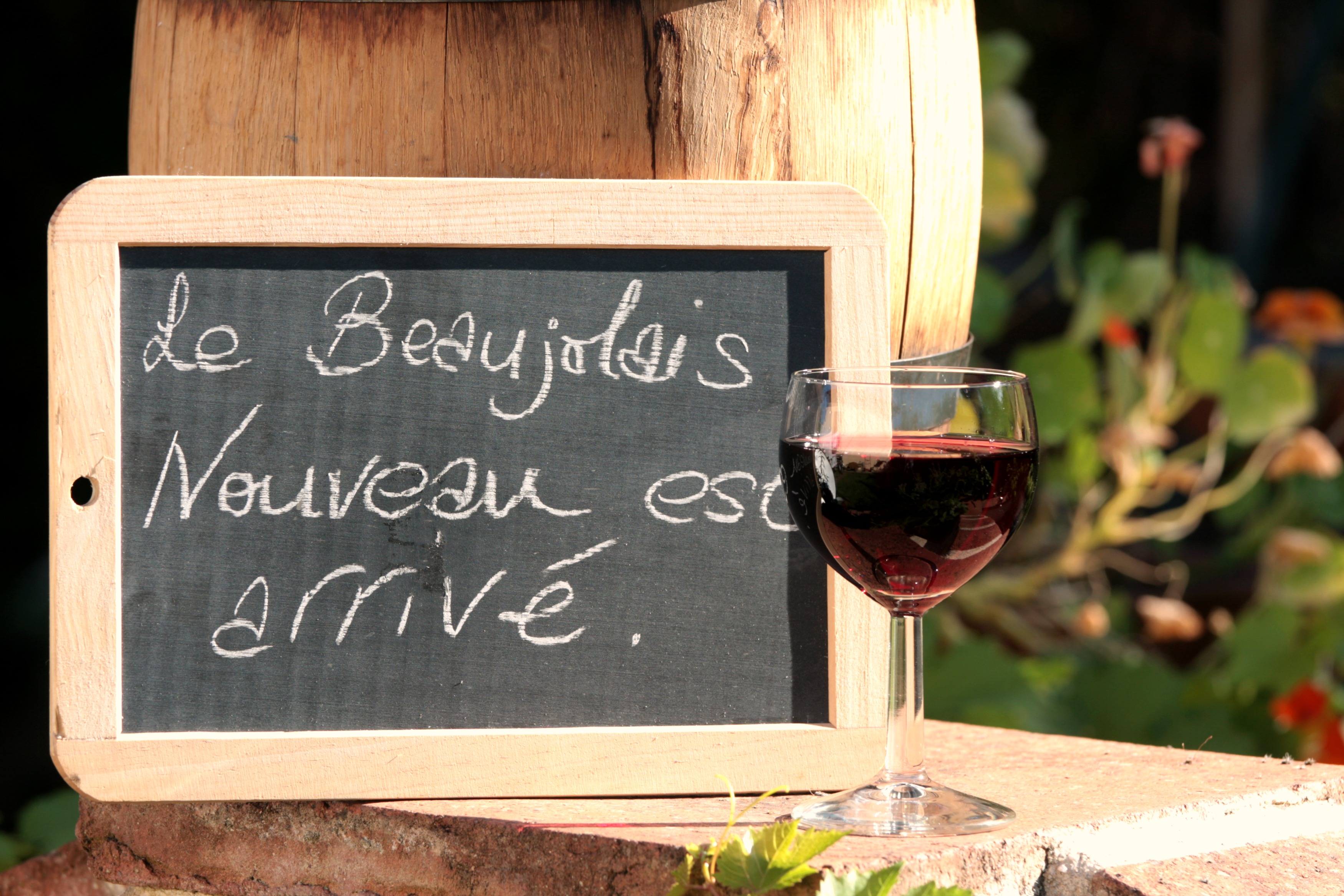
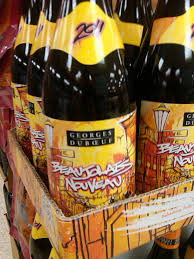
Beaujolais Nouveau  made from the Gamay grape produced in the Beaujolais region of France.   


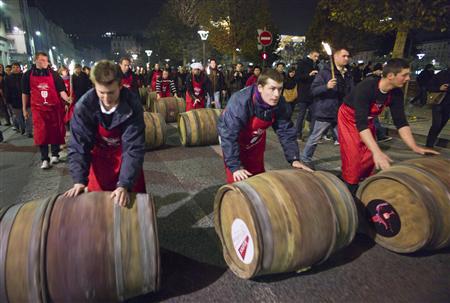
This wine is fermented  just a few weeks before being released for sale on the third Thursday of November. This Beaujolais Nouveau Day used to see heavy marketing, with races to get the first bottles

to different markets around the globe.   This special wine occasion started in the 1950’s   The various wine makers were in a race to see who could get their wine to Paris first!    Then in the 1970’s, winemaker and business man  Georges Duboeuf, pushed and publicized the wine and the associated festivities.  Banners proclaiming
Le Beaujolais Nouveau est arrivé!  

I remember working at my first wine retail store in the 1970s, that the arrival of the first Beaujolais Nouveau was a major event.   At that time, there were only 3 or 4 French wine producers that were involved.   I still remember the first time I tasted a Beaujolais Nouveau.  It was something that I have not tasted before.  It was light, it was fruity, it had a slight sparkle to it, it wasnt dry, yet it wasnt sweet.   Your mouth was treated to all this goodness and it was tasting one of the freshest things you can think of.   The finish was not lingering, but the taste made you want to have another sip and another and another.

In the late 1990’s, there were probably over 20 different wine houses that were making this wine.  Still everyone rushing to get to be the first to reach the states!.   It was a fun event and fun time.   We used to advertise weeks before the arrival, like posting the arrival of a new born baby.   People used to ask us daily,  When is it coming in?   The first to arrive at our store would get top billing, the best display area in the store!   We had signs and banners surrounding the display, plus had bottles all over the counter. 

BUT something happened!  And to me, it was not a good thing.   That joyful , delicious , fun wine changed.   Now it was becoming a dull rather sweet wine, lacking any character, void of any effervescent.  It was disappointing.   At first, I thought it might have been that particular wine maker, but then tasking the nouveau time after time from different wine houses, it was all the same.

It became a semi sweet wine with almost no characteristics.

The worst part of this, besides the major disappointment of such a fun wine, was the way the wine was handled in the retail shops.  The original Beaujolais Nouveau’s were meant to be consumed before Christmas.  So, basically, they had about a month shelf time.   Most retail owners, banking on the popularity of this wine, would be cases and cases from several different wine makers.

Customers started to shy away from these wines now, but the retailer was left with 20 or 30 or more cases of the wine.   And thus they sat and sat, on the floor, in a out of the wine display area.     I used to taste one of these each month to see what was happening to them.  By the beginning of Spring, these wines were basically non descriptive and probably best used for cooking or for making wine vinegar!.

Such a shame,  It was a total joy and then it was lost

Why, I really dont know, I dont know who or where to place the blame.   I think, just the commercial hype in getting these wines to America as fast as possible, had something to do with their downfall.

Perhaps, some day, there will be another wine, another nouveau that can be as exciting as the Beaujolais Nouveau’s from the 1970’s were.


Pinot Grigio Yes? No?

I think in the last 10 years almost every American has order or has drank one type of Pinot Grigio or another.

The retail wine shops are flooded with all sorts of Pinot Grigios from the inexpensive $5.99 up until the $20 range.

America fell in love with Pinot Grigio.  Why?

Its inexpensive
Its clear, crisp, almost neutral, no oak, no citrus, just easy drinking
It is available everyone!

But can there be a more complex expensive Pinot Grigio?  For starters, Pinot Grigio is the Italian name for the French PInot Gris.  PInot Gris, are generally more complex than any Pinot Grigio.

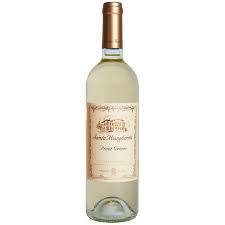
The best Pinot Grigio’s come from two northern provinces of Trentino-Alto Adige and Friuli-Venezia Giulia.   In 1979, the owner of Terlato Wine Company in Italy released Santa Margherita.   This was the first Pinot Grigio in America that was not inexpensive and do have some complexity and body.

In the retail store, Santa Margherita was the wine that customers would only purchase once in a while.   While, anyone who tasted this wine, agreed it was so much nicer than the general Pinot Grigios, BUT they would rather  spend the approx $20 on a Chardonnay, Sancerre or another classic white.

There just didn’t seem to be the market for above average Pinot Grigios.  But you do need to do yourself a favor and try one.   You will find quickly how a more sophisticated Pinot Grigio can taste.  Those elite growing areas,  Friuli and Alto Adige are close to the boundaries of the Alps and Adriatic sea.  This area takes full advantage of that great wine growing climate.

What also separates the complex Pinot Grigios from the common ones is the soil.   The grapes are planted to ensure quality and not quantity.   The soil can be described as having a lot of  marl and sandstone.   The results in the wine with mineral flavors, but limits the quantity of the grapes grown.   This lower yield produces more body, more complexity and a fuller wine.

Still bottom line, I dont believe the American consumer is ready to start to spend over $20 for any Pinot Grigio!